
State Street’s lost mandates expose growing risk in Europe
 Add BT as a preferred source
EFFORTS by US asset managers to try to adapt their business to the political reality at home are now alienating some of their clients in Europe.
State Street Global Advisors has already lost mandates with pension funds in the UK and Scandinavia. And more Europe-based institutional investors, including PME in the Netherlands, are currently reviewing their relationships with US managers. The trigger, they say, is a trend on the other side of the Atlantic to downplay climate risks.
“We have relatively high standards with regard to sustainability and responsibility in our investing,” said Anders Schelde, the chief investment officer of Danish pension fund AkademikerPension. He said he recently informed State Street that he’s pulling a mandate worth 3.3 billion kroner (S$639 million).
“Asset managers don’t need to think exactly as we do, because these are of course very complex matters and there may be different routes to achieve the same goal,” Schelde said in an interview. “But they have to be aligned to some degree with how we think and how we see the world.”
AkademikerPension, which oversees total assets of about US$20 billion, is now reviewing its entire equity portfolio and plans to do a lot more in-house than it used to. The fund grades external managers on a scale of A to C; firms falling to C face exclusion. AkademikerPension recently downgraded State Street to C, marking the first time one of its external managers had received such a low grade, Schelde said.
“We haven’t decided yet what the final new portfolio of external managers will be,” he said. “But all things being equal, I think the odds of a US manager getting to our portfolio going forward have become lower.”
Navigate Asia in
a new global order
Get the insights delivered to your inbox.
A spokesperson for State Street, which also recently lost mandates with UK-based the People’s Pension, said AkademikerPension’s decision to reduce the use of external managers was prompted by an exercise to increase “insourcing capabilities”. State Street looks forward to continued discussions with the Danish fund about future opportunities, the spokesperson said.
Asset managers are increasingly having to navigate a world in which their investment strategies have become highly politicised. In the US, the administration of President Donald Trump has demonised the net zero financed-emissions goals that scientists say are needed to limit global warming to the critical threshold of 1.5C. And even before Trump’s return to the White House, the Republican Party was attacking climate finance through bans and litigation threats across GOP states.
In response to such threats, a growing number of US asset managers have toned down their climate commitments. State Street, JPMorgan Asset Management, BlackRock Inc and Pacific Investment Management Co are among money managers that have backed away from Climate Action 100+, the world’s biggest investor group devoted to tackling global warming.
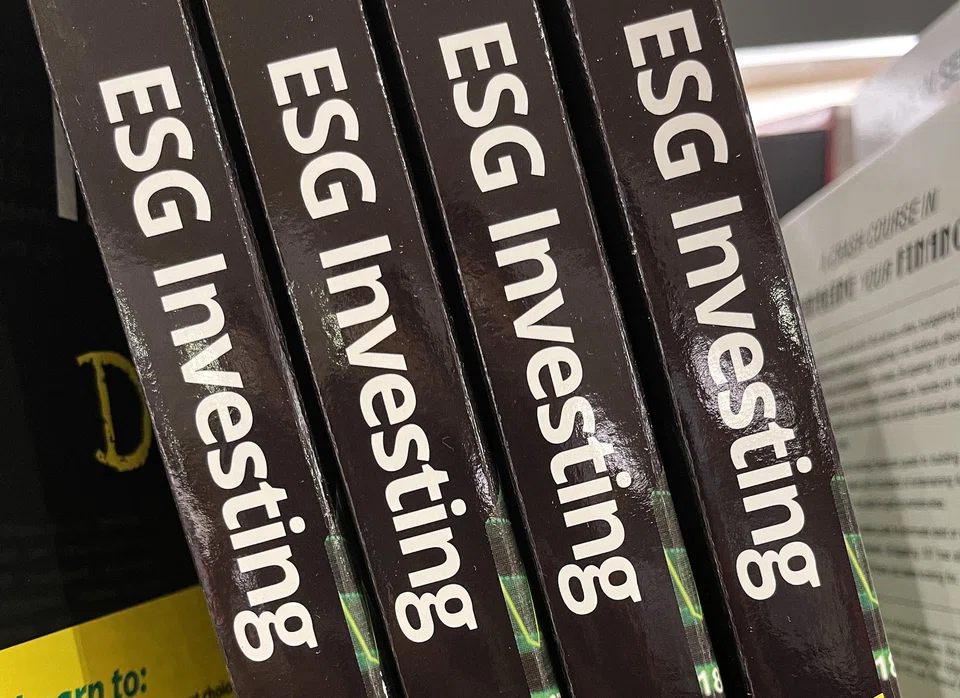

Those moves have raised eyebrows in Europe, where institutional investors still consider climate risk a key parameter in determining allocations. Among those is PME, which has about €60 billion (US$65 billion) of assets. It’s now reviewing its relationship with BlackRock.
PME has “concerns about BlackRock’s diminishing ambitions and efforts in responsible and sustainable investing, such as halting support for ESG resolutions and weakening climate ambitions”, according to an internal document seen by Bloomberg.
The document also explicitly refers to BlackRock’s decision to withdraw its “main entity” from CA100+ as being “contrary” to PME’s own climate goals. BlackRock last year transferred its membership in Climate Action 100+ to its international unit, which represents clients in Europe and Asia.
In a written comment to Bloomberg, PME said BlackRock’s mandate is valued at €5 billion. PME will now “reconsider” that agreement and also undertake a broader review of external managers, it said.
PME wants “to allocate our funds through a manager that shares the same values but also points at the same direction and moves into the same direction”, it said. “And that is where the difference between American managers and European managers is becoming clear.”
A spokesperson for BlackRock said the asset manager is “a global leader” in sustainable and transition investing, and that it manages more than US$1 trillion of client assets in such strategies. BlackRock also noted that all its largest clients in Europe have made net zero commitments, and said it offers these clients a choice of products “to deliver performance in line with their investment objectives”.
James Alexander, chief executive of the UK Sustainable Investment and Finance Association (UKSIF), said asset managers are watching developments around European mandates closely “and realizing that stepping back from commitments on sustainability is something that asset owners take seriously”.
The takeaway is that “sustainable and responsible investment practices are far from niche”, Alexander said. “Every major financial institution in the world will incorporate them to some degree in order to manage the full scope of risks they face, from litigation to reputational.”
PFA Pension, a Danish pension fund with about US$120 billion in assets, finds the decision by some of the biggest US money managers to backtrack on their climate goals “regrettable”, said Rasmus Bessing, its head of ESG investing and co-CIO.
“You need to make sure that if you give a mandate to a manager, they will manage in accordance with your own net zero, sustainability strategy,” Bessing said in an interview. “I think it’s natural, of course, to have a conversation on where an asset manager stands from a broader perspective, and I think that is something that you will see happening.”
At the same time, US managers risk losing business to institutional investors in GOP states, where sustainable investing strategies are become deal-breakers. For example, Indiana’s state pension plan recently replaced BlackRock with State Street as part of an effort to avoid investment practices that take environmental, social and governance goals into account.
“While we of course understand the bind” that US managers are facing, “we also have to take note” of the fact that “they actually then change”, Schelde said. He pointed to the voting records of State Street and other US managers, where he says AkademikerPension has observed “a noticeable change”/
Asset managers’ support for ESG resolutions at annual general meetings hit a low last year, according to a February report by the non-profit ShareAction. The world’s largest asset managers including State Street and BlackRock supported 7 per cent of key shareholder resolutions, the advocacy group said.
“For us, being a long-term investor, we do think that it’s best not only for the climate and the globe we live on, but it’s also best for our long-term investment returns that we handle this climate crisis,” Schelde said. BLOOMBERG
Decoding Asia newsletter: your guide to navigating Asia in a new global order. Sign up here to get Decoding Asia newsletter. Delivered to your inbox. Free.
Copyright SPH Media. All rights reserved.

