

5 common investing mistakes
A know-nothing investor can outperform most professionals if they avoid some common investing mistakes
STOCK markets around the world are in a state of confusion. There is no other way to describe it. How else can we explain, say, the behaviour of the Dow Jones Industrial Index? In March of this year, it dropped to a first-quarter low of about 33,000 points from a high of nearly 37,000 at the start of the year. This was followed by a 2,000-point rally, before plunging below 30,000 towards the end of the first quarter.
Just before the end of the third quarter, the US benchmark had climbed as much as 4,000 points to regain its mid-year high. It is now nestling at around 32,000. It is anyone’s guess whether it will be higher or lower by the end of 2022. There are some ‘experts’ who would like us to think that they know. They are either delusional, disingenuous, or just downright naive.
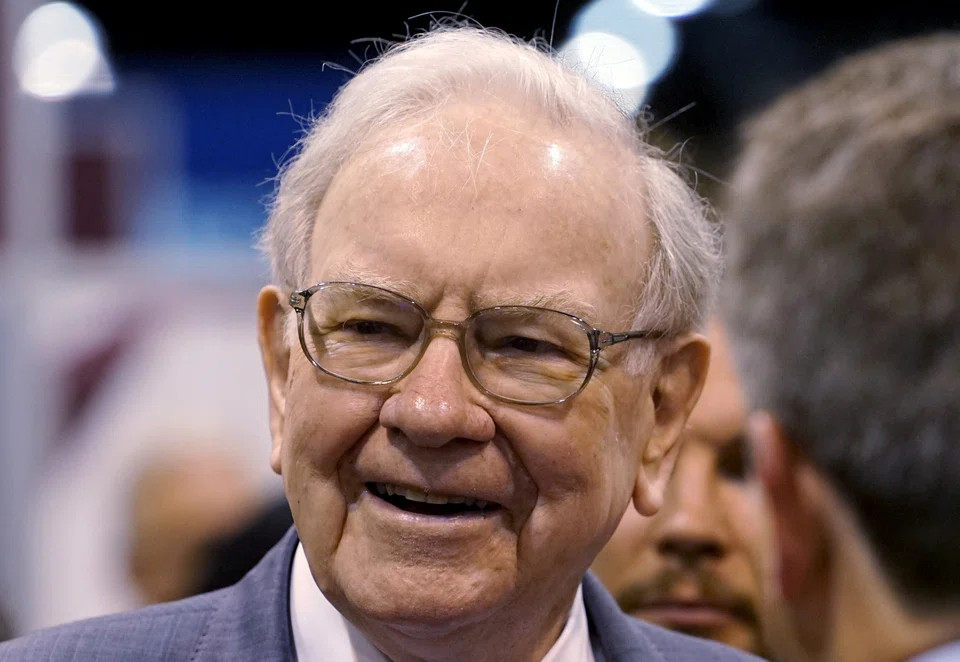
Warren Buffett once said: “There is nothing wrong with a ‘know-nothing’ investor who realises it. The problem is when you are a ‘know-nothing’ investor, but you think you know something.” In fact, a know-nothing investor can often outperform most professionals. But in order to do so, it is important to avoid some common investing mistakes. Here are 5 that we private investors can make. How many have we been guilty of?
Swayed by tipsters
This falls into the general category of believing everything we read. To be a good investor, it is important to digest as much information available about companies. These could be company accounts or research reports. Occasionally, though, we may also come across tipsters whose arguments can be so persuasive that they can trigger us to buy or sell certain shares. The solution here is to never put our faith in tipsters, but instead carry out our own in-depth research. In other words, trust but verify. As Buffett said: “Never ask a barber if you need a haircut.”
No strategy
Investing is about knowing where we are today and where we would like to be some time in the future. So, investing is a journey with a well-defined start and end. We therefore need to know how we intend to get from A to B. We also need to know the types of investments that will let us achieve our objective. Not all shares will be able to do that. Consequently, it is important to not only identify those companies that can, but also to add money continually to those businesses. Buffett has some sage advice for us: “An investor should act as though he had a lifetime decision card with just 20 punches on it.” So, choose those shares carefully.
Overtrading
Trading too much is very easy to do, but it can hurt our overall performance. Whenever we buy and sell shares, we pay commission to our broker, and each deal then eats into our returns. How many times have we, for instance, sold a share only to see it carry on rising? Perhaps we have been too pessimistic with our long-term valuations, and in turn focused too much attention on short-term gains. On this point, Buffet is clear: “The stock market is designed to transfer money from the active to the patient.”
Holding losers
This is something that we do all too regularly. We tend to hang onto our losers because acknowledging that we may have bought the wrong share is painful. However, it is worth bearing in mind that while we are sitting on losers, our money could be better invested elsewhere. That said, it is important to define what a loser is. Just because the price of the share has fallen does not necessarily mean it is a loser. Here is what Buffett has to say: “Should you find yourself in a chronically leaking boat, energy devoted to changing vessels is likely to be more productive than energy devoted to patching leaks.”
Not reinvesting dividends
Finally, all too often, dividend cheques are deposited into our bank accounts and spent. However, dividends and reinvesting those dividends are a vital part of stock market investing. It is the underlying principle behind compounding, which uses the proceeds from dividends to invest in more shares, which then generate more dividends. Compounding can be powerful. Buffett said: “My life has been a product of compound interest.” His partner Charlie Munger was more direct: “The first rule of compounding: Never interrupt it unnecessarily.”
Let’s be clear about one thing: investing will never be mistake-free. However, if we want to be better investors, it is vital to learn from the mistakes that others have made and not make them ourselves.
The writer is co-founder of The Smart Investor.
TRENDING NOW

Ex-Nvidia CEO Jensen Huang carried a secret for more than a year. It led to his downfall

Jensen Huang after Nvidia: Will he ever be a CEO again?

Demand, tech capabilities position Apac and AI as Skyscanner’s next growth frontiers: CEO Bryan Batista

Higher rates, weaker spending: Is the Philippines entering stagflation?

