Adjusting the way we look at global equities
Share prices, rather than profits, sales or even a company's total value, are likely to receive a disproportionate boost as valuations are pushed higher
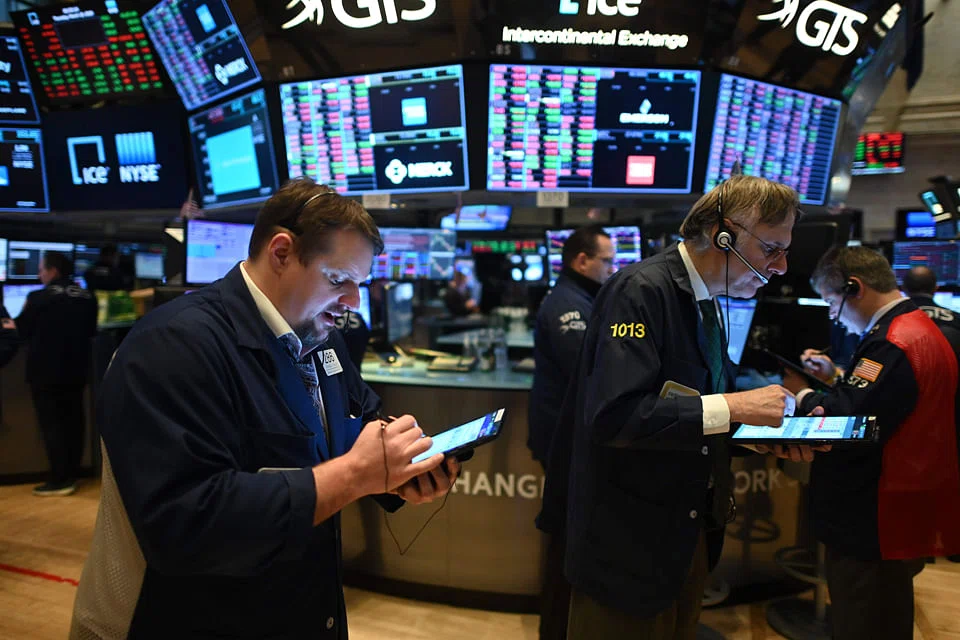
STOCK markets are running at feverishly high levels while the global economy has suffered a major setback due to Covid-19. Is this disconnect just investors' complacency or is there more to it?
Investing has always been a complex subject, even for finance professionals. What makes it more challenging - and rewarding - is when we are investing through a crisis such as the Covid-19 pandemic.
Even though global equities saw an abrupt plunge of minus 30 per cent in March this year, they have since staged an astonishing V-shaped recovery across April and May. Stock prices around the world appeared to have shaken off the negative effects of Covid-19 and are now near their pre-crisis highs. However, a quick glance at news headlines would tell investors a completely different story - businesses worldwide are furloughing employees and several prominent companies have even filed for bankruptcy.
Faced with a dichotomy of awful economic numbers and stellar performances in the equity markets, investors can be understandably overwhelmed - how should they assess the markets and what should they do with their cash and investments?
As investors ourselves, these same questions confound us. Thankfully, we are guided by a framework of investing philosophies and principles, which were constructed to assist us in making sense of markets and investment decisions. At the framework's core are two key metrics - earnings growth and valuations - which we will discuss briefly in this column.
Poor earnings growth this year; but we should look past it
To no one's surprise, earnings of global equities are likely to be extremely bad this year. As economies were brought to a standstill across the world, affected sectors such as travel and retail have seen sales vaporise in the first half of 2020, and conditions are unlikely to turn for the better in the second half.
While things currently look pretty bleak, the silver lining is that earnings are likely to see a bottom this year, followed by a robust rebound next year as the global economy picks up after Covid-19. As the world enters the early stages of a new cycle, we see great prospects of a strong recovery in earnings and economic activities.
It also helps that the massive policy responses - coordinated by governments and central banks to help alleviate the economic weakness across the globe - have been greater in terms of magnitude and speed than at any other moment in modern history.
Even though global earnings may take some time to recover - we reckon at least one year - it is worth remembering that market participants are inherently forward-looking.
This means that markets can continue to edge higher, even as present conditions deteriorate, if most investors have looked past this year.
'Lower-for-longer' interest rates a boon for equities
Looking ahead, there is high certainty that yields for the short and intermediate term of the yield curve in the US will be kept at the current lows for a prolonged period of time. This is a function of policymakers' attempts to suppress interest rates in a bid to minimise borrowing and refinancing costs for both the public and private sectors.
Moreover, in the current deflationary backdrop, yields will likely be kept low to prevent further rising of the real interest rates, which otherwise equates to monetary tightening. As such, there will likely be zero hikes from the Fed over the next two years and some form of yield curve control will materialise.
Collectively, this means that the US has little choice but to keep interest rates lower for longer, joining the likes of Europe, Japan and the UK. For investors, such a shift in the interest rate regime will have a profound impact, inflating equity valuation over the longer term.
Valuations in a post-Covid-19 environment
In such a backdrop, we ought to rethink valuations. While expensive on a historical basis, we think there is a case to be made for stock valuations to remain elevated.
For retail investors, loans (that is, for mortgage, vehicle and investment) can be taken up at a 'lower cost', as rates continue at historical lows. Personal wealth eventually improves from greater ownership of these assets, perpetuating a higher propensity for the wealthy individuals to invest in the stock market, as we have seen over the last decade.
It is also clear since the great financial crisis that lower rates have engendered a more aggressive hunt for higher yielding assets. This is exacerbated by greater leverage, leading to even greater equity inflows. It is likely that we will see this behaviour stretching into the years ahead as the appeal of equities exceeds fixed income.
In addition, lower rates will inevitably force strategies and pension funds to re-direct investments to growth assets such as equities, albeit taking on more risks. These institutions are responsible for managing large amounts of capital and can move markets. Given how equities are still priced more attractively over fixed income, we could see larger inflows into equity markets, as fund managers rebalance their asset allocations.
Therefore, from a market structure perspective, we see valuations being pushed higher in the years ahead for the reasons above. As the above drivers are mostly flow based, we believe prices, rather than earnings, sales or even a company's total value, will receive a disproportionate push.
The longer term picture: Stay disciplined and invest progressively
Slowly but surely, we believe such a dynamic will play out over the longer term, driving equity markets in the process. We reckon it will be more pronounced in the US market than the others.
Either way, we are more positive on the outlook of global equities one to two years out. The collapse of the current late-stage global economic cycle will usher in a more positive cyclical economic expansion by 2021-2022.
While the recent wild swings in prices and elevated volatility may inflict tremendous mental stress on investors, it can create opportunities. We believe that the best investment opportunities often present themselves whenever financial markets face a challenging but temporary problem. Just like past crises, the current Covid-19 crisis will fade over time.
We encourage investors to stay invested and disciplined in line with their long-term investment objectives. Global capital markets will likely remain volatile for H2 2020 and having a consistent investment plan, such as regular saving plans (RSP) or dollar cost averaging (DCA), will help investors deal with their portfolios rationally and avoid costly emotional decisions.