

Art is sometimes in the eye of the accountant
A usually dry biennial report on corporate governance reveals nuggets such as a Singapore company's investment in a Jeff Koons work.
 Add BT as a preferred source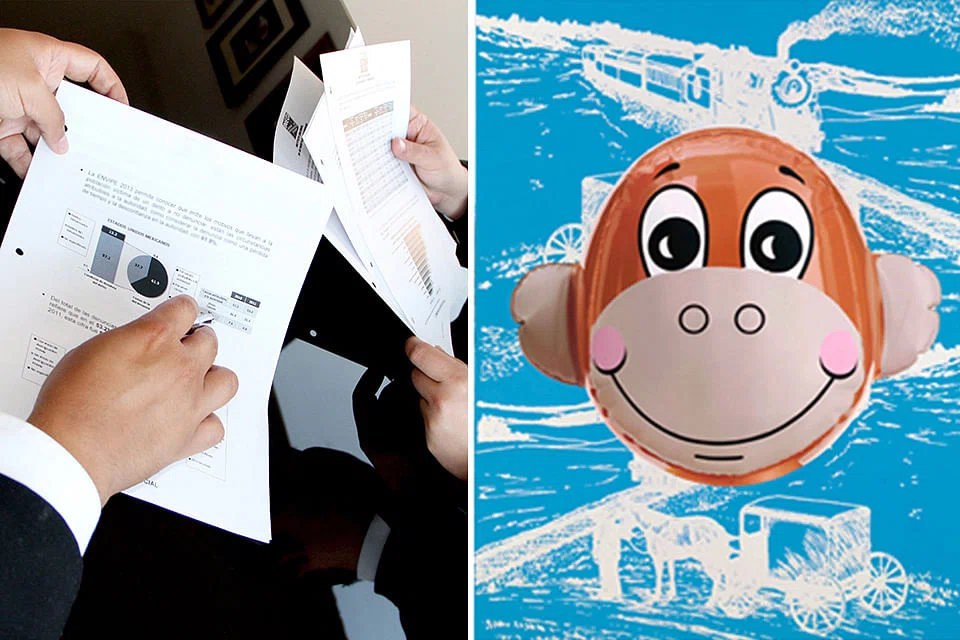
DeeperDive is a beta AI feature. Refer to full articles for the facts.
ART as investment is a tricky business. Stocks and bonds have cash flows that can be projected and discounted to arrive at a theoretical value. Even commodities are subject to supply and demand curves.
Art is altogether more nebulous. In a realm where beauty is purely in the eye of the beholder, specialists have the advantage. That is one reason why most investors probably are not delighted to learn that their small-cap property company or communications device maker has been dabbling in the market.
Shareholders of Singapore's MYP Ltd might never have known that their company had bought Monkey Train (Blue), a 2007 work by American artist Jeff Koons, had the property investor not decided that "plant and equipment" was not the ideal place in its accounts to record a contemporary oil painting of a smiling simian. The company reclassified the piece under "other assets" in its 2020 results, prompting a flurry of questions from the city's exchange operator last July.
MYP was not greatly forthcoming in answering some of the exchange's queries, though it did confirm the identity of the shareholder who was holding its art pieces on trust for the company: Jonathan Tahir, chairman, chief executive officer and controlling shareholder. The 34-year-old is the son of Indonesian billionaire Tahir, who is worth US$3.3 billion, said Forbes.
The company's responses did not appear to satisfy shareholders, with the Securities Investors Association (Singapore) lodging its own set of questions - including asking pointedly whether an indebted, money-losing business that has not paid a dividend since 2015 might have better uses for its cash.
The association also queried what the collective investment experience of MYP's independent directors was in art investments.
Navigate Asia in
a new global order
Get the insights delivered to your inbox.
"The independent directors' core competencies mainly comprised accounting or finance, business management, legal or corporate governance and strategic planning," MYP said in its reply. Which looks like a roundabout way of saying "not very much".
Questioning value
Never mind. The tale has a happy-ish ending. The fair value of MYP's S$5.7 million of art investments had increased by S$1.1 million as of March 31 last year, the company said, citing an independent appraisal by a specialist art valuer. A 19 per cent turn is not bad - not quite in the realm of crypto currency (another asset whose value arguably lies in the eyes of beholders), but seemingly a lot better than MYP's core business, considering the company has reported four net losses in the past five years.
MYP's art adventure is featured in the biennial CG Watch report published last week by the Asian Corporate Governance Association and CLSA Ltd. It is a mostly dry tome - 500 pages of regional surveys and rankings covering environmental, social and corporate governance (ESG), regulatory enforcement, audit practices and the like, though spiced up by the occasional vignette from the colourful world of Asia's small-caps.
The amount invested by MYP accounted for only 0.66 per cent of the company's assets, so was never a life-or-death issue. The equivalent of US$2 million that MYP shelled out for Monkey Train was also a snip compared to the US$33.7 million that casino operator Wynn Macau paid in 2016 for Tulips, a stainless-steel sculpture by Koons (who appears to have corporate appeal in Asia) - although that was bought to be displayed in the Wynn Palace, rather than reserved for the chairman's viewing pleasure.
A darker and more consequential example comes from Hong Kong, where Champion Technology Holdings Ltd and its subsidiary Kantone Holdings Ltd spent 92 per cent of the group's total assets, or the equivalent of around US$1.1 billion, on gemstones that ultimately proved almost worthless. Most were purportedly Tianhuang stones - carved, yellow-coloured rocks from Shoushan in Fujian province that were often used for imperial seals and which are highly prized in their genuine form.
Champion Tech, founded by Paul Kan, was once a technology pioneer in pagers, before being overtaken by the advances in mobile telephony in the 1990s. Kan, a noted collector, and his brother, then-executive director Leo Kan, bought the stones over a six-month period in 2015-16 without having them valued or authenticated by professionals, said CG Watch.
A few months later, Paul Kan sold his stake and both brothers left the board. Experts were called in to value the gemstones after auditors raised concerns while preparing the 2016 results: The group subsequently wrote off 99 per cent of their value over two years.
There are plenty of unanswered questions around the case. The Hong Kong stock exchange censured the Kan brothers and another director in April 2020 for failing to exercise sufficient skill, care and diligence, and criticised others. In November, Hong Kong newspapers reported that the Commercial Crime Bureau had arrested eight former directors of the group, including the Kan brothers.
Champion Tech, now reinvented as a gas and oil trader under new ownership and management, said in a statement that police had informed it of the arrests.
Are there lessons to be taken from such episodes? Perhaps. Beware the tendency of small companies toward bandwagon-jumping and what the legendary fund manager Peter Lynch called "diworsification", particularly if accompanied by poor disclosure.
And if your humble widget-maker really must delve into the glamorous world of art, maybe stick to Jeff Koons. BLOOMBERG
Decoding Asia newsletter: your guide to navigating Asia in a new global order. Sign up here to get Decoding Asia newsletter. Delivered to your inbox. Free.
Share with us your feedback on BT's products and services
TRENDING NOW
Shelving S$5 billion office redevelopment plan proved ‘wise’ as geopolitical risks mount: OCBC chairman

Eurokars Group introduces rental car franchises Enterprise Rent-A-Car, National Car Rental, and Alamo to Singapore
20 photos that show how dramatically Singapore has changed in two decades
Singapore’s key exports up 15.3% in March from electronics surge, exceeding forecasts

