WEALTH & INVESTING

Asia-Pacific’s infrastructure opportunity is not just a private affair

    • Asia-Pacific will need sizable investments in industrials, utilities, waste management, renewables, data centres, education services, airports, highways and railways.
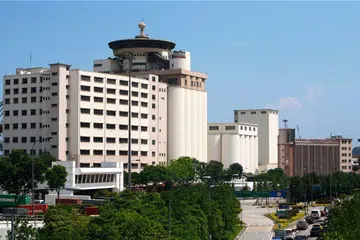
    • Asia-Pacific will need sizable investments in industrials, utilities, waste management, renewables, data centres, education services, airports, highways and railways. PHOTO: BLOOMBERG
    Published Fri, Sep 8, 2023 · 02:00 PM

    INFRASTRUCTURE assets are recognised for their ability to generate steady and predictable cash flows. In Asia-Pacific (Apac), however, infrastructure means much more. It is an asset class with real growth potential, underpinned by structural tailwinds of decarbonisation, digitalisation and rising prosperity of the middle class.

    In particular, Apac’s demographics and growth dynamics will drive demand for transport and technology infrastructure. Healthcare infrastructure also faces strong prospects as consumers increasingly prioritise healthcare spending and populations grow older.

    More broadly, the region will also need sizeable investments in industrials, utilities, waste management, renewables, data centres, education services, airports, highways and railways. Developing Asia alone will require an estimated US$1.7 trillion of annual infrastructure investment to sustain its economic development and enhance climate adaptation and mitigation, according to the Asian Development Bank.


    Historically, institutional investors have accessed infrastructure assets mainly through private assets, both equity and credit. Unfortunately, this is increasingly challenging with private asset valuations reaching high multiples amid rising competition from sovereign, pension, infrastructure and private equity funds. Listed infrastructure stocks now trade at effective discounts of 30-40 per cent to private infrastructure assets, while offering comparable long-term returns.

    Compelling opportunities in public markets

    Thus, listed investors can have access to similar cash flows with better liquidity (allowing investors to manage their cash-flow needs) and lower operating costs versus comparable private assets.

    There is certainly no dearth of choice when it comes to listed infrastructure stocks across Apac. Total market capitalisation easily exceeds US$1 trillion today and is growing rapidly. The universe of infrastructure stocks includes Australia, New Zealand, mainland China, Hong Kong, India and Taiwan, with an increasing share also originating from the fast-growing South-east Asia economies.

    To illustrate the breadth of opportunities in this area, we need only look at a handful of examples from different regions and sectors.

    New Zealand’s leading generator of geothermal electricity is on track to deliver over 20 per cent compound annual growth in earnings before interest, taxes, depreciation and amortisation and a dividend yield of over 4 per cent over the next three years.

    In India, a leading listed infrastructure trust comprising 46 grid transmission lines is delivering sustainable dividend yield of about 10 per cent, with historically low price volatility relative to the broader market.

    In China, a toll road operator in the country’s most prosperous province, where traffic is now materially higher than before the Covid pandemic, trades at just seven times earnings and a 7 per cent dividend yield, even though the company has never reduced its dividend per share for the past 25 years.

    Indonesia’s dominant mobile tower company is on track to grow net profits by over 16 per cent annually and deliver a dividend yield of over 3 per cent over the next three years, while boasting a markedly under-levered balance sheet.

    Listed infrastructure assets sit somewhere near the middle of the risk-return spectrum, with limited earnings volatility because they generally provide essential services and face limited competition.

    Investors can choose to compile portfolios with assets that are higher and lower on the risk curve.

    Mature infrastructure providers, such as regulated utilities, and electricity or gas transmission and distribution companies, display relatively lower potential risk and returns. Such investment returns are dominated by yield, while capital growth is generally more modest.

    For a slightly higher potential risk and reward, investors can pursue pro-cyclical infrastructure assets, such as airports, seaports and toll roads. These are recovering at different paces following the pandemic, and should provide returns through a mix of cash yield and capital growth.

    Emerging social infrastructure – which includes healthcare, retirement and education facilities – is also set to benefit immensely from Asia’s growth story and demographic trends. As these companies are investing cash flow into capital expenditures to drive future growth, this category of listed infrastructure usually offers higher return profiles but less dividend yield.

    Balancing risk and return

    In Apac, investors can also balance their portfolios between developed and emerging markets to suit their risk appetite. Emerging markets such as India, China and Indonesia are set for considerably stronger economic growth in the coming years than the global average, accompanied by a boom in mass affluence, creating robust demand for various types of infrastructure and driving returns higher.

    Infrastructure assets in the region’s developed markets of Australia, New Zealand, Singapore and Hong Kong benefit from their lower risk profile. This is an important consideration when investing in regulated businesses, where investors need strong government institutions and rule of law to generate stable returns.

    This breadth and diversity explains why major investors are now looking beyond the private markets to take a view on infrastructure trends. As a defensive way to ride on key structural themes, such as energy transition, aspiring middle class, mobility, digitalisation and ageing, listed infrastructure in Asia-Pacific is hard to overlook.

    The writer is a portfolio manager at Tribeca Asian Infrastructure Fund