Asia stands out as alternative safe haven
Asian currencies favoured as 7 out of the region's 10 largest economies post current account surpluses
THE faltering emerging-market currency rally is stronger than ever in Asia.
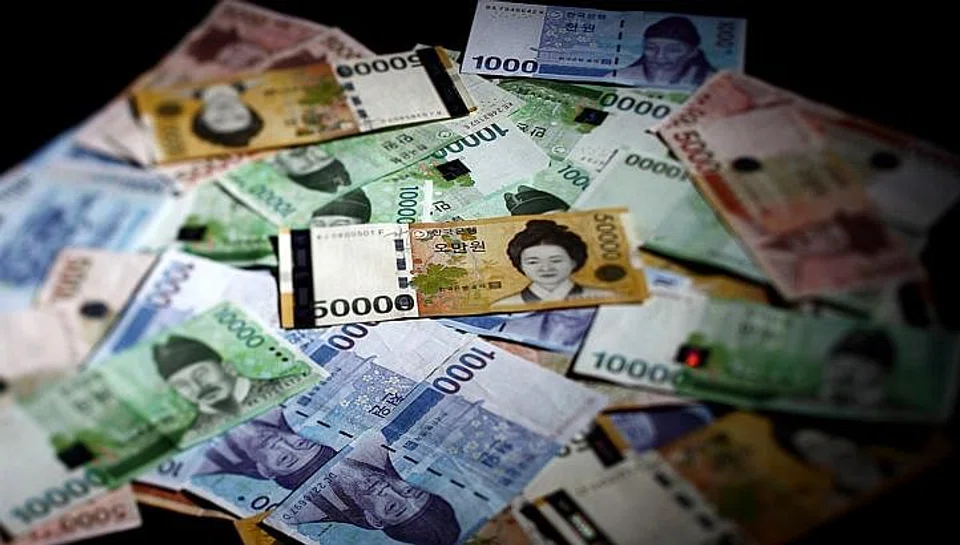
Of the nine developing-nation exchange rates to strengthen in August, six were from Asia, with South Korea's won and Malaysia's ringgit leading the gains. A Bloomberg index of the 20 most-traded emerging-market currencies posted its first back-to-back monthly drop since January as geopolitical strife and the withdrawal of extraordinary monetary stimulus in the US makes investors choosier about where they put their cash.
Asian countries are being favoured because of their generally superior trade balances, particularly now that China's economy is showing signs of stabilising. South Korean and Indian bond markets attracted a combined US$5 billion from international investors last month, while Turkey and South Africa saw outflows of US$2 billion, data compiled by Bloomberg show.
"Asia stands out as an alternative safe haven, far away from geopolitical stress in Ukraine, Gaza and Iraq," Anders Faergemann, a senior money manager in London at PineBridge Investments, which oversees US$71.4 billion, said by e-mail on Aug 28. "The region is also benefiting from the apparent stabilisation of China's economic growth." The won strengthened 1.8 per cent versus the dollar in August, helped by the central bank's forecast of a record current-account surplus, and the ringgit climbed 1.5 per cent, reaching a 10-month high of 3.1415 per dollar on Aug 28. Among the top gainers elsewhere were Brazil's real, where a pro-business presidential candidate is rising in the polls, and South Africa's rand, which has benefited from two rate increases this year.
Earlier in the year, the top performers were more of a mixed bag, with seven of the 14 currencies to gain in the second quarter outside Asia. The Bloomberg JPMorgan Chase & Co Asia Dollar Index rose 0.6 per cent in August, its biggest monthly advance since October, and jumped 0.1 per cent on Monday. The gauge of the top 20 emerging-market exchange rates lost one per cent last month and was little changed on Monday.
"It was quite impressive that Asian currencies strengthened" last month against a dollar buoyed by the outlook for higher rates, Rajeev De Mello, who manages US$10 billion as head of Asian fixed-income at Schroder Investment Management in Singapore, said by phone on Aug 25. "Investors are much more discerning."
More often than not, investment decisions are based on trade balances. Seven of the 10 largest Asian economies posted surpluses in their current accounts, the broadest measure of trade, in the first-quarter. The exceptions include India, whose rupee was the smallest gainer among its peers last month, and Indonesia, where the rupiah weakened one per cent.
Improving economic backdrop
The seven biggest Latin American economies, from Brazil to Peru, saw deficits. In Europe, shortfalls included 0.9 per cent of gross domestic product in Poland and 7.5 per cent in Turkey.
Options traders are confident Asia will remain resilient over the next three months. The market's nine most optimistic positions are all in Asian currencies, led by Hong Kong's dollar and China's yuan.
With improvements in the US jobs market, traders see about a 52 per cent chance the Federal Reserve will raise its benchmark rate from a range of zero to 0.25 percent by July 2015, futures data compiled by Bloomberg show.
While that means Asian exchange rates will "struggle" against the dollar, they'll strengthen versus other major currencies such as the euro and yen, Schroder's Mr De Mello said. The firm favours higher-yielding Asian currencies such as the rupee, Indonesian rupiah and ringgit, he said.
Citigroup, the largest foreign-exchange trader, and Societe Generale both back Asian currencies and recommend clients to stay away from eastern European assets affected by the Ukraine turmoil. The conflict on Europe's easternmost border is escalating, with European Union governments agreeing to impose new sanctions on Russia if the trouble worsens.
HSBC Holdings, which gets more than half its revenue from emerging markets, is more bullish on developing-nation currencies in general, its top picks being Poland's zloty, Colombia's peso, the rupee and yuan.
China's economy will lead Asia with 7.4 per cent growth this year, the International Monetary Fund predicted in July. While an official report on Monday showed manufacturing growth slowed in August, Chinese stocks rose on speculation the government will step up stimulus measures.
While HSBC backed emerging-market currencies, it also identified the buoyant dollar and political tensions as potential risks. Those risks mean cash is increasingly shifting towards Asia. US exchange-traded funds that invest in Asian assets saw inflows of US$328 million in August, while Latin American funds received $29 million and those dealing in eastern Europe lost US$2.4 billion, data compiled by Bloomberg show.
There's still plenty of cheap money circulating the globe for investors to plough into emerging markets. While some central banks, including the Fed, are winding down their post-crisis stimulus programmes, others such as the European Central Bank and Bank of Japan have signalled they may pump more money into the economy.
"The economic backdrop in Asia has been improving," Peter Frick, a money manager in Boston at Loomis Sayles & Co, which manages US$221 billion, said on Aug 27 by email. "Should easy money from global central banks continue to lubricate markets, higher asset prices and stronger Asian currencies are possible." - Bloomberg