

Asking clients what they want
Citi's wealthy clients are keen on the fixed income asset class and real estate

Genevieve Cua
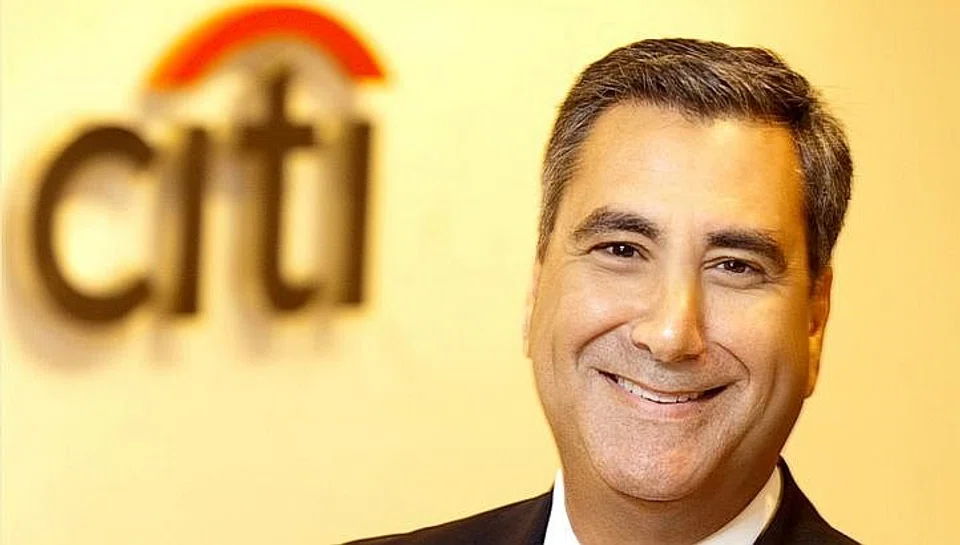
HIGH cost-to-income ratios are the biggest challenge among private banks here, said Bassam Salem, Citi Private Bank chief executive (Asia-Pacific).
Failure to segment clients is one of the main issues exacerbating costs, he said, as well as the inability to offer services that private clients need, such as cross-border financing facilities.
Citi's cost-to-income ratio is around 60 per cent. Mr Salem reckons that the industry ratio stands at between 80 and 100 per cent.
Year-to-date, Citi private bank has assets under management (AUM) of around US$245 billion in the Asia-Pacific. In 2013, its AUM rose about 3 per cent to US$218 billion, from US$210 billion previously.
Said Mr Salem: "The industry cost-to-income ratio is high due to factors including regulatory and premises' costs. But none of that is new. I have been associated with Citi since the 1980s and I can't remember a single day when premises were cheap or when regulators were easy on us.
"The question (that institutions coming to Asia) need to ask themselves is why they came here in the first place. What added value do they provide?"
He cautions that consultants' estimates of wealth market sizing tends to be overstated as they include onshore wealth.
Citi services three segments of clients under separate platforms. Citigold deals with clients with between US$200,000 and US$1 million. The Private Client group services those with assets of US$1 million to US$10 million. The Private Bank caters to those with more than US$10 million.
He said that Citi Private Bank regularly reviews the accounts and may move clients to Citigold or the Private Client group.
In recent years, a number of private banks' Asian businesses have been put on the block. The most recent deal is DBS Bank's acquisition of Societe Generale's Asian private client business for US$220 million. In 2012, Bank of America sold its wealth management business outside the US to Julius Baer. In 2009, ING sold its Asian private banking business to OCBC.
Mr Salem believes that the wealth threshold of US$1 million to qualify for a private bank account is too low. In any case, a number of banks accept clients with investible assets below that in the hope that the account will eventually grow.
"Many of these new players find it challenging to attract the ultra or mega wealthy clients, so they go for the affluent and high net worth clients instead. When I started in the 1980s, clients needed to be millionaires to open an account . . . Anyone with private property in Singapore is a millionaire, but is he bankable? Does he have liquid assets he can allocate to you?
"If you adjust for over 30 years of inflation and the deflation of the dollar, that $1 million should be worth $5 million or $10 million today. Yet the industry continues to take in clients with $1 million or $3 million. Is this the right target market for them?"
He added that an institution's size does not necessarily spell success. "You can be a boutique and be successful if you know exactly what you are doing and how you are different from the crowd. I think the challenge is that many institutions rush into Asia because the opportunity in their home market is no longer attractive. Many looked at Asia and said this is the new El Dorado, this is where I need to be. But why should people bank with you? What do you have that the industry doesn't already provide?
"All of them tended to have the same answer: I'm boutique, I'm different, I have customised service and asset management. Clients in Asia want different things. No one asked the clients what they wanted."
Asian clients who tend to be entrepreneurs most often seek financing. "They need balance sheet commitment to leverage and invest in projects . . . Private clients do not buy an apartment. They buy an entire block of apartments and treat it as a bond. They don't come to us to borrow US$1 million, but (they borrow) US$150 million to buy an entire tower."
On investments, Mr Salem said that wealthy clients remained keen on the fixed income asset class, hedging the interest rate risk through a swap. They also remain keen investors in real estate. "What has been attractive for a couple of years were bonds. (Clients) have been buying US dollar bonds. Many have been borrowing against the bonds because rates are very low.
"Actually, clients have been doing what central banks wanted them to do. Central banks have lowered short-term rates and are effectively saying 'please borrow'. They want the economy to pick up. Our clients have borrowed, and redeployed money in bonds issued by Asian companies. They have achieved returns in excess of 10 per cent over the past couple of years and are extremely happy with it."
Meanwhile, Citi has been focusing as well on wealth planning services through its long-running next generation programmes. Among Asian clients the average age is 72, excluding China. The average age among Chinese clients is half that, at 35.
A family office event is being organised in partnership with Harvard, conducted jointly for older and younger generations of clients. About four to five Asian families are expected to attend.
TRENDING NOW

Indonesia’s coal tycoon Low Tuck Kwong replaced as Bayan Resources president-director

OCBC names Ang Eng Siong as global corporate banking head in rejig of wholesale banking business

Consider lowering homeownership barriers for some non-resident foreigners

DBS opens flagship investment strategy to retail investors with new fund

