Beijing's crackdown ruins July for investors everywhere
China's regulators are trying to calm markets but there will be ramifications around the world. It's going to be a nervous summer.
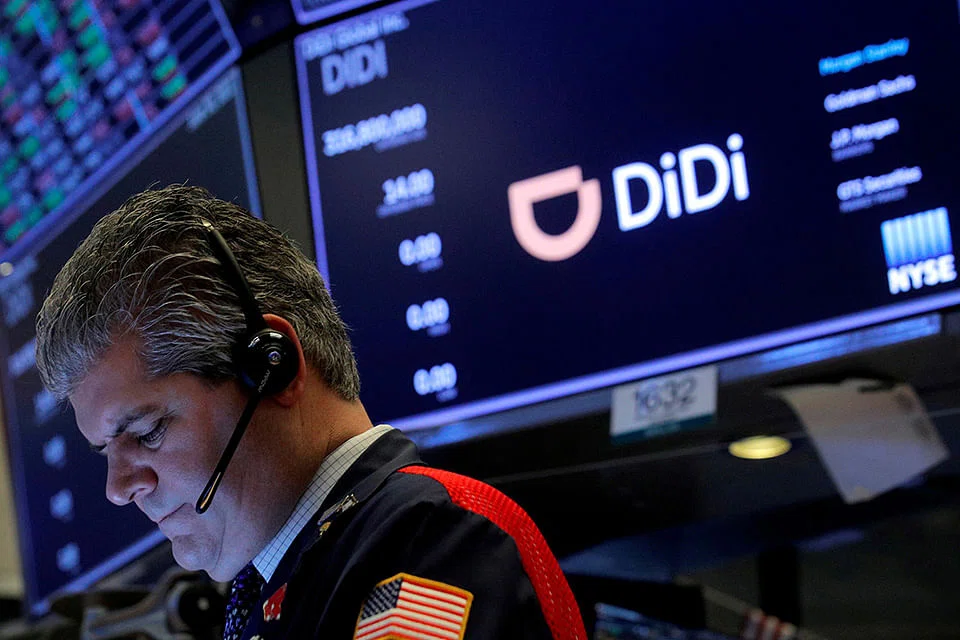
FORGET your plans for a quiet, relaxing summer. The stock markets of the world's second largest economy are tumbling; and when Chinese equities turn bearish, it can be brutal. At one point during Hong Kong trading day on Wednesday, the Hang Seng Index fell close to 20 per cent below its February peak.
This is unlikely to be a localised event. The big fear is a re-run of China's stock market rout of summer 2015 which saw a 45 per cent selloff. There were further major selloffs in early 2016 and 2018.
The knock-on effect for emerging markets then saw average credit spreads rise by a quarter and the MSCI emerging markets equity exchange-traded fund (ETF) fall by over 25 per cent in the second half of 2015 into early 2016. China's latest stumble could lead to skinned knees around the world.
Beijing's crackdown over the weekend on for-profit school tutoring is just one part of a much wider re-shape of the tech economy in China. And it is more likely just a beginning, not the end of the process. It's also becoming a major inflection point for global investors to evaluate Chinese and China-linked assets.
As one recent analysis put it: "China doesn't care how much money you lose." Goldman Sachs Group and JPMorgan Chase & Co will not be alone in turning cautious on Chinese stocks.
Reducing exposure quickly is what it's all about. So we are now experiencing the ATM effect: Large cap liquid stocks are being sold first. Thus the drop in Chinese tech behemoths, such as Tencent Holdings, Alibaba Group Holding and Baidu. But everybody is in the crosshairs and liquidity is quickly evaporating for lower-volume stocks.
Indeed, there has been a notable increase in "southbound" liquidation, that is domestic Chinese investors selling off Hong Kong-listed stocks. The percentage of domestic equity trading on margin is also climbing rapidly towards 2015 highs. It is a precarious setup for an extended market correction.
But it won't just be a domestic Chinese event. What happens in China now has major ramifications far beyond its nearby Asian economies. In Europe, the export-driven economies of Germany, the Netherlands and Italy are the most sensitive to a changing China governance model and a weakening yuan to the euro. Latin America and Africa are also increasingly reliant on either Chinese direct investment and trade.
Weakness in China-exposed currencies such as the New Zealand dollar and the South African rand was evident on Tuesday and could turn swiftly into a wider emerging market currency rout.
The real problem comes if the Chinese yuan starts to weaken substantially against the US dollar. A stronger greenback is always a problem for most developing economies' currencies but a potential sudden shift in the most important currency pair of them all presents a multitude of problems at the same time.
There is an increased risk of foreign capital flight if a developing nation's currency suddenly weakens, potentially forcing its central bank to raise interest rates sharply. A concomitant stronger US dollar exacerbates this as money around the world flies to the safety of the global reserve currency. Furthermore, because most commodities are priced in US dollars, the cost of vital raw material imports just goes higher. It is already pushing emerging market credit spreads wider.
Meanwhile, the so-called "China Discount" is certainly likely to get larger, as the cost of lending money either via bonds or stocks to Chinese-related entities will likely rise as additional compensation for risk is required.
Though Beijing is intent on showing Big Tech that the Communist Party is boss, the authorities appear to have been rattled by the severity of the selloff. The government's securities regulator convened a virtual meeting after the market close on Wednesday to explain to major banks, including international investment firms, that recent measures affecting the education sector were not part of a wider crackdown.
Several articles in the state-run media and anecdotal reports of government-linked funds buying equities show that Beijing is keen to see the stock market stabilise.
But investors have been spooked and are not likely to calm down, especially with the Biden administration talking about restricting US-based funds from investing in China or Hong Kong equities. There is considerable hedge fund and real money exposure in all this interconnectivity.
Even if this scare proves to be transitory, it should serve as a wake-up call for international investors and governments alike on the nature of China's markets and who they answer to. BLOOMBERG
Decoding Asia newsletter: your guide to navigating Asia in a new global order. Sign up here to get Decoding Asia newsletter. Delivered to your inbox. Free.
Share with us your feedback on BT's products and services