

Beyond the headlines: Five things you didn’t know about Singapore’s Straits Times Index
Singapore’s Straits Times Index (STI), covering 85% of the local equity market by capitalisation, is more than just a stock barometer. With a legacy dating back to 1966, the STI has evolved through strategic partnerships, grown alongside Singapore’s economy, and become a regional diversification tool
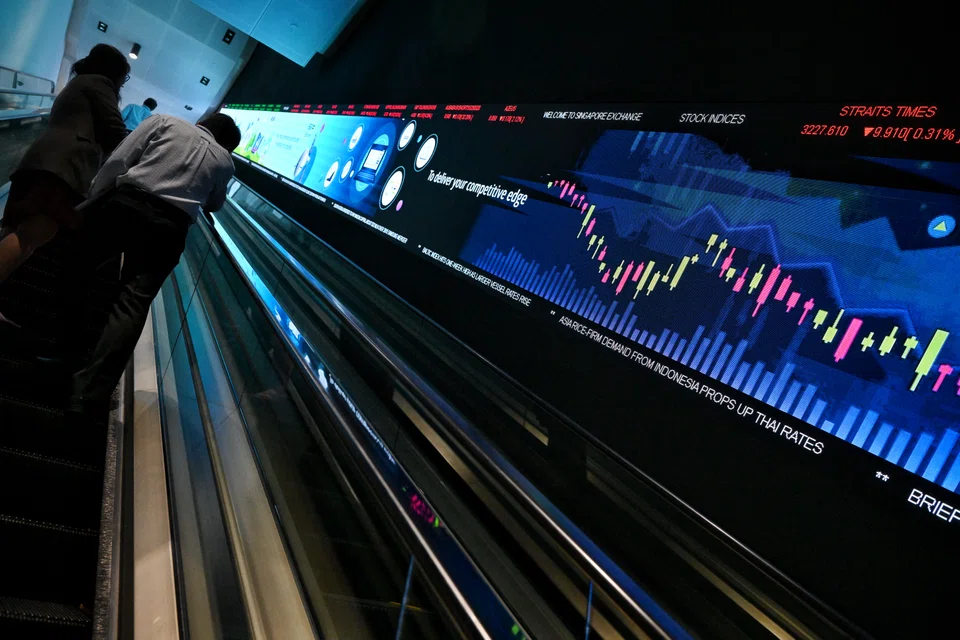
- Regional reach: Over half of STI constituents’ earnings originate outside Singapore - tapping growth in China, India, and Southeast Asia.
- Resilient legacy: Twelve original STI members remain since 1998, showcasing stability across decades of global economic shocks.
- Diversification value: STI has shown low correlation to global indices, making it a valuable hedge for regionally anchored portfolios.
Tracking the performance of the 30 largest and most liquid companies listed in Singapore, the Straits Times Index (“STI”) is the country’s flagship equity index. The STI covers approximately 85% of the local stock market’s total capitalisation.
While it is widely known as a barometer of the local stock market, there are many fascinating facts about the STI that lie beyond the headlines. Here are 5 things you probably didn’t know about this famous blue-chip index.
- It’s older than you think
The STI’s legacy dates to 1966, just one year after Singapore gained its independence. Back then, it was called the Straits Times Industrial Index (“STII”), reflecting the country’s industrial ambitions during its early nation-building years.
In 1998, the STII was rebranded as the Straits Times Index to reflect the country’s evolving economic landscape. The STI underwent a significant overhaul in 2007-2008, when FTSE Russell entered a strategic joint venture with the Singapore Exchange (SGX) and SPH Media Ltd (SPH Media) and assumed responsibility for the index’s calculation and management.
Following the creation of the joint venture, the number of index constituents was streamlined to 30 and the STI adopted FTSE’s international index methodology, enhancing its investability, transparency and global relevance. In 2015, FTSE Russell strengthened the STI’s liquidity rule to improve the usability of the index.
Today, STI index membership is governed by a set of eligibility criteria that are designed to ensure liquidity, investability and transparency. In addition, fast-entry rules are in place, allowing newly listed companies that meet specific thresholds to be included in the STI outside the regular review cycle - ensuring the timely inclusion of major new listings.
The STI now selects its constituents from an equity market universe of over 600 listed companies. Meanwhile, Singapore is recognised as a leading financial hub in Asia: it is home to the second-largest real estate investment trust (REIT) market in the region and has deep expertise in the financial, logistics, and biomedical sectors.
- 12 companies have stood the test of time
The 1998 STI index list contained 55 companies. However, the present STI only covers the 30 largest and most liquid companies listed in Singapore. The index has not only modernised but also matured into a true reflection of Singapore’s dynamic and resilient economy.
Over the past 27 years, the STI has navigated a series of major global crises—from the 2008 Global Financial Crisis to the COVID-19 pandemic and recent inflationary headwinds. Through each challenge, the index has demonstrated an enduring strength built on solid fundamentals.
Remarkably, 12 of the companies that were part of the STI in 1998 are still in the index today, including the three big banks, Singapore’s national airline, its core telecoms player, an industrial/energy giant and a key property player. Some of these names are developing as diversified engineering groups with growing capabilities in technology or are in the process of transforming themselves into tech companies. The original index members’ longevity speaks volumes about the Singapore stock market’s maturity.
The 12 STI members that have survived since 1998
| Company Name | ICB Industry |
| DBS | Financials |
| UOB | Financials |
| OCBC | Financials |
| Singapore Telecomm | Telecommunications |
| Singapore Technologies Engineering | Industrials |
| Singapore Airlines | Consumer Discretionary |
| Keppel | Utilities |
| Hong Kong Land | Real Estate |
| Sembcorp | Utilities |
| City Dev | Real Estate |
| Jardine Matheson | Industrials |
| Venture Corp | Technology |
Source: FTSE Russell, The Straits Times 31 August 1998 Publication. Past performance is no guarantee of future returns. Please see the end for important legal disclosures.
- A gateway to the economic growth of broader Southeast Asia
Investing in the STI isn’t just about Singapore—it’s a unique opportunity to gain exposure to the broader Southeast Asian economic growth story. Over the years, many of the STI’s constituent companies have expanded beyond Singapore’s borders, leveraging Singapore’s global connectivity to build significant business footprints across Asia, particularly in markets such as China, India and the rest of Southeast Asia.
As of June 2025, 51% of the STI constituents’ total revenue was generated from the broader Southeast Asian region, including 41% from Singapore and 10% from India and other Southeast Asian countries. In addition, 29% of the revenue originates from Greater China and Australia. 23 of the index’s 30 companies have business operations that extend beyond the Asia Pacific, tapping into opportunities in Europe and the US.
STI constituents’ revenue breakdown
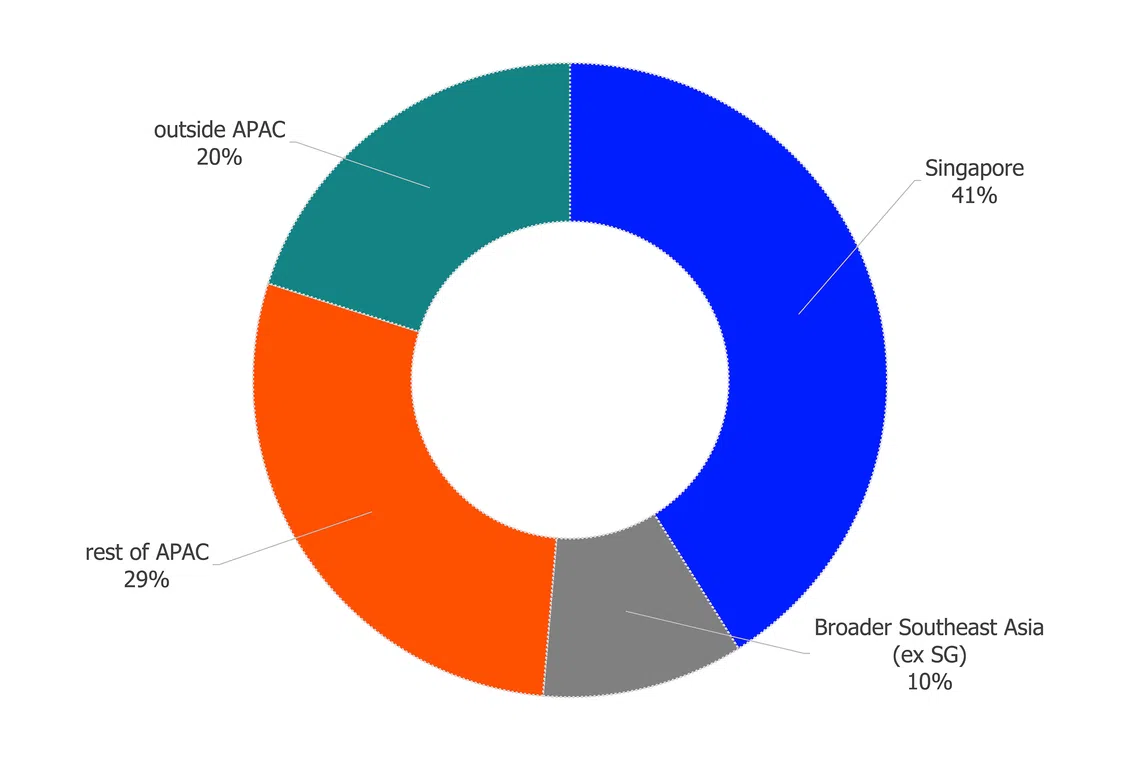
This regional and global diversification has reshaped the STI’s earnings profile: 59% of the index’s total earnings now originate from markets outside Singapore, with a tilt toward emerging Asia. This not only enhances the index’s growth potential but also provides a buffer against the cyclicality of purely domestic earnings.
In essence, the STI offers investors a cost-efficient and diversified way to tap into the broader Southeast Asia’s demographic tailwinds, rising middle-class consumption and long-term infrastructure growth. Investing in the STI isn’t just about Singapore—it’s about owning a share in Asia’s future.
- First locally listed tech exposure arrives in 2023
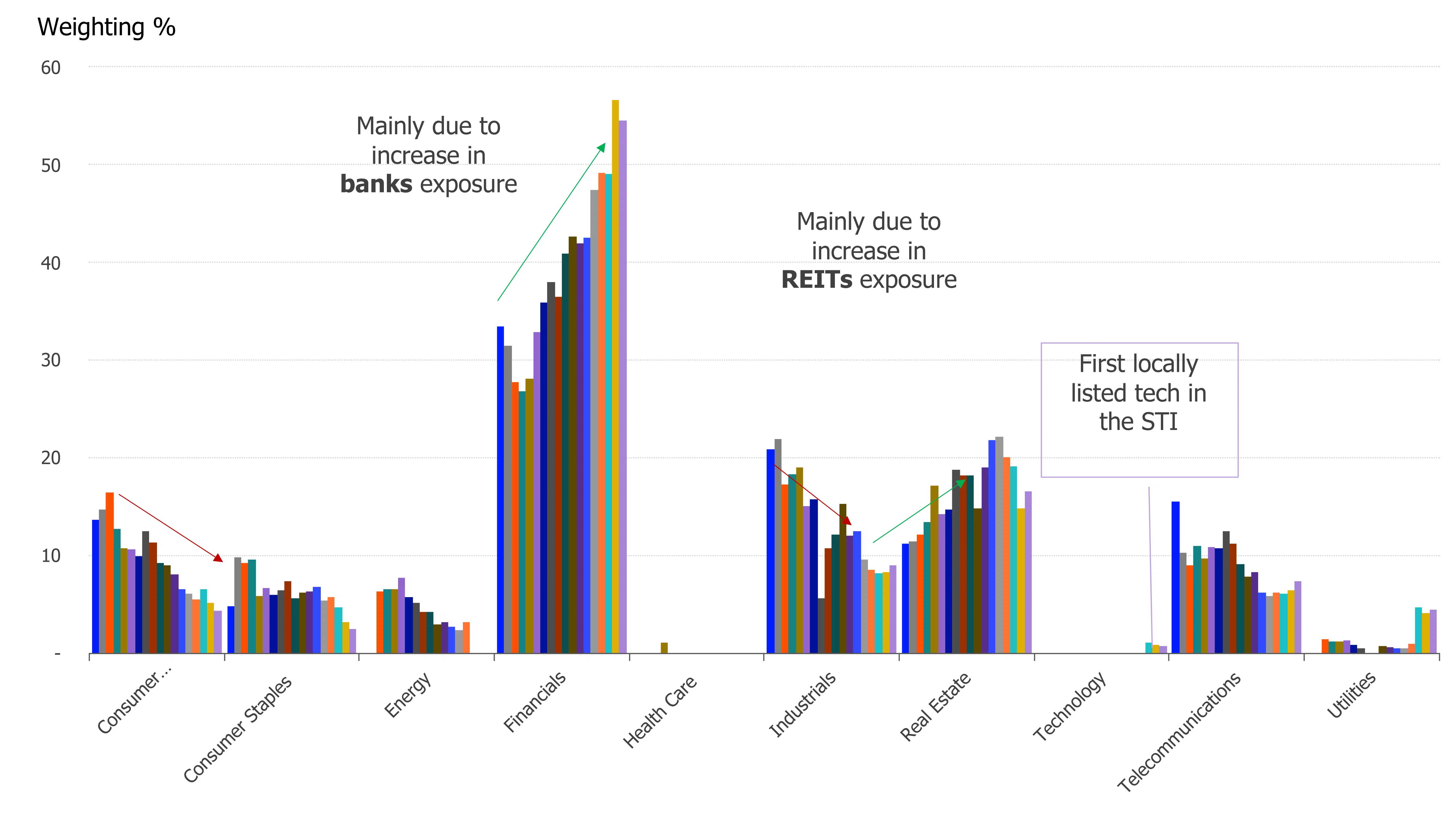
Traditionally dominated by financials, real estate and industrials, the STI took a major leap in 2023 by including its first locally listed technology company—Venture Corporation. This wasn’t just a small change: it was a landmark moment, marking the STI’s embrace of tech transformation.
Venture Corporation, originally known for its roots in high-precision electronics manufacturing, has undergone a major transformation over the past two decades. The company has repositioned itself as a high-value technology solutions provider, with operations spanning AI integration, cloud infrastructure, life sciences instrumentation and advanced manufacturing systems.
STI index ICB industry exposure change 2008-2025
- STI: diversification tool with low global correlation
In an era where equity markets are increasingly synchronised and vulnerable to geopolitical tremors, the STI has quietly offered investors something rare: regional stability with global diversification benefits.
Over the five years ending June 2025 and based on monthly return data, the STI showed a relatively low correlation to several key global indices, such as the Russell 1000 index (US large caps), the FTSE Eurotop 100 index (European large caps), the FTSE China Index and the FTSE Hong Kong 100 Index, with correlations of 0.6, 0.7, 0.4 and 0.6, respectively.
This underscores the STI’s limited past sensitivity to geographical flashpoints and shifts in global investor sentiment. The combination of reduced volatility, strong downside protection and moderate correlations highlights the STI’s value as a potential diversification tool—particularly for investors seeking regionally anchored, lower-beta exposure amid a volatile global landscape.
STI’s historical correlation with key global indices
| *1Y | **3Y | ***5Y | ***10Y | ***15Y | |
| Russell 1000 | 0.01 | 0.4 | 0.6 | 0.7 | 0.7 |
| FTSE Eurotop 100 Index | 0.6 | 0.7 | 0.7 | 0.7 | 0.7 |
| FTSE China Index | 0.4 | 0.4 | 0.4 | 0.6 | 0.6 |
| FTSE Hong Kong Index | 0.4 | 0.5 | 0.6 | 0.6 | 0.7 |
Source: FTSE Russell, as of 30 June 2025, *based on daily data, **based on weekly data, ***based on monthly data. Past performance is not a guide to future returns. Please see the end for important legal disclosures.
The bottom line
Next year marks the 60th anniversary of the STI—a significant milestone for Singapore’s capital market. As the flagship barometer of the local stock market, the STI continues to evolve in step with the nation’s economic ambitions.
As we look ahead, the index is poised to further reflect the transformation of industries, the rise of innovation and the increasing importance of sustainability and regional connectivity in shaping the next chapter of growth.
Share with us your feedback on BT's products and services
TRENDING NOW

Singapore’s central gas buyer affirms Indonesia’s role as ‘important partner’ amid export review warning

Why the biggest business decision about AI isn’t which model to choose

Is Manila Asia’s new dining hot spot?

KKR founders among investors buying 42% of Peter Lim’s Valencia; club valued at US$1.4 billion

