

Billionaires are ramping up their California exits on threat of wealth tax
The proposed tax could create a new model by going after a large, one-time cut of a billionaire’s net worth
[SAN FRANCISCO] At least a half-dozen billionaires left California before the new year, and their exodus could soon be followed by more than a dozen others in the face of a proposed 5 per cent tax on their wealth, according to financial advisers to the rich.
David Lesperance, who specialises in relocation and expatriation, said he personally helped four billionaires leave the state ahead of the Bill’s Jan 1 residency cut-off date. Two other billionaires – Peter Thiel and David Sacks – both publicly announced new office locations on New Year’s Eve as they departed for Florida and Texas, respectively.
Iconiq Capital founder Divesh Makan knows four or five families that have left already, and he expects another 15 to 20 will leave if the tax is approved, he said in an email. Alphabet co-founder Larry Page has also moved out of the state, according to a report in Business Insider.
Representatives for Page’s family office and Alphabet did not respond to requests for comment. Both Lesperance and Iconiq’s Makan declined to identify the individuals, citing privacy reasons, but Lesperance said they do not include billionaires who have already been named in the press.
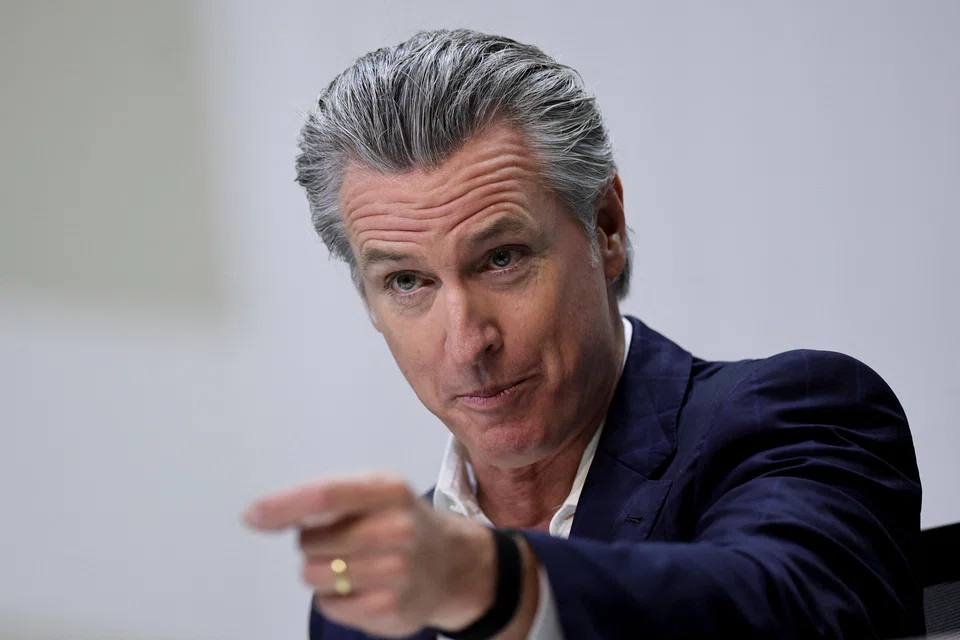
The departures follow the introduction of a ballot initiative that calls for a one-time 5 per cent tax on California residents with more than US$1 billion in net worth. It must still clear significant hurdles, including gathering hundreds of thousands of signatures to qualify for the November ballot and then win voter approval. It is expected to face heavy opposition, including from Democratic governor Gavin Newsom, who has publicly denounced the Bill.
But wealth advisers say the risk alone has been enough to prompt early moves and contingency planning among the state’s roughly 200 billionaires.
Innovation economy
The measure – introduced by a health-care workers’ union – aims to raise around US$100 billion to cover funding shortfalls for medical care, food benefits and education in the state.
Opponents argue that it would jeopardise California’s innovation economy, taxing both its largest business leaders as well as fledgling startup founders whose wealth is on paper and may have a hard time liquidating assets to pay the tax Bill.
It could also threaten a state that has an outsized dependence on its top earners for tax revenues. A state analysis calculated that while a wealth tax could generate “tens of billions of US dollars” in one-time revenue, it could end up costing California hundreds of millions per year in long-term revenue if billionaires choose to leave.
SEE ALSO







“If you look at the 200 targets, they don’t need to be in California to make and maintain their wealth,” said Lesperance, managing director of Lesperance & Associates. “All my clients have family offices who are going to dot the I’s and cross the T’s and put the notices in Business Wire and change the voters registration and all that stuff.”
Already it has become a political lightning rod, especially in Silicon Valley, where most of the richest individuals reside. Representative Ro Khanna, a Democrat who represents the district that is home to five trillion-US dollar companies and numerous tech startups, set off a firestorm when he came out in support of the tax.
“Since 40 per cent of the tax revenues of California come from 1 per cent of its citizens, Congressman Khanna is supporting a proposal that will be a hammer blow,” billionaire venture capitalist Michael Moritz said in an email. “The congressman should devote his energy to eliminating the waste, graft and fraud that riddles California’s vast state government.”
Khanna, in response, said in a statement that he is “calling for an audit of all 50 states and will be working with the Oversight Committee to tackle this.”
New model
States and municipalities nationwide are increasingly focusing on their wealthiest residents as they scramble to fill budget holes and expand services. Rhode Island is currently weighing a surtax on those making more than US$640,000, while progressives in New York, Washington and Illinois are also pushing for higher taxes on the rich.
Still, California’s proposed tax could create a new model by going after a large, one-time cut of a billionaire’s net worth.
“For billionaire clients, in any high tax state or any state that is looking for revenue, this would be a very meaningful precedent,” said Dan Schrauth, a wealth adviser at JPMorgan Private Bank in San Francisco.
California’s ballot proposal as currently written would apply to billionaires who were residents as of Jan 1, 2026. Some lawyers and wealth advisers, however, question whether the levy could be applied retroactively and expect the measure to face legal challenges on several fronts, including how it will value an individual’s net worth.
In a letter to Newsom, attorney Alex Spiro argued that the tax is unconstitutional as well as economically harmful, and said that while his clients would prefer to stay in the state, “they will not remain if subjected to an unconstitutional confiscation of their wealth.”
“Our clients are prepared to mount a vigorous constitutional challenge if this measure advances,” wrote Spiro, who has represented Elon Musk and other high-profile clients. “Litigation would be protracted and expensive, and it would generate sustained negative attention to California’s business climate.”
The ballot measure was amended in November in an effort to preemptively address some of the potential issues. The initial draft called for billionaires who left before the new year to still be on the hook for 75 per cent of the tax, but that was revised to the Jan one residency deadline. The Bill’s authors also included an expedited legal process that would bring any challenges directly to the state supreme court in hopes of a quick resolution.
“The (taxes) are being raised to address a crisis that’s going to be happening this year,” said David Gamage, a co-author of the ballot proposal and law professor at the University of Missouri. “We want the revenues raised in time to meet this challenge.”
‘Chips fall’
Should the proposed bill’s retroactivity not pass legal muster, it could still give billionaires time to leave before November and avoid the levy. But the the threat of the tax – and the precedent it could set – has been enough to tip the scales for some ultra-high-net-worth individuals, whether they’re a billionaire or not.
“Once this passes and we see where the chips fall, I don’t think it’s a far cry to imagine the threshold being lowered or walked down to something that captures more taxpayers,” said Daren Shaver, a San Francisco-based tax lawyer at Hanson Bridgett.
There could be repercussions throughout Silicon Valley as well if founders have to weigh timing of an initial public offering or funding round against a net worth valuation and a potentially higher tax bill, JPMorgan’s Schrauth said.
“If the momentum for this initiative continues, and it looks possible or likely could pass, those conversations could pick up,” he said.
Kris Reddaway, a Newport Beach-based wealth adviser for Citizens Private Bank, said he’s been talking to clients about how they can prepare for any potential liquidity needs, through distributions or dividends or lines of credit.
“I think the biggest thing is you just don’t want to get caught off guard,” Reddaway said.
‘Perfectly fine’
While some billionaires have made moves to leave, others said they plan to stay in California.
Nvidia’s Jensen Huang said in an interview on Tuesday (Jan 6) on Bloomberg TV that he had not even thought about the tax. Huang, the world’s ninth-richest person with a US$156.7 billion fortune, according to the Bloomberg Billionaires Index, could potentially face a 10-figure levy if the Bill passes.
“We chose to live in Silicon Valley, and whatever taxes I guess they would like to apply, so be it,” said Huang, who is the Santa Clara-based company’s co-founder and chief executive officer. “I’m perfectly fine with it.”
Developer John Sobrato, who has an US$11.8 billion net worth according to Bloomberg’s wealth list, also said he’s not moving. He expressed concern that the measure could drive out high-net-worth individuals, but said his advisers believe it will ultimately be shot down.
“It’s going to be fought by folks, and it seems like the governor is against it,” Sobrato said in a phone interview. “California is losing a lot of wealthy folks already because of high taxes to other jurisdictions, and we think this thing will fail eventually.”
Huang’s comments were being touted by the bill’s sponsor as vindication that the state’s advantages – including its talent pool – are too valuable to walk away from.
“His comments just show that folks aren’t scared about this tax,” said Suzanne Jimenez, chief of staff for the Service Employees International Union-United Healthcare Workers West.
“A lot of the flurry and discussion online about this has been a Chicken Little argument around this huge exodus,” she added. “We know in real world examples of tax policies like this, people don’t leave the state.” BLOOMBERG
Decoding Asia newsletter: your guide to navigating Asia in a new global order. Sign up here to get Decoding Asia newsletter. Delivered to your inbox. Free.
Share with us your feedback on BT's products and services






