

BNP Paribas guns for growth in wealth management and sustainable investments
The bank’s 2025 strategic plan aims to direct investments towards supporting a more sustainable economy

Genevieve Cua
FLUSH with strong 2021 results, BNP Paribas Wealth Management has set out a strategic plan to gun for business growth and the acceleration of 2 other pillars — technology and sustainability.
Asia is set to benefit from further investment in talent development as well as digitalisation. BNP Paribas Design Factory Asia, set up in 2017 and based in Singapore, serves as a fintech laboratory for solutions which can be rolled out globally.
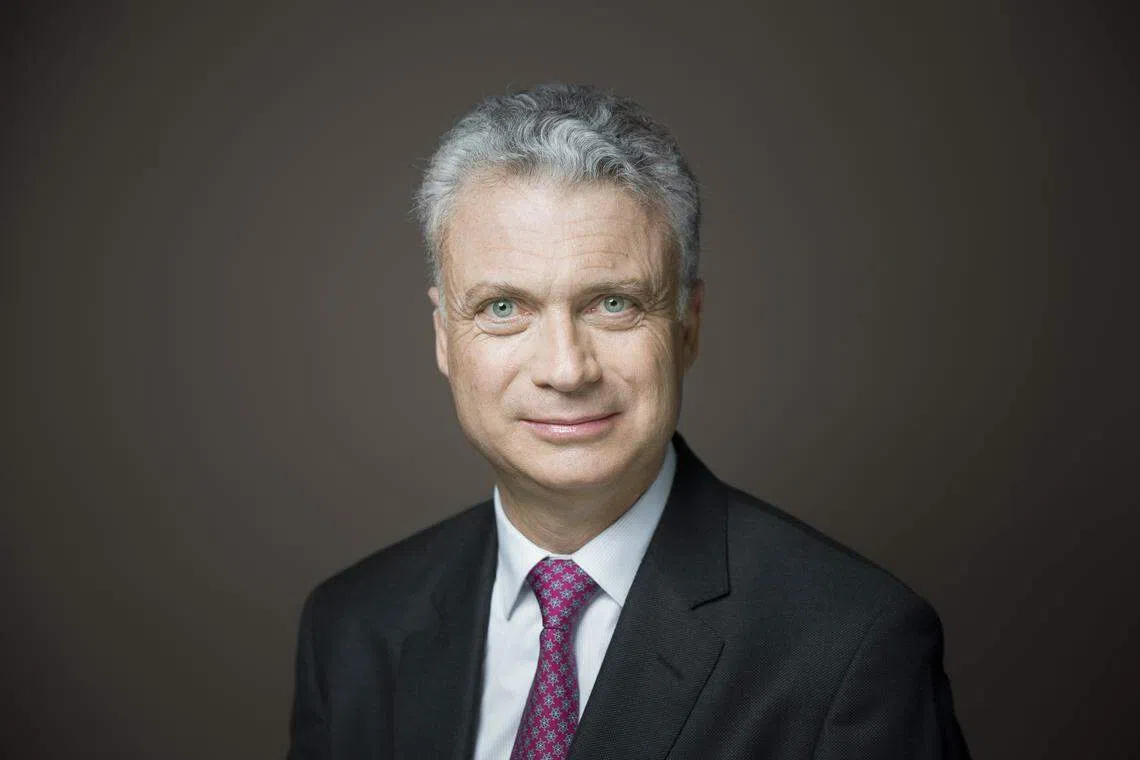
Vincent Lecomte, chief executive of BNP Paribas Wealth Management, said: “2021 was a record year for us in Asia. Wealth management is a strategic business for the group. The goal is not only to promote our services to entrepreneurs, families and wealthy individuals, but also to enable them to benefit from the strength of the bank.
“Revenue growth has been very substantial. We’re very focused on our key markets in South-east Asia, Singapore and Greater China including Taiwan … We’re disciplined in the way we want to grow. Our objective is not to put flags across the board, but to be seen as the bank for entrepreneurs and families in Europe and Asia.’’
Last year, the group reported a 4.4 per cent rise in revenues at 46.23 billion euros (S$65.46 billion). The wealth management business falls under the “investment and protection services’’ division, and is grouped with insurance. Assets under management for wealth management came to 422 billion euros. The group reported net asset inflows of 15.3 billion euros in 2021 for wealth management, a rise of nearly 19 per cent from 2020. The group does not give geographical breakdown of the AUM, but Asia’s share is understood to be over 20 per cent, and Europe accounts for over 60 per cent.
The positive momentum has continued in the first quarter. Group revenues rose 11.7 per cent to 13.22 billion euros. The group reported “good’’ net inflows into wealth management; AUM however is flat at 421 billion euros.
The Asian operations are expected to benefit from the group’s strategic plan for 2022 to 2025, which sets out ambitions for growth, technology and sustainability. These are to be built on 3 key engines — technology which is seen as the heart of the model; sustainable finance and ESG at scale; and employee development. In the area of technology, BNP Paribas Design Factory Asia employs 9 people and to date has rolled out a number of innovations including the myWealth platform which includes trading functions, proprietary research and portfolio analysis. There is also Chat’, a communication channel which incorporates WhatsApp and allows clients to place orders and receive investment advice. Another application is myImpact, a profiling tool to help clients understand their philanthropic and sustainability preferences.
In terms of employee development, Lecomte says the group invests “massively’’ in its Wealth Management University programme. “Beyond traditional compliance, investment skills, ESG and digital are part of the journey for our staff. It’s one of the main success factors to support our growth in the region ... Quality of people is essential, not quantity.’’
As a group, BNP Paribas’ strategic plan aims to hire 20,000 a year. It also aims to facilitate internal mobility by helping around 20,000 staff to work in other business lines and territories after 3 years in their first role.

In the pillar of sustainability, the strategic plan sets out 5 priorities, including support for the transition to net zero; natural capital and biodiversity; and sustainable savings and investment. By 2025, it aims to mobilise 350 billion euros through loans and sustainable issuances to help further the net-zero transition. It also expects to manage 300 billion euros in sustainable and responsible investments. Currently, around 40 per cent of the AUM is in sustainable investments.
Lecomte said: “Sustainability is not a new focus for us, but the intensity is much greater given the high demand from our clients, particularly in Asia. About 70 per cent of our clients in the region are willing to invest in sustainable products, and we’ve seen a massive shift among entrepreneurs to invest sustainably as well.’‘
BNP Paribas has also developed a sustainability rating framework for financial instruments called the “clover rating’’, where assets are tagged based on their sustainability level, ranging from 0 to 10. For funds and asset managers, the criteria for assessment include ESG practices and exclusions, voting and engagement policies, and impact. The clover rating sets out to enable comparisons of financial instruments including equities, bonds and ETFs.
Decoding Asia newsletter: your guide to navigating Asia in a new global order. Sign up here to get Decoding Asia newsletter. Delivered to your inbox. Free.
Copyright SPH Media. All rights reserved.
TRENDING NOW

Temasek’s Wan Chee Foong to helm PIL, Lars Kastrup to be board adviser

Chagee, Mixue and Luckin won the market. Sustaining their edge is the harder part

He built the Vingroup empire. Now South-east Asia’s richest man is handing some key roles to his sons
One-third of Singapore-listed firms at risk in severe AI downturn: MAS

