

Bringing sustainable period products to women in poverty
Singapore-based start-up Freedom Cups looks to grow with the flow.
Lisa Kriwangko
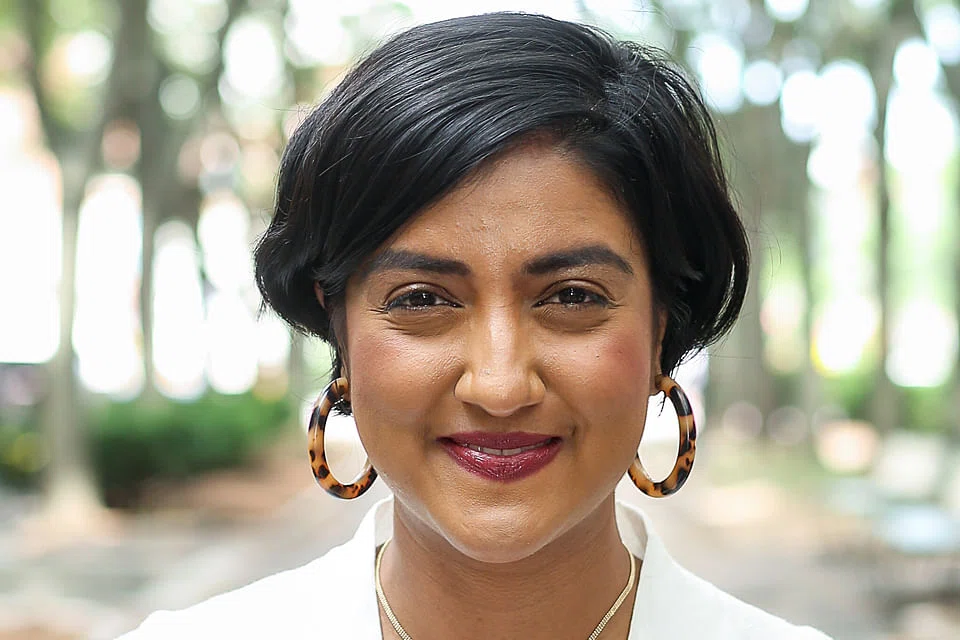
"IT WAS a great big mix of ethnicities, nationalities, and languages in the room. But we had one thing in common. Each of us bled once a month," Vanessa Paranjothy says, recounting one of Freedom Cups' beneficiary outreach sessions.
Period education and de-stigmatisation are just 2 of the many goals sisters and co-founders Vanessa, Rebecca and Joanne Paranjothy had set for the company when it first started.
Founded in 2016, Freedom Cups manufactures and sells eco-friendly period products, focusing mainly on menstrual cups.
Manufactured in the United States, the Food and Drug Administration (FDA)-registered and medical-grade silicone cups come in 2 sizes: mini (25 ml) and grande (35 ml).
Priced at S$33 each, they ship worldwide and are mostly sold online to keep overheads low. In Singapore, the cups can also be found at retail stores such as Watsons, Isetan and The Green Collective.
The Singapore-based startup operates on a buy-one-give-one (B1G1) model - for every menstrual cup purchased, Freedom Cups donates another to a woman in an underprivileged community across Asia and Africa.
"The average price of a menstrual cup when we started was way out of the financial reach of most women in under-resourced communities. The B1G1 model allowed us to work with these women while still remaining financially independent and sustainable," Paranjothy says.
To grow with the flow
When Paranjothy and her sisters started working on the project some 7 years ago, menstrual cups were "virtually unheard of" in Singapore, she says.
After 6 months of ideation, research, and liaising with manufacturers in China, the team got their first batch of sample products made.
But getting volunteers to try the products and provide feedback on the various cup models proved to be an "uphill task", Paranjothy says.
Freedom Cups eventually moved its manufacturing to the US in order to obtain FDA approval.
The company also took "longer than expected" to secure its place in brick and mortar retailers, as many people were under the impression that reusable menstrual products may not be commercially viable in Singapore, she adds.
Women, especially in Asia, were not used to "internal methods" such as tampons and period cups. Conversations about periods were also not as common and open as they are now.
"I find that in a lot of settings women are conditioned to not have agency over their bodies, to not be curious or not want to go and explore, because a modest woman shouldn't or wouldn't," she says.
The challenge at the time was to raise understanding on the safety and benefits of menstrual cups.
To do this, the company featured an instruction page explaining proper cup insertion, removal and storage methods on its site. It also included answers to frequently-asked questions that people often had.
Supporting cycle sisters
Freedom Cups also aims to bring safe and affordable sanitary products to communities where poverty poses a barrier.
In Nepal, the company donated cups to students in a boarding school to ease their families' financial burdens on sanitary products.
The girls had previously used cloth for their periods, but opted for the more costly option of disposable pads due to the stigma and shame that came with hanging their cloth out to dry in a co-ed environment, says Paranjothy.
But access and affordability of pads are not the only elements of period poverty.
Freedom Cups is currently working with a village in India where the only means to dispose of such products is to throw them into a small lake behind their settlement.
"They have reported that the lake is hard to go near because of the stench," Paranjothy says.
She also recalled her visit with a community of sugarcane plantation workers in the Philippines, where due to a lack of waste management facilities, women had to resort to burying used pads in their backyards.
"They had very little choice in this, because it was recounted to us that there could be stray dogs running around with the pads if they did not dispose of it as such. And the women were extremely embarrassed by this," she says.
Their next best option was to put the pads into plastic bags and burn them in their backyards where their wells - used to draw water for cleaning and drinking - are located.
This village also saw women often missing work over the course of their periods because there were no toilets to properly clean themselves out in the fields where they worked from morning till evening.
Paranjothy says the cups presented a practical solution because they can be used for 8 to 10 hours without having to be changed out.
"Menstrual cups also don't produce any waste," she says.
Bleeding green
Thousands of disposable period products are used by a single person over a time of 5 to 10 years, which is the average duration that a single menstrual cup lasts for.
Pads are also estimated to contain 90 per cent non-biodegradable plastic, which end up in landfills, beaches and seas.
According to research from the Liverpool School of Tropical Medicine, in that 10 years, a period cup produces about 0.4 per cent of the plastic waste generated by single-use pads and 6 per cent of that from tampons.
Compared to period underwear or reusable cloth, Paranjothy points out that menstrual cups generally require less water to wash. They also allow women to swim or participate in water sports.
That said, Paranjothy is encouraged to see that conversations around periods are progressing towards sustainability.
She says: "We have been pleasantly surprised by how fast attitudes are changing. So many women today are aware of how the products they are using are impacting both their bodies and the planet."
When distributing cups to the beneficiary communities, Freedom Cups also conducted question-and-answer sessions to teach menstruators about their periods and bodies. "But then it becomes a conversation, because we try to learn from them as much as they might learn from us," Paranjothy says.
She also notes that receptivity rates in the communities have been "very high" because the women quickly see pragmatic value in the cups.
"Coming from where we come from, we thought that culture and stigma around such internal products might hold women back. But what we have found is that, women are very practical, especially when you don't have options," she says.
"It's easier to talk to someone in an under-resourced community about the benefits of the cup and convince them to make the swap, than it is talking to someone like my fellow Singaporean," she adds.
Although much progress has been made, Paranjothy remains bullish on the company's growth and social impact.
She notes that Freedom Cups' largest market is currently in Singapore, though she declined to reveal their volume of sales, and she hopes to further drive efforts globally.
After years of mainly organic growth funded by their family, the company is currently exploring ways to expand its product lines and raise its first round of financing.
As travel restrictions ease, Paranjothy is also excited to reconnect with the beneficiary communities in the flesh and start new distribution projects in more countries.
TRENDING NOW

Britain’s mansion tax shows the difficulty of targeting wealth

Once staunchly pro-China, Malaysian Chinese businesses are now distancing themselves from Beijing

The only common thing in S-E Asia is that we all eat rice: Cisco’s Asean president

Singapore data centre operator DayOne opts for US IPO at likely US$20 billion valuation

