

Caught up in crypto fever? Heed lessons from 2022
This weekend’s Bitcoin halving may prompt a bull market, but risks remain
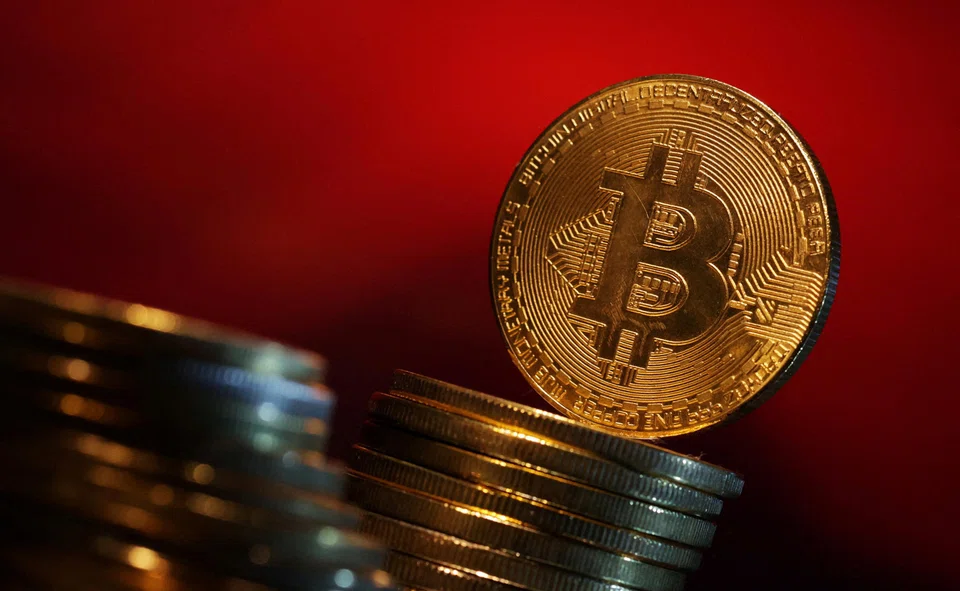
THIS has been a comeback year for cryptocurrencies. In the first quarter, the US approved 11 spot Bitcoin exchange-traded funds (ETFs), while Bitcoin prices hit an all-time high.
This week, Hong Kong gave “initial approval” for asset managers to launch Bitcoin and Ethereum ETFs. Even meme coins and non-fungible tokens (NFTs) – which seemed to have collapsed just over a year ago – have rebounded, some with eye-watering returns.
Now, the industry is crossing another milestone: the fourth “Bitcoin halving”, set to happen this weekend.
The Bitcoin blockchain code stipulates that the supply of new Bitcoin gets halved every four years or so.
In Singapore, anticipation for the halving and its impact on cryptocurrency prices has hit fever pitch. This week, Singapore was the fifth highest country for searches of “Bitcoin halving” as a proportion of all searches, according to Google Trends. For searches of “Bitcoin price”, the Republic ranked first.
The frenzy is understandable, as the previous three halvings showed a pattern of heightened market activity and price rallies.
But these rallies were also followed by a correction phase. In some cases, this exposed fundamental flaws in how the industry operated and meant significant losses for cryptocurrency investors.
Hence, while many view the fourth Bitcoin halving as the start of another bull market, such optimism should be balanced with the lessons learned from past halvings.
A four-year cycle
Assuming that Bitcoin demand remains constant or increases when the halving happens, the law of supply and demand indicates that prices should theoretically rise.
Beyond price effects, previous Bitcoin halvings mark shifts in the evolution of cryptocurrency and the broader blockchain ecosystem, ever since the first Bitcoin was mined in 2009.
The first halving in 2012 attracted Bitcoin’s earliest proponents, but cryptocurrency remained a niche technological curiosity.
By the second halving in 2016, mainstream awareness of cryptocurrency and blockchain technology had risen. The world’s leading derivatives marketplace, CME Group, launched its Bitcoin price indices later that year.
The landscape had transformed dramatically by the third halving in 2020. Retail participation surged as meme coins, NFTs and user-friendly cryptocurrency applications proliferated.
In 2021, cryptocurrency and blockchain-related firms in Singapore raised US$1.48 billion, accounting for almost half of all funds raised by domestic fintechs that year.
Thawing from the crypto winter
Everything changed in 2022. The collapse of high-profile cryptocurrency exchanges and hedge funds triggered what arguably remains the industry’s largest crisis of confidence to date. By year-end, over US$2 trillion in cryptocurrency market capitalisation had been wiped out, badly burning many investors.
However, it is important to consider that these collapses were not failures of blockchain technology. Instead, they were a result of poor corporate governance, risk management and liquidity protections, with outright fraud in some cases.
These issues are not unique to cryptocurrency. In fact, they are the root causes of some of the largest downfalls in the history of traditional finance.
These corporate downfalls typically spurred a wave of regulatory reform to prevent such events from happening again. The cryptocurrency world is no different.
After 2022, regulators in key financial hubs began imposing new requirements on cryptocurrency platforms – forcing them to either meet the standards expected of other regulated financial institutions, or wind up entirely.
The Monetary Authority of Singapore (MAS) imposed user protection and financial stability-related requirements on digital payment tokens service providers. Hong Kong introduced requirements on onboarding, insurance, and retail participation for virtual asset service providers.
Far from sounding the industry’s death knell, crypto’s worst crisis triggered a long-overdue transformation into a more robust and professionally run ecosystem.
Buyer beware
Despite these ecosystem-wide improvements, no platform is risk-free. Investors who still wish to trade cryptocurrencies should be highly selective about the platforms they use.
Some investors may avoid centralised entities altogether and shift to decentralised exchanges: blockchain-based marketplaces where smart contracts establish prices and automatically facilitate trades. These mitigate some of the earlier-mentioned human issues and give investors more control over their assets.
However, using such exchanges is technically complex and comes with new risks such as smart contract programming errors. Currently, less than 30 per cent of all cryptocurrency transactions occur on decentralised exchanges, with centralised platforms remaining preferred.
Investors relying on centralised exchanges should conduct due diligence. A good starting point is checking if the exchange is licensed in a reputable financial hub, as this could provide clues as to its credibility and ability to safeguard investor assets.
In Singapore, investors can check MAS’ Financial Institution Directory to see what licences their preferred exchange holds.
Investors can also scour online material for indications of an exchange’s robustness or lack thereof. Some exchanges will highlight their audited certifications, attesting to the adequacy of infrastructure and internal controls.
It is also worth assessing whether the exchange’s board and management have extensive relevant experience in financial markets.
And investors should check if their preferred exchange segregates client assets from the exchange’s assets. This ensures that if the exchange winds up, investors remain the beneficial owners of their cryptocurrency holdings.
The fourth Bitcoin halving is arguably unlike the previous three. It takes place after the crypto world, having learned the lessons of 2022, has begun a paradigm shift towards becoming a professionally run asset class, akin to its traditional finance counterparts.
This has prompted many professional investors – including private wealth, family offices and traditional financial institutions – to overcome their initial scepticism and begin incorporating cryptocurrencies into their portfolios and service offerings.
This has a flywheel effect where such investors accelerate the ecosystem’s evolution towards greater professional management, in turn further enhancing its appeal. This transformation – along with the influx of talent and capital it will draw – will surely mark the comeback for cryptocurrencies.
The writer is chief executive officer of DBS Digital Exchange
TRENDING NOW

ComfortDelGro appoints two new independent directors

Once staunchly pro-China, Malaysian Chinese businesses are now distancing themselves from Beijing

NoonTalk needs continued financial support from CEO Dasmond Koh, auditors warn

DP Architects sets the benchmark for sustainability disclosure and design

