

China’s private equity trailblazer Fang Fenglei faces doubts on returns, succession
After weak returns, slow dealmaking and leadership churn, Hopu sees backers Temasek, GIC and CIC rethink support
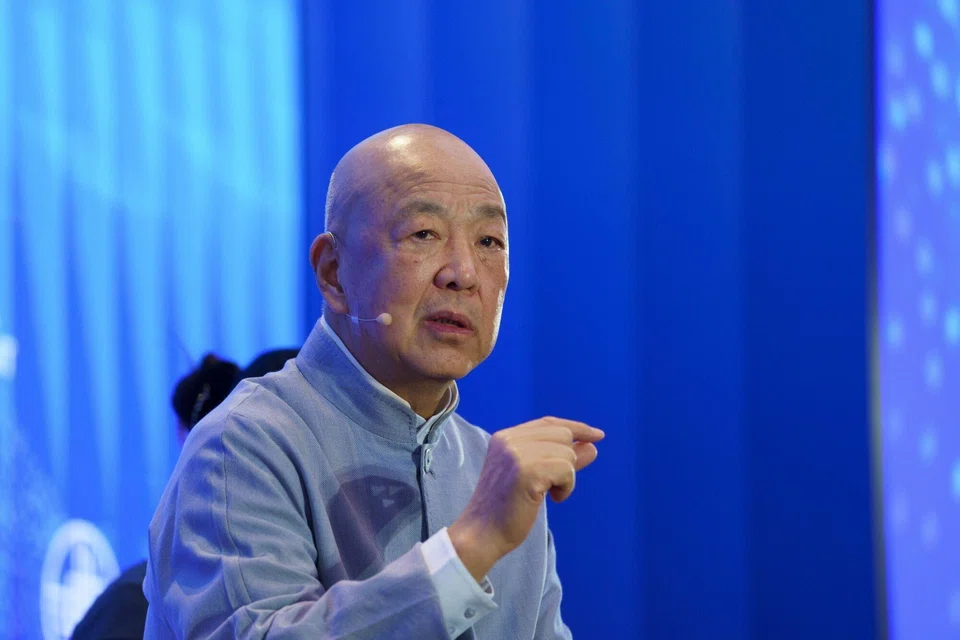
[HONG KONG] For years, Fang Fenglei was Wall Street’s go-to fixer in China – a partner to heavyweights like Goldman Sachs Group who built one of Asia’s most prominent private equity firms.
Now, after a stretch of mediocre returns, subdued dealmaking and leadership churn at his Hopu Investment Management, even longtime backers such as Temasek Holdings, GIC and China Investment Corp (CIC) are rethinking their commitments, according to people familiar with the matter.
As Hopu prepares to raise US$1.5 billion to US$2 billion for a new fund in 2026 under the direction of Fang’s handpicked successor – his son-in-law, Gunther Hamm – the firm has come to epitomise the challenges facing Asia’s founder-led private equity shops in an exceedingly tough environment for fundraising. The days of abundant capital and outsized profits from China are gone, and ageing rainmakers are handing over the reins to younger leaders, with mixed results.
“When you have a change of leadership, investors get nervous,” said Hong Kong tycoon Richard Li, who is an investor in a small Hopu growth fund that Hamm manages. Li said it’s not the first time that Fang has overcome challenges, and that it will be important for Hopu to raise fresh capital from other blue-chip investors. The Hong Kong billionaire said he has not decided if he will invest in the firm’s next fund.
Hopu has pre-closed an initial investment for the new vehicle, called Fund IV, of several hundred million US dollars. Prior to that, the firm last closed a flagship US dollar fund in 2018 after raising US$2.63 billion. Mediocre returns from that vehicle and the fund preceding it, and departures of some of the firm’s senior leaders and former partners have made some investors wary, said people familiar, who asked not to be identified discussing private information. Hopu also has not made significant new investments since mid-2022, the people said.
Many global asset allocators have scaled back their China exposure due to concerns about its slowing economic growth and heightened geopolitical risk. Some are still nursing losses from Chinese investments made years ago. In Asia, many private equity investors have also indicated they won’t cough up fresh capital until they get money back from older-vintage funds.
Fang, a quintessential power broker who is now 73 years old, is known for a relationship-based style rooted in China’s business and political networks. Around three decades ago, he helped start investment bank China International Capital Corp with Morgan Stanley as a founding investor.
In 2004, Fang helped Goldman Sachs establish a Chinese securities venture that he oversaw as chairman. He founded Hopu in 2007, and the firm quickly raised US$2.5 billion for its maiden fund from Goldman, some of the Wall Street firm’s partners, Temasek and other foreign investors.
Hamm, a 45-year-old American, has a more direct, Western-style approach to managing and dealmaking that some Hopu veterans have chafed at, according to people familiar with the firm’s internal dynamics.

A former investment banking analyst at JPMorgan Chase, Hamm moved to China in 2007 and in 2010 joined a domestic private equity firm, CDH Investments Fund Management, following a recommendation from Fang, people familiar said.
He then worked at Hillhouse Investment Management for a little over a year before joining Hopu in 2017. Hamm rose quickly through the firm’s ranks, becoming a partner in 2021 and co-president in 2023. The executive who shared the role stepped down in May 2025 – leaving Hamm as sole president – and left Hopu at year end, according to people familiar with the firm.
Hamm’s swift elevation has stirred tensions within Hopu. Some staffers question whether he can revive morale and bring in profitable deals given his limited local ties compared with previous senior leaders, the people said.
In an interview with Bloomberg News, Hamm said the firm has been “laser focused on the performance of the business” over the past few years and on monetising its investment portfolio. “Returning capital productively to our investors is the best demonstration and people want to see that,” he added.
Fang said in a separate interview that he has no intention of retiring, and that Hopu’s investors call him the firm’s “super key man.” He said he believes that cultivating and elevating talent from within the firm is better than hiring senior executives from the outside, because it fosters greater loyalty and stability.
Fang also said Hopu’s lack of significant new investments in the past few years was a good thing, as markets were highly volatile. “Under these circumstances, not investing is the best investment,” he said, adding it helped the firm avoid losses from sectors such as Chinese tutoring and Internet platform companies.
Returning cash
Hamm said a big priority in 2025 was returning money to investors in Hopu’s existing funds. Private equity funds typically have a lifespan of seven to 10 years; they deploy cash during the first few years and return capital as they exit investments, usually starting around the sixth year.
Hopu’s 2018 flagship fund – known as Fund III – has deployed a little over US$2 billion after deducting fees and expenses totalling US$356 million, according to an internal document seen by Bloomberg News.
As of March 2025, it had generated about 1.25 times its capital and returned 17 per cent of investors’ money, according to Bloomberg calculations based on figures in the document.
The firm has since stepped up the pace of distributions. It said in a November letter that by end-2025, Fund III’s investors will have gotten back 66 per cent of what they invested, thanks to a roughly US$1 billion distribution over the course of the year. The fund’s net multiple on invested capital improved to 1.5 times in the third quarter, according to a person familiar with the matter.
Recent stock market gains helped. The firm sold part of its stake in insurer FWD Group Holdings, which went public in Hong Kong in July. Some cash also came from a profitable investment in Ceva Animal Health, a French maker of veterinary medicines and vaccines, which was partially rolled into a new continuation fund vehicle, Hamm said.
About half of the 21 investments in Fund III’s portfolio were flat or underwater as of March, according to the internal document. Ceva – an investment Hamm led – and FWD have been its most profitable bets.
Leadership churn
Hopu has cycled through senior leaders. Aside from Fang, the original managers of its first three flagship funds have all departed, according to people familiar.
The firm has focused largely on technology, logistics, consumer and financial services deals in China. Its 2014 investment in warehouse operator Global Logistics Properties – in which Hopu led a US$2.5 billion consortium that included Chinese state-owned enterprises – became its defining success. GLP China is preparing for a public listing in 2026, according to the firm’s recent investor letter.
But the performance of Hopu’s second flagship fund, which closed in 2014, has been less impressive. As of March 2025, Fund II had delivered a modest 1.19 times its US$1.8 billion in invested capital including fees, according to Bloomberg calculations based on figures in an internal document. It has returned more than 60 per cent of investors’ cash after generating profits on 12 of its 19 investments, the document showed.
Its performance was dragged down by a US$310 million investment in New Age African Global Energy, an oil and gas company that the fund has largely written off, according to the document. Hopu’s Fund III also invested US$50 million in New Age.
One of the original managers of Fund III was Lau Teck Sien, a Temasek alum. Lau was also Hopu’s chief investment officer, but he disagreed with Fang over the timing of investment exits and was sidelined, according to people familiar with the matter. Fang in 2018 recruited Lee Zhang, a former Asia head of Deutsche Bank and ex-senior executive at Industrial and Commercial Bank of China, and made Zhang Hopu’s co-chairman.
Frictions grew when Lau and another then-Hopu partner Cliff Chau, a former CIC managing director, explored carving out a separate pool of partners’ capital for Fang to invest from Beijing – instead of having him deploy clients’ money in ways that could affect the performance of Hopu’s flagship vehicles, according to people familiar.
Fang pushed back, and in 2021 tried to pressure Lau and Chau into signing documents that would hand him management control, the people said. The duo then told staffers during a conference call that Fang would be removed from decision-making to safeguard the fund, the people familiar added.
The internal dispute was eventually settled privately. After years of tension, Lau and Chau left Hopu in 2023. That year, Chinese authorities opened a graft investigation into Zhang in connection with his time at ICBC. He was prosecuted in 2024 and subsequently sentenced to death, with a two-year reprieve that could change the sentence to life imprisonment.
With the top leaders gone, Hamm gained full control to steer Hopu.
The firm’s investment team, which had peaked at 49 individuals at the end of 2021, shrank by roughly half as Hopu moved away from venture capital and other strategies to focus on buyouts through its main fund. All the managing directors on that team have either quit or were forced out in the past two years, according to people familiar with the matter.
New hires
The investment team has since grown to 36 people following 11 hires in 2025, according to the firm. Hopu said its overall headcount stands at 80, close to the level of a few years ago. Many of the recent additions were junior hires, according to the people familiar.
Whenever there is new leadership, “you are always going to try to add people and there will inevitably be some people who are asked to leave or choose to leave. I don’t view that as a problem per se,” Hamm said. Several younger partners have helped fill the void left by the old guard.
People who have worked closely with Hamm said he is hard-charging, meticulous and works long hours, sometimes doing portfolio reviews on weekends. Junior staffers routinely prepare client-meeting scripts for him that include greetings, data points, recaps and negotiation lines in short and long formats, the people said. During one client meeting a few years back, Hamm introduced himself as Fang’s son-in-law, which struck the investor as odd, according to that individual.
Hopu is pitching its next flagship vehicle, Fund IV, as an Asia fund that includes China, as opposed to a China-focused private equity fund. The firm is also planning to base its headquarters in Singapore, and is awaiting approval for a licence from the Republic’s financial regulator, according to the investor letter.
In mid-November, close to 100 individuals attended Hopu’s annual meeting in Hong Kong, including potential investors not currently in its funds, Hamm said. Fang also took the stage at the event, and the two men talked about how the firm can acquire more overseas investments, buy assets from multinationals in China, and take controlling stakes in companies.
Hamm said the founder remains “very highly engaged” with the firm, its investors and the companies Hopu is invested in. “Our chairman is still a huge resource for us.” BLOOMBERG
Decoding Asia newsletter: your guide to navigating Asia in a new global order. Sign up here to get Decoding Asia newsletter. Delivered to your inbox. Free.
Share with us your feedback on BT's products and services
TRENDING NOW
Malaysian king buys stake in Singapore-listed mining firm expanding into rare earths

Grab CEO’s wife Chloe Tong on life with Anthony Tan and finding her purpose

Once staunchly pro-China, Malaysian Chinese businesses are now distancing themselves from Beijing
Longer wait times expected as S’pore healthcare institutions report system disruptions

