

Consider Chinese dividends for your portfolio in 2026
The macro picture strengthens the case for state-owned enterprise stocks
A QUIET, powerful engine of wealth creation has been humming along in recent years, largely ignored by the mainstream narrative.
Tucked within Hong Kong’s Hang Seng Index, which has gone through ups and downs over the past five years, a select group of stocks has delivered a masterclass in consistent performance in terms of decent price returns and dividend yields year after year: Hong Kong-listed high-dividend Chinese state-owned enterprise (SOE) shares.
Decent dividend yield and price returns
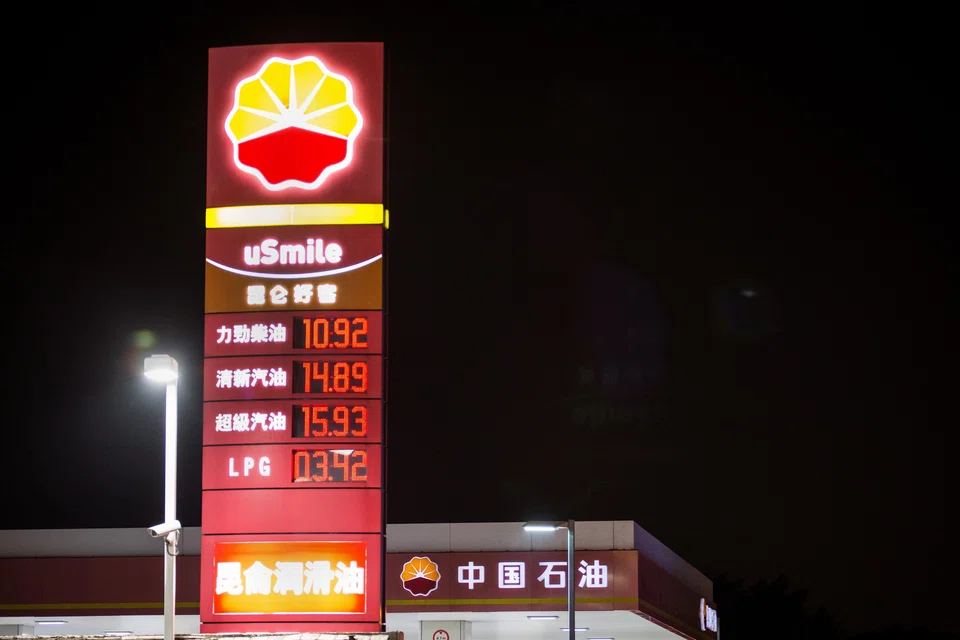
The poster children for this thesis are, perhaps counter-intuitively, the titans of China’s oil and gas sector. While the global energy sector is dismissed as cyclical and politically fraught, China’s state-owned energy giants have been financial powerhouses.
They have generated an average dividend yield of nearly 6 per cent – a number that warrants attention in a world of declining interest rates.
The story gets better. This group has registered annualised price return exceeding 20 per cent over the past five years.
This consistent upward trajectory in share prices, occurring even as the oil price itself has been volatile and largely on a downtrend, requires an explanation. How has this decoupling been achieved?
State-owned enterprises’ reform
The answer lies in the reform in SOEs initiated by the Chinese authority. The old perception of bloated, inefficient state-run companies is outdated. Under a mandate from Beijing to enhance shareholder value, these entities have embraced a new era of corporate stewardship.
Operational efficiency, including steady output growth, is no longer a buzzword but a key performance indicator. This relentless focus on organic growth, combined with rigorous cost-cutting, has created an insulating effect to mitigate the nearly 20 per cent decline in oil prices year to date.
Simultaneously, the SOEs’ commitment to shareholders is now explicit and accelerating. These are not companies hoping to return cash; they are companies programmed to do so. They have not only demonstrated a track record of steady dividend payouts, but have also proactively revved up their future payout targets.


This is a clear signal that returning cash to shareholders is becoming a core pillar of their corporate identity, directly addressing the historical governance discount associated with SOEs.
More attractive than fixed deposits
Hong Kong-listed (H-shares) high-dividend SOEs offer higher dividends than even fixed deposits. This high-yield proposition is music to the ears of mainland Chinese investors.
Onshore fixed deposit rates have dwindled to sub-2 per cent, with the People’s Bank of China expected to maintain a low interest-rate environment into 2026. This has triggered a growing hunt for yield.
The Southbound Stock Connect channel has seen a record-breaking US$177 billion of funds from mainland China into Hong Kong equities so far this year. A meaningful portion of these funds has been strategically earmarked for high-dividend H-shares.
These high-dividend stocks, which are no strangers to mainland investors, are natural and trusted beneficiaries of this relentless capital flow.
More attractive than A-shares
A savvy investor might ask: These companies are dual-listed. Why not simply buy their A-shares listed in mainland China? The answer lies in the valuation gap.
The H-share market, more influenced by global institutional capital, consistently prices these companies at a discount to their A-share counterparts. This structural inefficiency is a gift to the discerning investor.
It means that for the same company, with the same assets and the same dividend in renminbi, the H-share offers a yield that is typically one to two percentage points higher than the A-share counterpart.
The H-shares, because of their income stability, also tend to outperform growth stocks which are vulnerable to fund rotation when geopolitical tensions rise.
Looking ahead to 2026, the macro picture strengthens the case for high-dividend Chinese SOE stocks. Global growth is moderating, equity volatility is rising, and cash is becoming a less attractive asset as policy rates fall. In this environment, investor appetite will pivot towards quality: companies with visible earnings, sustainable dividends and tangible price return potential.
The Hong Kong-listed non-financial, high-dividend SOE shares, spanning energy, communication services and construction, are well positioned to meet this demand.
The writer is chief investment officer for North Asia at Standard Chartered’s wealth solutions unit
Decoding Asia newsletter: your guide to navigating Asia in a new global order. Sign up here to get Decoding Asia newsletter. Delivered to your inbox. Free.
Share with us your feedback on BT's products and services
TRENDING NOW

Once staunchly pro-China, Malaysian Chinese businesses are now distancing themselves from Beijing

Cliff Tan has 7 million followers and a 4-month waitlist. Why won’t he expand his business?

Could stablecoins be the future of money?

Grab CEO’s wife Chloe Tong on life with Anthony Tan and finding her purpose

