COP27 must follow through towards a just transition
Making progress on the issue of loss and damage is fundamental to enabling a just transition to a resilient and more equitable net-zero world
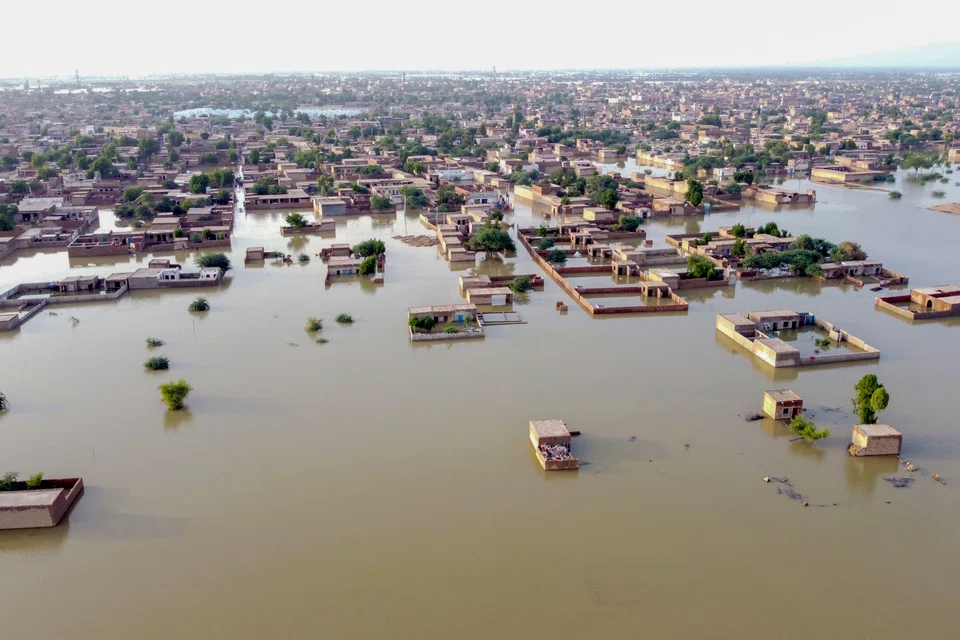
IN THE run-up to the just-ended United Nations Climate Change Conference (COP27) in Egypt, climate justice had been high on many nations’ agendas, with three words – loss and damage – dominating the pre-conference discourse.
The issue of loss and damage – whereby those nations impacted most by the effects of climate change (that is, the Global South) are compensated by those historically responsible for its amplification (the Global North) – has long been a sticking point at annual COP negotiations.
Rich nations have traditionally pushed back against the matter to avoid debates around climate change blame and liability, but the tide appears to be turning.
There is growing pressure for the Global North to acknowledge the role it has played in changing the climate and recompense the Global South.
There have been positive steps here – Denmark recently broke the mould and committed funds specifically to loss and damage, and both the United States and European Union have said they will support talks on the issue.
Developing nations, alongside the COP27 host Egypt, pushed for a real loss and damage breakthrough at this year’s talks in Sharm el-Sheikh. The Alliance of Small Island States was set to propose a loss and damage response fund after the failure to establish a similar facility at COP26 in Glasgow.
Germany’s proposal for an insurance fund like Global Shield to allow a rapid financial response to climate impacts has been dismissed by climate campaigners as not extensive enough.
There appears to be good reason for developing nations to force this issue – developed nations’ pledge to provide a baseline of US$100 billion of climate finance annually by 2020 to assist decarbonisation efforts has still not been met, with the funding gap caused by richer nations’ failure to act expected to be closed only next year or in 2024.
What a just transition means for investors
For the conference to be a success, it is key that COP27 delivers meaningful progress on loss and damage. As climate disasters such as Pakistan’s catastrophic flooding wreak havoc, we believe developing nations are right to demand reparations and climate justice.
The Intergovernmental Panel on Climate Change (IPCC) this year highlighted the importance of accelerating progress towards a just transition, stating that sustainable development is concurrently able to enhance social inclusion.
The private sector can play a large role in financing a just transition and climate adaptation in communities that need it.
For investors, this means, among other actions, ensuring social factors are integrated into capital allocation and stewardship activities or investing in social bonds.
What else is on the COP agenda?
Progress also needs to be made on climate change adaptation and resilience, given the fact that 3.3 billion people already live in climatically vulnerable areas, according to IPCC estimates.
Even if we manage to limit the rise in global temperature to 1.5 deg C above pre-industrial levels, we are still likely to see risks to human health, livelihoods, water supplies, and food security.
Mitigation as ever would have played its part in the discussions, and again we believe there is work to do here. Nations agreed at COP26 to bolster their climate pledges, known as nationally determined contributions (NDCs), before COP27 as analyses in Glasgow (and more detailed calculations since) indicated that more needs to be done collectively to restrict the rise in global temperatures to 1.5 deg C.
A recently published NDC synthesis report from the United Nations shows that only 24 countries have updated their pledges since COP26, leaving many opportunities for improvement in Egypt.
After NDC enhancement, we believe it’s important that the conversation moves on to actual implementation.
Indeed, India, which raised the issue of climate finance at COP27, has said its updated NDC is conditional on technology and finance transfer from developed nations.
Enabling a just transition to net zero can be seen as essential if we are to optimally address climate change, since allowing inequities to persist will likely impede climate action.
Moreover, even if we were able to resolve climate change while allowing inequities to persevere, we would just be trading an environmental catastrophe for a social one.
We believe just transition principles will be key for developing nations to be able to implement the pledges made in their NDCs. If fossil fuels are to be leapfrogged in favour of low-carbon alternatives, developed nations need to provide adequate support.
Here, as with loss and damage, there is much for the Global North and private sector investors to do.
The writer is global head of sustainability research, BNP Paribas Asset Management.