

Credit Suisse renews focus on wealth management, aims to expand ‘core’ high-net-worth clientele

CHASTENED by scandal and a poor set of results in 2021, Credit Suisse is renewing its focus on its wealth-management business, with the intention to nurture the “core” segment of high-net-worth (HNW) clients whose investible assets are not as large as those of the ultra-wealthy, but who desire managed investment solutions.
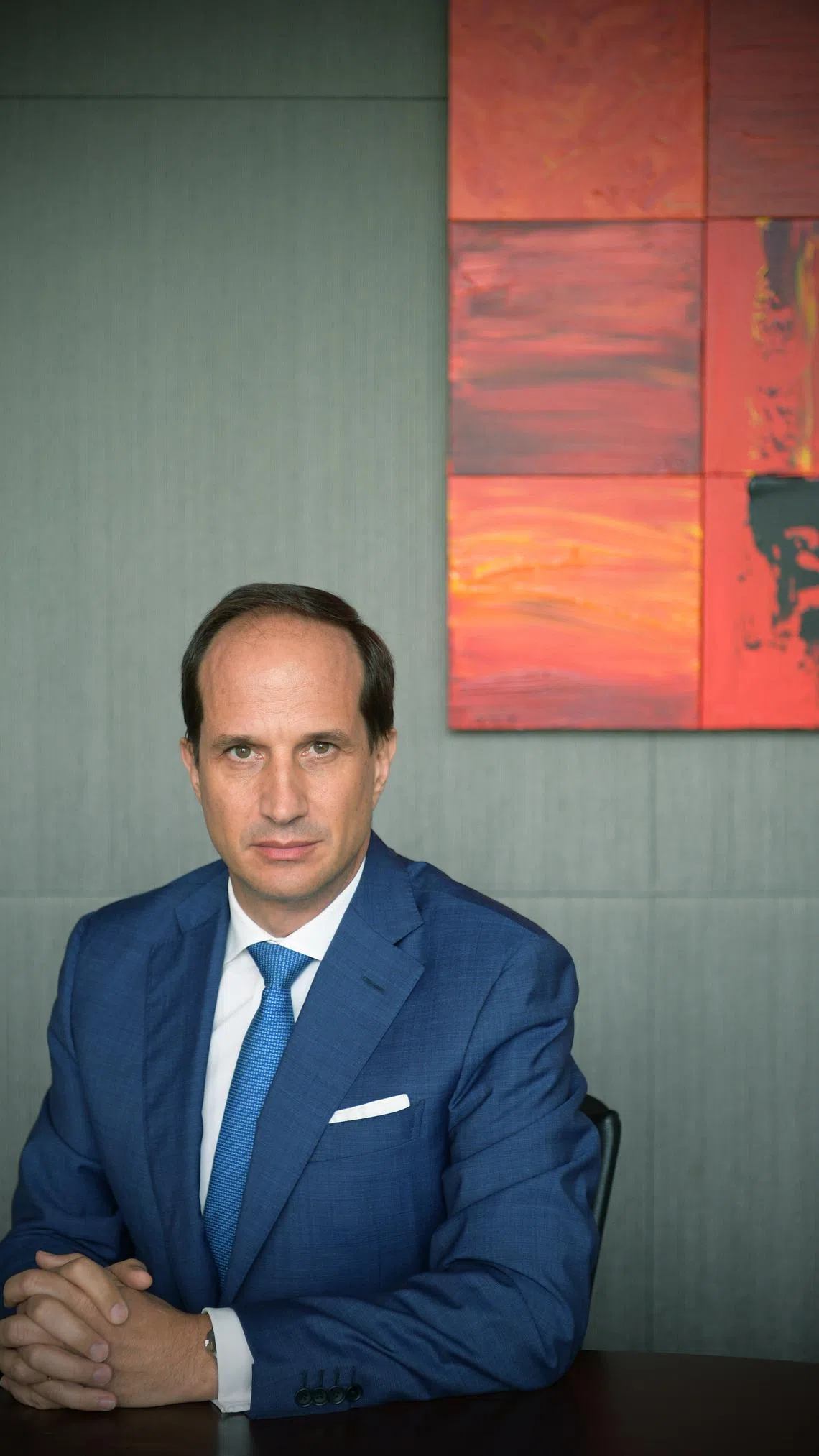
Francesco de Ferrari, chief executive for wealth management, said: “Wealth management is a long-term, client-driven business. Some of our strongest franchises were built in moments of difficulty … My priority in the first 3 months has been to define our organisational structure, select and meet all the teams.
“We have to be very disciplined around which segments of clients we cater to. We’re traditionally very strong among ultra HNW entrepreneurs … But the one segment we want to do better at is the core wealth management business, where clients tend to be professionals and their main focus is for us to help them generate investment returns.” The thresholds to be considered ultra HNW is understood to be around US$25 million, and US$2 million for HNW clients.
Credit Suisse was a sore thumb last year with a series of scandals and poor set of results, relative to other wealth management institutions which reported record results. With its exposure to collapsed investment firm Archegos Capital and supply-chain finance firm Greensill, the group reported a full-year net loss of 1.57 billion Swiss francs in 2021, compared to a net income of 2.7 billion Swiss francs in 2020. The Archegos debacle prompted the departure of a number of key executives. In January, group chairman Antonio Horta-Osoria resigned just 9 months into his role, due to repeated violations of Covid-10 quarantine rules.
In the first quarter, the group reported a 42 per cent year-on-year fall in net revenue to 4.4 billion Swiss francs (S$6.38 billion); net loss attributable to shareholders came to 273 million, compared to 252 million in Q1 2021. For the wealth-management segment, net revenues fell 44 per cent to 1.17 billion Swiss francs; the division incurred a loss of 357 million Swiss francs, compared to 978 million Swiss francs in profit in Q1 2021.
Wealth management’s assets under management (AUM) fell 6.6 per cent to 707 billion Swiss francs in Q1 2022; the group saw net new assets of 4.8 billion Swiss francs, compared to 14.5 billion Swiss francs in Q1 2021.
In efforts to “turn a new page”, Credit Suisse reorganised its business into 4 divisions – wealth management, investment bank, Swiss bank and asset management — in January this year. It is dropping its prime brokerage unit and reducing investment banking services. It will redeploy 3 billion Swiss francs of capital from investment banking into the wealth management by 2024, and also raise its capital expenditure by 35 per cent to about 3 billion Swiss francs in 2024 to invest for growth in clients, technology and talent among others.
Wealth management CEO De Ferrari is a 17-year veteran with Credit Suisse. Between 2012 and 2018, he was chief executive of private banking for the Asia-Pacific. In 2018, he left to become AMP’s chief executive, and rejoined Credit Suisse in January.
He said two-thirds of the wealth-management clientele overall comprises ultra-HNW entrepreneurs; geographically, two-thirds of the business is in emerging markets, including Latin America, Middle East and Asia. “If I compare our business to the rest of the market, our differentiating factor is our very strong tilt towards Asia. Looking at wealth management, Asia is roughly a quarter or 26 per cent of AUM; Asia is a very important growth region.”
In an “investor deep-dive” presentation on Tuesday (Jun 28), it outlined plans to focus on priority markets such as Hong Kong and Singapore.
The “core” segment of HNW clients are typically professionals who want help in managing their assets and generating returns. “The HNW business is about having better digital tools, having a dedicated offering and making sure you are able to support the relationship managers (RMs) to deliver this service to more clients.
“If you look at the characteristics of the ultra-HNW business, it would have a lot of structured lending and transaction revenues. ... In the HNW business, you tend to see more managed solutions and discretionary mandates because professionals would rather delegate investment management to someone else. So, it is more of a recurring-fee business linked to global asset allocation and discretionary mandates.” Penetration of both advisory and discretionary portfolio services is estimated at about 31 per cent among clients in the Asia-Pacific.
Two other areas offer opportunities, said de Ferrari. One is clients’ desire for sustainable investments in their portfolios. Globally, sustainable AUM grew by almost 40 per cent between 2020 and 2021. Sustainable investments’ share of AUM rose from 7 per cent in 2020 to 9 per cent last year.
“Increasingly, clients demand that their money not only generate returns, but also help to make the world a better place. On the financing side, green bonds or structures help companies finance their sustainability targets…’‘
Another opportunity is the external asset management (EAM) business, which is now structured as a global business. The EAM business caters to the needs of independent asset managers and multi-family offices, which manage portfolios on behalf of wealthy clients. “Among the long-term trends shaping the industry is the growth of independent advice. We see more multi-family offices being created and more external asset managers.
“Our estimate is that this segment will grow faster than the normal wealth-management business. And it’s increasingly about data, technology and connectivity, and being able to provide best-of-breed products. Those are areas where we are very strong. Running this business globally makes sense because you start to see family offices in Europe set up a branch here in Singapore.”
De Ferrari said that while the investment backdrop is challenging, client accounts have deleveraged since last year. While the deleveraging was forced by the Archegos losses, it may have also spared clients from steep losses due to the market down draft this year. “I don’t see a doomsday scenario in markets. But we need to reposition the business for a new normal. Markets have been very tough, but it’s not going to continue forever, and clients are very skewed towards cash. Today, clients are looking for signals to step into markets again.”






