Critical minerals are the new battlefront of energy security, says IEA chief

Average market share of top 3 mining countries for key energy materials has risen from 73% in 2020 to 77% in 2024

Summarise
Genevieve Cua
Published Mon, Jul 21, 2025 · 06:00 AM
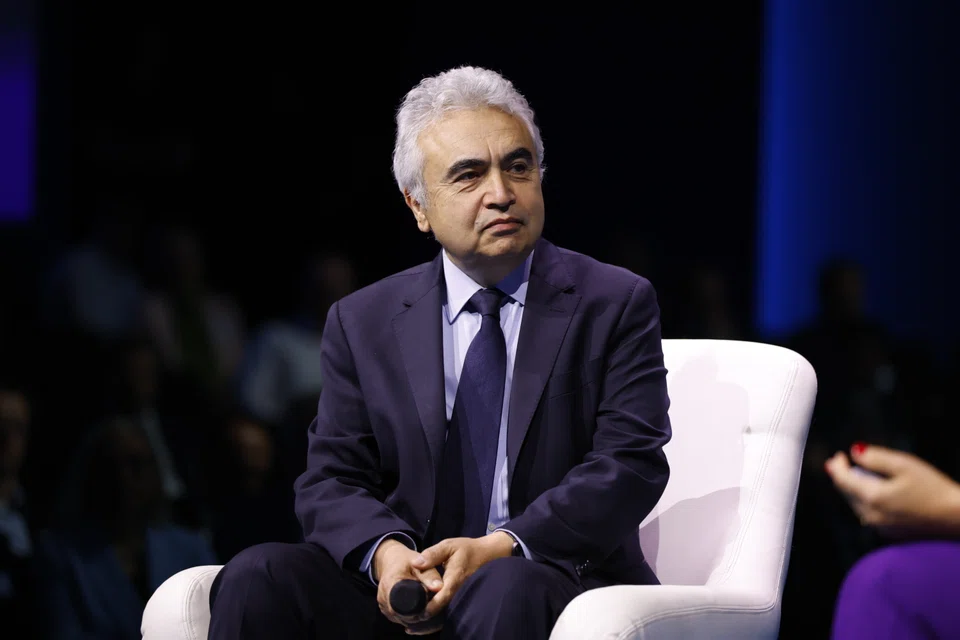
    • Fatih Birol, executive director of the International Energy Agency, said in Amundi's World Investment Forum in Paris that access to secure and clean sources of energy for data centres will determine the winners in AI.
    • Fatih Birol, executive director of the International Energy Agency, said in Amundi's World Investment Forum in Paris that access to secure and clean sources of energy for data centres will determine the winners in AI. PHOTO: AMUNDI

    [PARIS] Energy security remains a pressing issue, but the battleground is shifting from oil and gas towards critical minerals, said Fatih Birol, executive director of the International Energy Agency (IEA).

    Speaking at the Amundi’s World Investment Forum in Paris, he noted that oil is tilting towards a situation of oversupply, which has reined in its price even amid war. Weaker oil demand is also due to surging demand for electrification, particularly for data centres – and clean energy sources at that.

    “Global electricity demand is growing much faster than in previous decades. A year ago, I said we’re entering the age of electricity. Oil demand is slowing considerably.”

    Three sources are driving electricity demand – increased usage of air-conditioning; electric cars; and the boom in artificial intelligence (AI).

    In race for AI dominance, access to secure sources of power supply will be key, said Birol. “There is no AI without electricity. One medium-sized data centre consumes as much electricity as 100,000 households. Technology companies want 24/7 electricity – which we cannot afford. And they want electricity to be as clean as possible.”

    The price of Brent crude oil spiked in mid-June to US$81 after the US strike on Iran’s nuclear facilities. But it has quickly fallen since then, and now hovers at around US$69.

    “We have a lot of oil in the market, with production coming from US, Canada and Brazil… This is the new reality – a lot of oil supply and more to come, while demand is getting weaker.”

    The IEA’s July oil market report forecast world oil demand growth to rise by 700,000 barrels per day (bpd), its lowest rate since 2009 except for 2020 – during Covid. In contrast, world oil supply is forecast to rise by an average 2.1 million bpd this year to 105.1 million bpd, with non-Opec+ producers dominating growth.

    Still, the report also pointed out that price indicators belie a “tighter physical oil market than suggested by the hefty surplus in our balances”. This is due to demand from summer travel and power generation, and the accelerated supply hike from the Organization of the Petroleum Exporting Countries and its allies (Opec+) “had not had much effect”.

    Critical minerals the new frontline

    Birol expects critical minerals to be the new frontline of energy security issues, thanks to the over-concentration of almost all refining supply in less than a handful of countries – the Democratic Republic of Congo for cobalt, Indonesia for nickel and China for graphite and rare earths. According to an IEA critical minerals report, the average market share of the top three mining countries for key energy materials has risen from 73 per cent in 2020 to 77 per cent in 2024.

    IEA’s analysis of 20 energy-related and multi-sectoral minerals used in sectors such as technology and aerospace points to China as the dominant supplier of 19 of the 20 minerals, giving it an average market share of 70 per cent.

    Birol said in the conference: “In my view, we cannot solve this problem with market instruments alone. There should be government involvement in terms of using different instruments such as (forms of) guarantees… The over-reliance by the entire world (on a few countries) for critical minerals is the most important energy security issue today.”

    IEA argues in its report that public financing can help to support new refining projects, but rule-based market mechanisms are also required to support their operation. “Well-designed price stabilisation schemes, such as contract-for-differences and cap-and-floor models, can help smooth out price volatility and mobilise private investment without imposing excessive fiscal burdens,” it said.

    For now, markets appear “well supplied” for critical minerals, but risks are rising due to export restrictions. A sustained supply shock for battery metals could increase global average battery pack prices by as much as 40 to 50 per cent, IEA said.

    Meanwhile, Birol said, investment in clean energy has more than doubled in the last 10 years, but fossil fuel investment has remained the same. Capital flows into energy is estimated to rise to US$3.3 trillion this year, of which US$2.2 trillion is going into renewables, nuclear, grids, storage, low-emissions fuels, efficiency and electrification; and US$1.1 trillion into oil, natural gas and coal.

    The outsized share of clean energy investment “is a benefit of the Paris Agreement”, he said. “But of the US$2 trillion (into clean energy), 85 per cent is happening in the Western countries and China. Only 15 per cent is flowing into the emerging and developing countries which account for two-thirds of global population,” he added.

    IEA’s recently released report Energy and AI projects electricity demand from data centres worldwide to more than double by 2030 to around 945 terawatt-hours (TWh), slightly more than the entire electricity consumption of Japan today. AI is forecast to be the most significant driver of the increase; electricity demand from AI-optimised data centres is expected to more than quadruple by 2030.

    AI, however, is a double-edged sword. It can help raise the efficiency of electrical grids, increase cost competitiveness and reduce emissions. But it may also raise vulnerabilities to risks such as cyberattacks. “AI is one of the biggest stories in the energy world today – but until now, policymakers and markets lacked the tools to fully understand the wide-ranging impacts,” Birol said in a statement.