Cryptocurrencies: Just how much are they wrecking the environment?

Proponents say impact often exaggerated and highlight industry decarbonising efforts to mitigate the impact.

Michelle Quah
Published Sun, Apr 3, 2022 · 09:50 PM

    Singapore

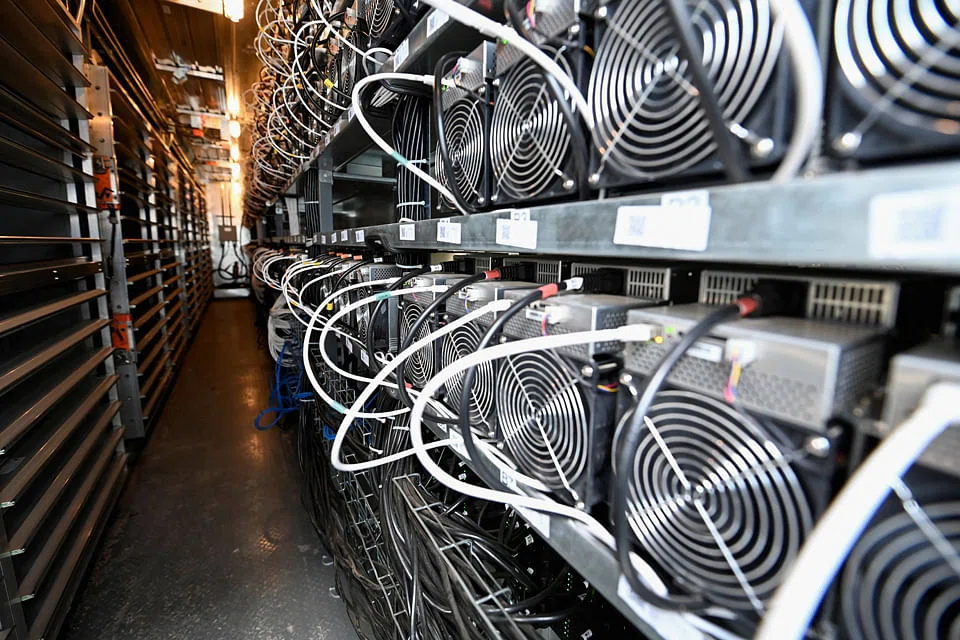
    CRYPTOCURRENCIES such as Bitcoin have grown significantly in popularity, but have also garnered much flack for the supposed damage they are inflicting on the environment. That impression comes from the fact that the mining of cryptocurrencies requires copious amounts of energy and generates hefty levels of electronic waste.

    But is the allegation that this wreaks environmental havoc fair? And is the industry doing its share to preserve the planet?

    Virtual money

    Cryptocurrencies are digital or virtual currencies secured by cryptography, which prevents them being easily copied or counterfeited.

    The most dominant cryptocurrency is Bitcoin, which came into existence in 2009 via a white paper written by a pseudonymous Satoshi Nakamoto.

    Like all cryptocurrencies, Bitcoins do not exist physically - balances are maintained on a transparent and public ledger that can be accessed by everyone, though each record is encrypted. They can be traded, and can also be used to buy goods and services in some instances.

    Due to its popularity, Bitcoin has spawned a host of other cryptocurrencies, with some of the more well-known ones being Litecoin, Ethereum, Tether and XRP.

    In Singapore, cryptocurrencies are regulated as digital payment tokens (DPTs), which refer to any cryptographically secured digital representation of value that is used or intended to be used as a medium of exchange.

    Environmental imprint

    The controversy surrounding the industry's environmental impact arises from the energy-intensive processes needed to mine cryptocurrencies.

    Cryptocurrencies such as Bitcoin and Ethereum have to be "mined" in order to put new units into circulation, to validate the transactions and to maintain the ledger of transactions. This is done through solving extremely complex math problems, which require the use of high-end computing and vast amounts of electricity.

    According to digieconomist.net, which maintains the Bitcoin Energy Consumption Index, each Bitcoin transaction uses 2,165.46 kilowatt-hours (kWh) of electrical energy - equivalent to the power consumption of an average US household over 74.22 days.

    On an annual basis, Bitcoin mining uses a total of 204.50 terawatt-hours (TWh) of electricity, comparable to the power consumption of Thailand, it says.

    The Cambridge Bitcoin Electricity Consumption Index has a lower estimate: it says Bitcoin uses about 136.38 TWh of electricity every year.

    But that's not all. Digieconomist claims each Bitcoin transaction uses 1,207.81 kilogram of carbon dioxide equivalent per kilogram (kgCO2), which is equivalent to the carbon footprint of 201,301 hours of watching YouTube, and generates 361.70 grams of electronic waste, or the equivalent of 2.21 iPhones 12 or 0.74 iPads.

    These numbers are expected to increase, as user adoption of cryptocurrencies grows.

    "There is no denying that computing takes energy," says Amar Gautam, founder and chief executive officer of fintech company HyperLinq, which is behind institutional-grade crypto trading terminal HyperTrader.

    "We all know the electricity currently used to mine cryptocurrencies is not 100 per cent renewable. The concerns are genuine; (but) the cryptocurrency industry is not alone to blame. I see this happening across all sorts of industries."

    Exaggerated claims?

    Cryptocurrency proponents also point out that the environmental impact is often exaggerated or misrepresented, and that not enough attention has been given to the positive action being taken by the industry.

    A Harvard Business Review article, for instance, claimed that Bitcoin consumes as much energy as Sweden or Malaysia. Raks Sondhi, managing director of Independent Reserve - a fully licensed cryptocurrency exchange in Singapore - says: "The reality is that Bitcoin's energy consumption is a fraction of what either of those countries produce. Moreover, 40 to 50 per cent of Bitcoin's energy consumption comes from sustainable sources."

    These are views shared by Igneus Terrenus, head of Communications at cryptocurrency exchange Bybit: "I want to disabuse the false premise that conflates energy use and carbon footprint. The Bitcoin mining industry, for example, now derives more than half of its energy from renewable sources - a significantly higher percentage than many significant industries."

    He says it's also not commonly understood that Bitcoin mining is essentially subsidising the development and growth of sustainable renewable energy: "Bitcoin miners are increasingly becoming buyers of last resort for clean energy supply, oftentimes setting up shop next to stranded energy sources that are too small to support industrial usage and are wasted if not used for Bitcoin mining, such as hydraulic energy next to small rivers inaccessible for other industries.

    "As the world looks to commercialise Bitcoin, it will also look to reduce the costs involved with storing renewable energy. The growth of the Bitcoin mining industry has the potential to propel the shift towards clean energy," Terrenus adds.

    Echoing that thought, Lei Tong, head of lending at crypto financial services provider Babel Finance, says Bitcoin mining has aided the clean energy transition: "Miners around the world are looking for the most energy-efficient machines and are finding the cheapest energy sources - often, electricity - to power their operations. In other cases, crypto mining firms have been leveraging natural gas to run their mining operations.

    "The industry has the potential to not only reduce pollution by burning less fossil fuel, but also generate economic value to promote clean energy. For example, in Iceland and Norway, nearly all cryptocurrencies are mined with renewable energy, via hydroelectric and geothermal power."

    Revisiting Bitcoin's carbon footprint, an article published on Feb 25 in scientific journal Joule said that there have been widespread estimates of the share of renewable electricity sources in the electricity mix that powers Bitcoin mining. These range from 39 per cent, based on a survey by the Cambridge Centre for Alternative Finance, to over 58 per cent, according to the Bitcoin Mining Council, to 73 per cent, according to digital assets service provider Coinshares.

    The article did go on to posit that the share of renewable electricity sources could have decreased after a mining crackdown in China in the spring of 2021, bringing it down from an average of 41.6 per cent in 2020, to 25.1 per cent in August 2021.

    "A possible explanation for this decline is that the Bitcoin network no longer had access to hydropower from the Chinese provinces of Sichuan and Yunnan. Before the crackdown in China, miners seasonally relocated to these provinces to take advantage of their abundant hydropower," it said, adding that this could have upped the average carbon intensity of electricity consumed by the Bitcoin network.

    The article concluded that the industry would need to speed up its efforts to decarbonise, such as by strengthening efforts such as the Crypto Climate Accord, launched in April 2021 to increase the use of renewable electricity to 100 per cent by 2030.

    Lower-energy options

    One such effort is the use of blockchain consensus models that consume less electricity.

    Cryptocurrencies such as Bitcoin work on a proof-of-work (POW) algorithm, which is very secure but also highly energy-intensive. Proof-of-stake (POS) systems are significantly more energy-efficient, using less electricity to secure a blockchain, but have yet to scale to the size of Bitcoin.

    Tong says: "Transitioning to POS is possible and can be a good option. We still need to evaluate if the network would face any stability issues as we have seen in other POS-powered networks such as Solana (a public blockchain platform which suffered a 17-hour outage in September 2021)."

    The market is keeping its eye on other examples. Ethereum, whose Ethereum 1.0 operates on a POW model, has built an entirely new Ethereum 2.0 blockchain, which works on a POS mechanism, that's expected to be completed this year.

    Terrenus says: "The industry is keeping a close watch on Ethereum's transition to POS, which is expected to reduce energy usage by 99 per cent."

    He also stresses that it is important to frame these efforts, and the arguments about the industry's impact on the environment, in the right context: "Critics often overstate crypto's environmental impact without acknowledging the industry's active efforts to mitigate this impact.

    "The carbon footprint that is caused by airplane travel, industrial farming, transportation, refrigeration and air-conditioning outweighs the energy use of cryptocurrency - not to mention the fact that more than 40 per cent of food is wasted and doesn't even reach the table. If someone throws their food delivery away after taking a few bites, they are being more wasteful and less environmentally friendly than the crypto industry.

    "To paint the entire industry as harmful takes a reductionist approach and fails to acknowledge the transformative power that crypto can have."