

‘Don’t fight the Fed’ takes on new meaning
Easy financial conditions of the past created the longest and strongest bull market in history. But that has changed, and investors will need to reconsider their portfolios
IN Winning on Wall Street, first published in 1970, Martin Zweig coined the famous phrase “Don’t fight the Fed”, a concept that is one of the keys to keeping a portfolio on the right side of history.
For most of the last few decades, “Don’t fight the Fed” has meant a risk-on mode. Investors were rewarded for keeping their foot on the gas pedal as central bank liquidity dampened volatility and drove outsized beta returns. Those easy financial conditions were largely responsible for creating the longest and strongest bull market in history. But that is all changed now, and investors must consider their positioning accordingly.
Why the market wants to fight
Inflation is now at a 41-year high, and the Fed is in its most aggressive tightening cycle since 1994. Those 2 conditions differentiate this period from those leading up to the last few recessions. In this market, not fighting the Fed means accepting the idea of a longer hiking cycle and a higher terminal rate. But to date, the market is not ready to accept that.
The market is pricing in just about 75 basis points more in rate hikes; a peak in the Fed funds rate in the fourth quarter of 2022; and rate cuts starting a year from now. And yet, these expectations come as the Fed signals that it will tighten well into 2023, with the policy rate ending next year at least 50bps higher than what markets are pricing.
The market seems to be pricing in something like the last cycle, using any plausible datapoint to believe in a quick return to easy money policies. The 1970s provide a useful, albeit imperfect, example of what is more likely to occur. That decade featured quicker bouts of inflation and shorter, more volatile economic cycles. Contrast that environment with the 2010s, when monetary stimulus dampened volatility and produced the longest expansion and bull market in history.
Today’s underinvestment, tomorrow’s inflation
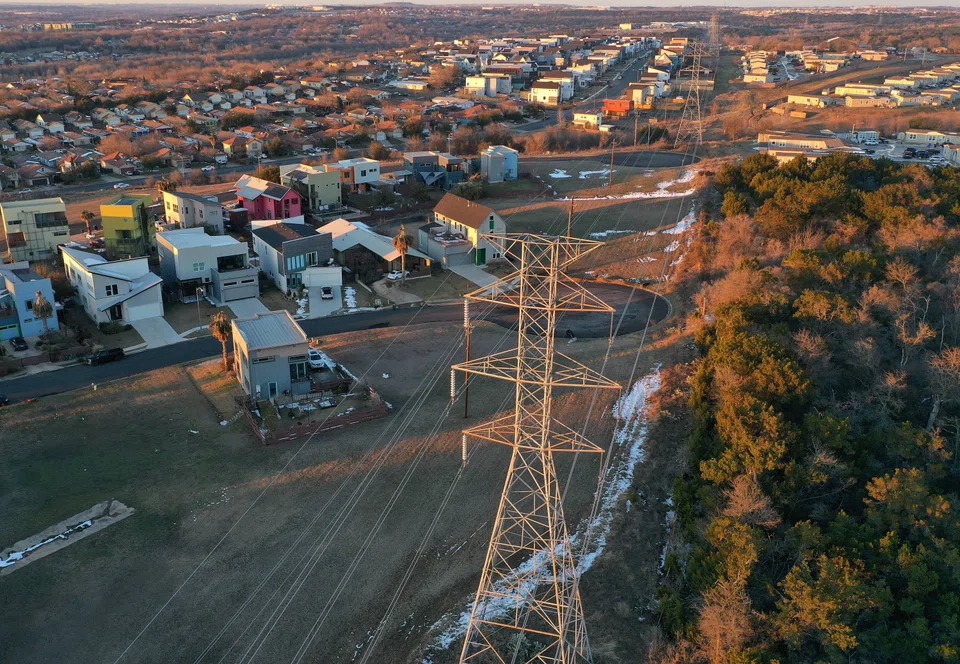
I think today’s underinvestment will create tomorrow’s inflationary pressures, and it will cause the world to look more like 1970 than 2010. In support of this view, the US and many other advanced economies have not invested to increase capacity for decades.
Compounding the underinvestment, weak recoveries from crises left slack in many economies, including the US. Following the tech bubble and the Global Financial Crisis, the absence of strong economic growth and shifts in the underlying structure of the economy meant that capacity utilisation trended lower. As a result of this slack, the average age of private fixed assets is the highest in nearly 70 years.
Housing, a prime example
Today, the Fed and central banks globally are tightening policy to curb excess demand, but the current growth slowdown will likely also result in a decline in investment. Unfortunately, that is exactly the opposite of what is needed to address the shortages that are exacerbating inflation to begin with. This paradox means that housing, energy, commodities, infrastructure and even labour are still likely to undersupplied once growth recovers, which is the argument for persistent inflation.
I believe the Fed will be successful in its aim of reducing demand in the short term, but its impact will vary across different segments of the economy. While certain services can be easily foregone, other types of demand do not go away just because they are postponed. A home purchase delayed simply becomes pent-up demand. The housing shortage in the US is estimated to be anywhere from 4 million to 6 million units, equivalent to at least 3 years of new home completions. Demographic trends coincide with this shortage and will aggravate the problem.
Keeping a portfolio on the right side of history
Fixing investment shortfalls including housing shortage, tight energy supply and the supply-demand mismatch in renewable energy will take year. Higher price growth may make inflation even harder to predict in the meantime, as higher and more volatile price growth mean that the Fed may be more pre-emptive and forceful in acting to maintain price stability. This scenario is a recipe for structurally higher interest rates, with higher highs and potentially lower lows for the Fed Funds rate. Investors should recalibrate their return expectations accordingly.
Ongoing inflationary pressures and higher rates challenge profit margins, which highlight the importance of identifying operational efficiency. In these conditions, private credit-market investors with proven track records of creating value and unlocking synergies through portfolio operations can be attractive. We do not necessarily think that defaults need to rise meaningfully, but it will be incrementally more important to consider credit risk when rates are at 3 per cent or higher than when they were at 1 per cent. Private credit that is senior in the capital stack and secured can be one way to reduce credit risk.
Traditional fixed income is likely to continue to be challenged by elevated inflation and rates. Conversely, floating rate debt can adjust to rising rates. Other alternative sources of income can re-rate when inflation runs hotter, such as short-duration hard assets. In this category, we highlight real estate sectors with shorter average lease durations that are renegotiated more regularly and adjust for rising costs. Two examples are rental housing, which often has year-long leases, and hotel rooms, which can be repriced almost daily. These assets can respond to changing macro conditions more tactically than a commercial office lease with a duration of 5–10 years.
The writer is the chief investment strategist at Blackstone’s Private Wealth Solutions group. The views expressed in this commentary are his personal views and do not necessarily reflect the views of Blackstone Inc.
TRENDING NOW

China Investment Corp, PGIM’s 50% stake in Nex mall up for sale; asking about S$1.2 billion

Higher rates, weaker spending: Is the Philippines entering stagflation?
Singapore tech stocks plunge as Nasdaq bloodbath spills into region

OCBC wealth clients turn defensive amid market volatility as Q3 profit rises 3%

