

Eliminating corruption in the Philippines is an uphill climb
President Ferdinand Marcos Jr will need to show resolve in his fight against it

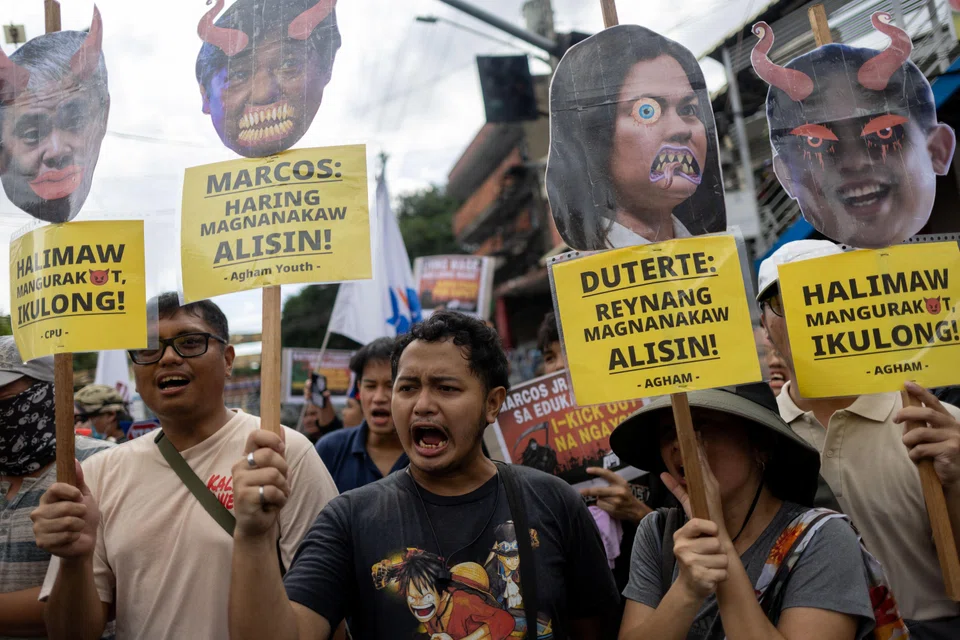
THERE was a time decades ago when the Philippines was the second wealthiest nation in Asia after Japan, and a model of development. In the 1960s, the peso was strong; one US dollar was equivalent to two pesos – hard to fathom now, but true. Today, thanks to an egregious corruption scandal, a dollar is worth 59.47 pesos. Foreign investment and sentiment have soured. The scale of the malfeasance is staggering. It is estimated that as much as 70 per cent of government funds for flood control projects has been lost to graft.
Filipinos have long been inured to corruption, which is seen as part of the fabric of business and life. Even so, the video interview of contractor Sarah Discaya, blithely showing off her 40 luxury cars – she acquired a Rolls-Royce for the umbrella – would be funny if she weren’t so oblivious to the poor optics. Discaya was held up as a rags-to-riches tale, but now faces graft charges.
The latest scandal stands out in its sheer scale. The government estimates that up to 118.5 billion pesos (S$2.5 billion) in economic value a year was lost between 2023 and 2025 in flood control graft. Funds which should have been channelled into infrastructure either went into shoddy and substandard works, or vanished into “ghost” projects which never materialised. The damage is real: Late last year, Typhoon Kalmaegi lashed the Visayas, causing nearly 200 deaths and affecting more than two million people.
To some degree, the scandal shouldn’t be surprising. The Philippines routinely scores poorly in global corruption indices. Corruption narratives are widespread. Businesses lament having to line the pockets of bureaucrats to speed up administrative permits and processes. Policemen accept sums to look the other way in traffic violations. Crony capitalism is rife.
This time, however, the damage is deep and potentially long-lasting. Economic growth came in at 4 per cent in the third quarter, a four-year low. The government has slashed its growth targets for 2026 and 2027. At a time when Asian stocks were soaring, the Philippine Stock Exchange Index closed 2025 with a loss of more than 7 per cent. The biggest hit, however, may be foreign direct investment. According to data from the Bangko Sentral ng Pilipinas (BSP), net FDI inflows plunged by nearly 40 per cent in October to US$642 million, from US$1.067 billion a year earlier.
So far, the country’s credit rating is unchanged but Fitch has warned that social unrest in Asia, including the Philippines, was a “significant risk”. Fitch has a BBB rating on the country, but governance concerns arising from the corruption scandal is likely to have made an upgrade more remote.


All eyes are on President Ferdinand Marcos Jr, who has likened the fight against corruption to a “very major surgery” to excise a cancer. As part of his crackdown, he has ordered “lifestyle checks” on the executive department. Just last week, he cut almost US$1.6 billion in unprogrammed appropriations, which were prone to misuse. Far more needs to be done. With prominent families implicated including his own, he will need to show resolve in the form of prosecution. The cost of doing too little is untenable.
Decoding Asia newsletter: your guide to navigating Asia in a new global order. Sign up here to get Decoding Asia newsletter. Delivered to your inbox. Free.
Copyright SPH Media. All rights reserved.






