

The first US land bubble and lessons from the Mount Tambora eruption
The volcano caused a year without summer – and drove many speculators to ruin
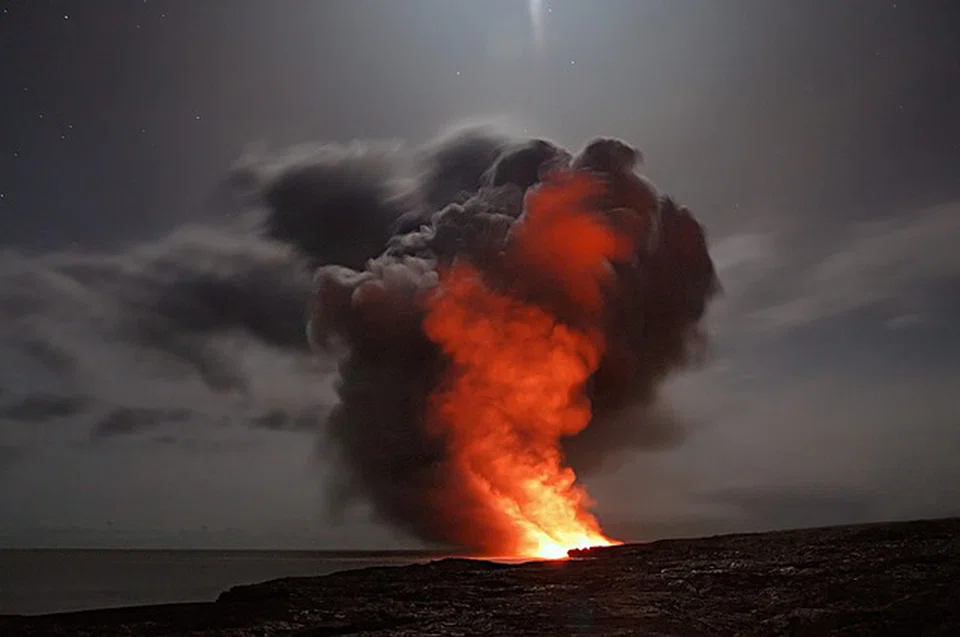

ON APR 10, 1815, a volcano on the Indonesian island of Sumbawa erupted – leading eventually to the rise and collapse of the United States’ first land price bubble.
In the largest volcanic eruption in recorded history, Mount Tambora claimed at least 70,000 lives. But the eruption’s effect on the climate was far more deadly and disruptive.
The volcano sent an enormous cloud of sulphur dioxide into the upper atmosphere. This repelled sunlight and temporarily cooled the planet by an estimated 0.5 degree Celsius.
The disaster’s impact peaked in the summer months of 1816, the so-called “year without a summer”. Crop yields collapsed throughout the world, creating a shortage of agricultural commodities and a sharp rise in prices – especially for wheat and cotton. European farmers were hit especially hard, and countries increased imports to feed their populations.
The US experience was less catastrophic but still painful. New England suffered the most due to the harsher effects of cold weather in the northern latitudes.
Thousands of US farmers sold their land and headed west. The appeal was twofold. First, they could purchase larger tracts of farmland.
Second, crop prices went up. For example, wheat prices rose nearly 25 per cent by the end of 1816 and more than 50 per cent by the end of 1817. Being able to get both more acreage and higher prices looked like the ultimate win-win situation.
The first Great Depression
The global cooling caused by the Mount Tambora eruption was intense but short-lived. Unlike carbon dioxide, sulphur dioxide naturally dissipates from the atmosphere within a few years. By 1818, sulphur dioxide levels returned to pre-eruption levels, and global temperatures normalised.
Owners of Midwestern farmland suddenly faced financial ruin. Many had taken on enormous loans to purchase plots at prices that could only be justified if crops continued to sell at elevated rates for many more years.
Instead, robust harvests and the huge expansion in agriculture fuelled a global supply glut, and prices plummeted. By 1820, wheat prices had fallen by approximately 60 per cent relative to 1817.
The decline of agricultural commodity prices triggered a collapse in US land values as farmers and speculators adjusted their revenue forecasts.
At the same time, the Second Bank of the United States – which began operations in 1817, at the height of the bubble – reversed many of its lending policies to keep its dwindling reserves from eroding further. This reduced the money supply and intensified the economic contraction.
Falling commodity prices, collapsing land values, tight monetary conditions and highly indebted landowners were too much for the economy to bear.
No single event marked the beginning of what was dubbed the Panic of 1819 – but the financial misery that followed rivalled anything that the nation had experienced before, and is sometimes referred to as the first Great Depression.
Lessons from the eruption
The eruption of Mount Tambora occurred more than 200 years ago, but it has many lessons that are still relevant today. Here are some of them:
First, there is the danger of herd behaviour. Humans have a strong instinct to follow the crowd. This bias was hardwired into our brains over hundreds of thousands of years because it was critical to our survival.
When early humans identified an attractive resource and harvested it, or recognised a hidden danger and fled from it, their neighbours often did the same. For most of human history and in many different contexts, this approach worked and continues to work; often, later arrivers gain just as much benefit as the first movers.
But the herd instinct does not work in the investing world. In fact, it backfires.
As the herd flocks to new investments, the price goes up and quickly exceeds the intrinsic value of the asset. Then, once the supply of new investors dries up, the asset crashes.
A small number of early adopters may profit from undiscovered investment opportunities, but followers are virtually guaranteed to come up short.
The farmers and speculators of the 1810s differ little from modern victims of herd behaviour. They suffered the same consequences as retail investors who piled into dotcom stocks, residential real estate, cryptocurrencies, non-fungible tokens and now, artificial intelligence (AI) stocks.
This behaviour is also common among institutional investors, who often substantially increase their alternative asset allocations, only to be disappointed with the returns.
Second, there is the danger of fighting the current of time. That is how James Buchan, the author of Frozen Desire: The Meaning of Money, describes the behaviour of participants in perhaps the greatest asset bubble ever: France’s Mississippi Bubble of 1717 to 1720. Like most financial catastrophes, it originated in an attempt by investors to cheat the powerful current of time.
A distinguishing feature of history’s best investors – the Hetty Greens, Warren Buffetts and Charlie Mungers – is their ability to align their investment behaviour with the inflexible flow of time. In a word, they are patient. They understand that successful investing is more like watching the grass grow than winning the lottery.
But those caught up in investment fads, whether it is Midwestern real estate in the 1810s or AI investments in the 2020s, often suffer from a compulsion to compress the time required to turn a little money into a lot. This is why there will almost always be many more losers than winners, whatever the latest investing craze may be.
Third, the idea of buying time with sulphur dioxide emissions. This last lesson comes with a huge caveat because it involves a rather extreme and undesirable proposal.
It is generally accepted as fact that the planet is rapidly warming and that carbon dioxide levels are the most important driver of this. Thus far, however, we are not moving fast enough to reduce emissions.
Over the next several decades, the race between the forces of nature and human ingenuity will determine how much the world warms as well as when and where temperatures will plateau.
The long-term solution to climate change will involve sharp reductions in fossil fuel emissions and perhaps innovations that remove greenhouse gases from the atmosphere. But given the slow pace of progress, we may need to consider alternative tactics to buy time.
In June 2023, the White House released a congressionally mandated report that explored the use of solar radiation modification to slow climate change. One potential tactic is to replicate the effects of a major volcanic eruption by releasing large amounts of sulphur dioxide into the upper atmosphere.
This may seem far-fetched, but Mount Tambora’s eruption demonstrates that the science works, and works quickly.
Of course, the logistics and financial feasibility of such a project are yet to be determined, and its side effects – sulphur dioxide produces acid rain and may deplete the ozone layer – could be steep, even unbearable.
Still, such uncertainties aside, the Mount Tambora eruption not only has lessons for investors more than two centuries later, but might contribute to solving one of humanity’s most pressing modern problems. This shows the value of studying financial history, and looking to the past to inform the present and shape the future.
The writer, CFA, CFP, is an author and financial historian
TRENDING NOW

China's premium puffer jacket push meets consumer resistance

BN-PN’s Melaka election landslide puts spotlight on jobs, investments and political divides

As Indonesia picks new vice-president to succeed Gibran, investors see risks and opportunities

LNG, stronger regional power links key to Asean’s energy resilience: Shell

