A SMART LOOK AT INVESTING

Four ways to identify promising growth stocks

Staying focused is crucial; a reliable strategy to cut through the noise and pick out quality names worth holding for the long term is necessary
Summarise
    • Singtel embarked on a strategic reset starting in May 2021, aiming to seize opportunities in the 5G era and build new growth engines, among others.
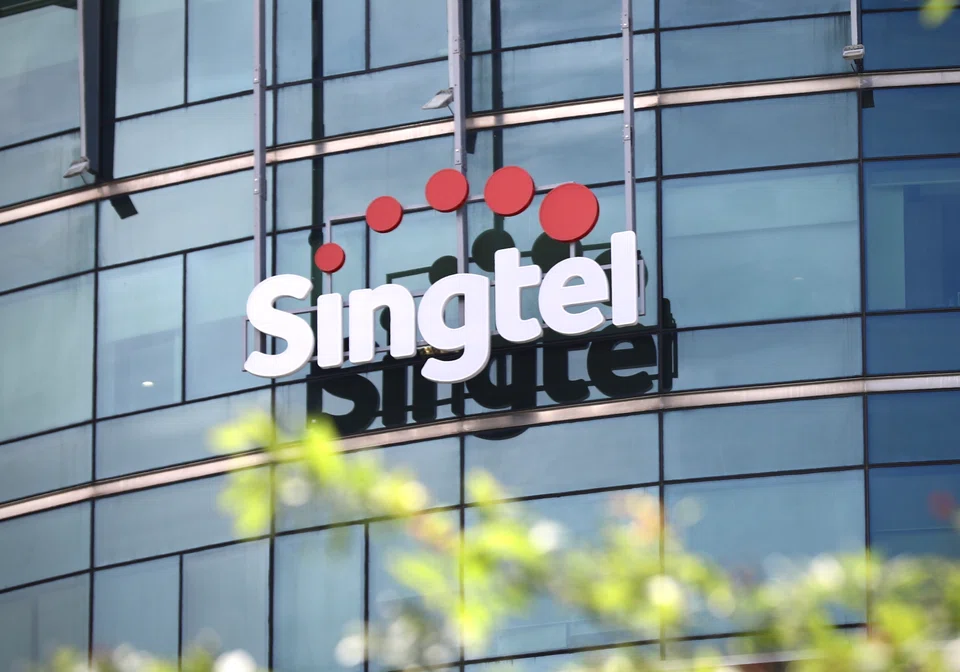
    • Singtel embarked on a strategic reset starting in May 2021, aiming to seize opportunities in the 5G era and build new growth engines, among others. PHOTO: ST
    Published Tue, May 27, 2025 · 05:55 PM

    [SINGAPORE] It is an exciting time to be a growth investor, despite the current volatility. Thanks to modern brokerages, it is easier and cheaper than ever to access a wide range of global stocks.

    With so many options at one’s fingertips, the possibilities are vast – but so is the noise.

    The Internet is flooded with data, opinions and analysis, making it difficult to zero in on truly promising growth stocks. Add the constant barrage of headlines from business news outlets, and it is easy to feel overwhelmed.


    That is why staying focused is crucial. One needs a reliable strategy to cut through the noise and identify quality growth stocks worth holding for the long term.

    Here are four effective methods to help you screen for attractive investment opportunities.

    Strategic review and resets

    We begin with companies undergoing strategic reviews or resets. These reviews occur when businesses need to reassess their strategic direction. For instance, by trimming unprofitable segments and focusing on high-potential areas, companies can position themselves for sustainable, long-term growth.

    Strategic reviews are especially valuable when a company finds itself stagnating and needs to understand what went wrong and how to get back on track.

    A good example is Hongkong Land. In October 2024, the property developer and investor announced a sweeping strategic review. As part of this move, the company decided to exit the build-to-sell property segment. Instead, it plans to redeploy capital into integrated commercial developments designed to generate steady, recurring income.

    Its management has set ambitious goals. By 2035, Hongkong Land aims to:

    • Double underlying profit before interest and tax.
    • Grow assets under management to US$100 billion (up from US$41 billion as at the end of 2023).
    • Double annual dividend to US$0.44, from US$0.22 in 2023.

    This strategic reset not only marks a significant change in its business, it also provides clear financial targets for the company’s future.

    Singtel is another company that embarked on a strategic reset starting in May 2021. At the time, Singapore’s largest telecommunications provider aimed to seize opportunities in the 5G era, build new growth engines and unlock value from its infrastructure assets.

    Since then, the mainboard-listed company has kept investors updated on its progress. The telco’s transformation strategy has focused on capital recycling and improving its return on invested capital (ROIC), targeting low double-digit ROIC by fiscal 2026.

    The results are showing. For fiscal 2025, Singtel reported an ROIC of 9.6 per cent, a solid increase of 2.3 percentage points from fiscal 2022. Dividend growth has also been strong and consistent.

    Since fiscal 2021, when it paid out S$0.075 a share, Singtel has more than doubled its annual dividend to S$0.17 by fiscal 2025.

    Looking ahead, the telco is gearing up for its next phase: the ST28 strategy. This new initiative emphasises active capital management with the aim of delivering continued growth and even higher dividends.

    Presence of sustainable trends and catalysts

    Another effective way to uncover promising growth stocks is by identifying sustainable trends and catalysts that can elevate a business to the next level.

    One such trend is the rise of athleisure, a blend of athletic and leisurewear. As consumers become more health conscious and lifestyle oriented, demand for stylish, comfortable and easy-to-maintain clothing has surged.

    This change has fuelled the growth of Lululemon. The company’s revenue jumped from US$8.1 billion in fiscal 2023 to US$10.6 billion in fiscal 2025, while net profit more than doubled to US$1.8 billion during the same period.

    Another powerful trend is the continued expansion of e-commerce, driven by global digitalisation and increasing Internet access. Two standout players in this space are MercadoLibre and Coupang.

    MercadoLibre, the dominant e-commerce platform in Latin America, is riding a massive wave of growth. The region’s e-commerce market is projected to grow at a 19 per cent compound annual growth rate from 2022 to 2027.

    Over the past three years, its revenue soared from US$10.8 billion in 2022 to US$20.8 billion in 2024, while net profit nearly quadrupled from US$482 million to US$1.9 billion.

    Coupang, often dubbed the “Amazon of South Korea”, has also seen explosive growth. From 2022 to 2024, revenue surged from US$20.6 billion to US$30.3 billion. After years of investment, it achieved profitability in 2023 with US$1.4 billion in net income. It has remained profitable since.

    Spotting trends like these and the companies riding them is a powerful way to identify long-term growth opportunities.

    A large total addressable market

    Another way to spot promising growth stocks is by focusing on companies with a large total addressable market (TAM). A sizeable TAM gives businesses a long runway for expanding revenue, profits and cash flow, making it a key factor for long-term growth potential.

    Take ResMed, for example. This medical device company helps people suffering from sleep apnoea and chronic obstructive pulmonary disease. Over the past year, it reached nearly 151 million people with its products. It aims to serve 500 million by 2030.

    ResMed’s long-term opportunity is massive, with a global TAM of 2.3 billion people affected by chronic respiratory conditions.

    Dexcom is another medical device company with a huge market to tap. It focuses on continuous glucose monitoring (CGM) for people with diabetes. The condition affected almost 590 million people globally in 2024, and is projected to impact more than 850 million by 2050.

    Dexcom’s CGM solutions currently have just 5 per cent penetration among 25 million Type 2 diabetics not on insulin, and less than 1 per cent penetration in the 98 million-strong US prediabetes population. That leaves plenty of room for expansion.

    Outside of healthcare, Lyft, a US-based ride-hailing company, is making bold moves to expand its market reach. In a recent acquisition, Lyft bought European mobility platform Freenow for around 175 million euros (S$255.5 million), effectively doubling its TAM.

    The company now has a target market of more than 300 billion personal vehicle trips a year, up from 161 billion before the deal.

    Successful serial acquirer

    Investors often steer clear of companies that pursue frequent acquisitions, viewing them as signs of empire-building rather than disciplined growth. But in the right context, particularly when a company holds a strong position in a fragmented industry, serial acquisitions can be a smart and effective growth strategy.

    When executed well, acquisitions can boost market share and accelerate financial performance. The numbers do not lie; they reveal whether the strategy is paying off.

    For instance, Hawkins, a speciality chemicals and ingredients company, has been on an acquisition streak – three deals in 2023, four in 2024, and two more in the first four months of 2025.

    The results speak for themselves. Revenue grew from around US$935 million in fiscal 2023 to more than US$974 million in fiscal 2025. Net profit rose from US$60 million to more than US$84 million over the same period.

    Another strong example is Rollins, a pest control company operating in a large, fragmented market with a rich pipeline of potential acquisition targets. In 2023, Rollins added 24 businesses through acquisitions. The following year, it ramped things up, executing 32 acquisitions and bringing 44 new businesses into its growing portfolio.

    This strategy has powered steady, profitable growth: Revenue increased from US$2.7 billion in 2022 to US$3.4 billion in 2024. Net profit climbed from US$368.6 million to US$466.4 million over the same period.

    These examples show that, when done with proper due diligence and strategic intent, serial acquisitions can be a powerful engine for long-term growth.

    The writer owns shares of Lululemon. He is portfolio manager of The Smart Investor, a website that aims to help people invest smartly by providing investor education, stock commentary and market coverage