

FTX implosion: Crypto’s value should not be quoted in dollars
FTX was quoted with a value of US$32 billion before it declared bankruptcy – but it was worth 32 billion of its own tokens, not dollars. Customers are likely to lose all assets they hold there
CRYPTO proponents have been saying things like: “How can you trust the banks?” With schadenfreude, crypto sceptics can now reply: “How can you trust the crypto exchanges?”
Following the Terra-Luna collapse in the summer, we have had another implosion with much wider ramifications. FTX, the second-largest crypto exchange in the world, last week declared bankruptcy after a stunning turn of events.
FTX’s collapse was precipitated when Binance, the largest crypto exchange, announced that it would sell all of its 23 million FTT tokens due to “irregularities” it discovered in FTX – which at the time were worth around US$529 million, thereby exposing a massive hole in FTX’s balance sheet and causing it to become insolvent. When it became clear that most of FTX’s assets were its own FTT token, people started questioning the solvency of the business.
This is not how exchanges are supposed to work. A buyer and a seller come to transact at your exchange, and you take a cut to facilitate this. There should be no way to even lose money in this business. A regulated exchange with proper risk controls should never go bankrupt, let alone implode in this fashion in a matter of days.
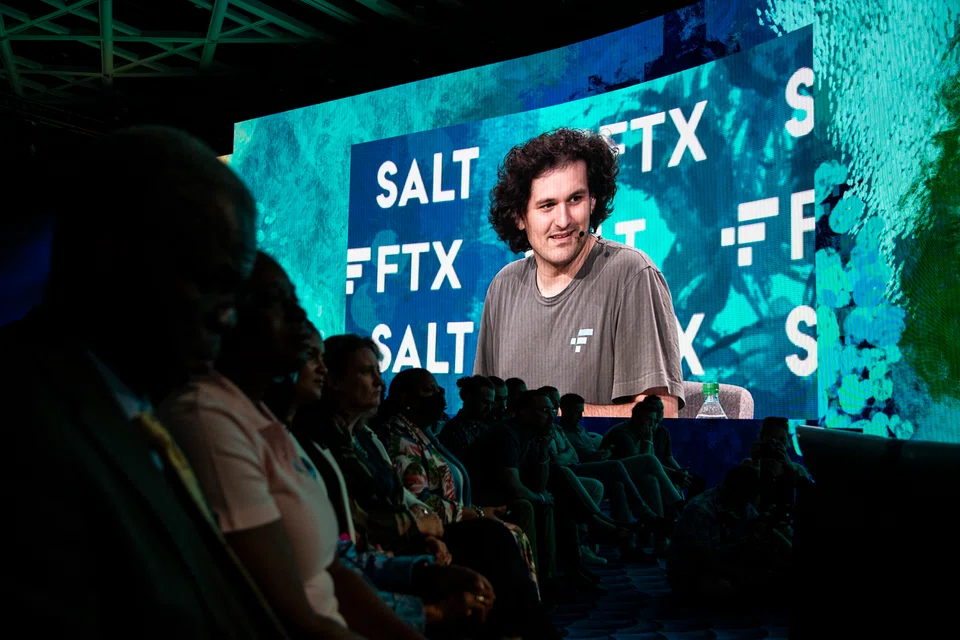
While the full story around the FTX collapse is still emerging, what we know so far makes for interesting reading – and a big cautionary tale. Its owner and chief executive officer, Sam Bankman-Fried (commonly referred to as SBF) was seen as a genius who was the face of crypto – especially in front of US regulators, after appearing in multiple testimonies with lawmakers where he gushed about how safe crypto exchanges such as his were.
FTX was quoted with a value of US$32 billion before declaring bankruptcy. But FTX was never worth US$32 billion. It was worth 32 billion in tokens – primarily its own FTT token, which it could create at will. It would be appropriate if all crypto values were quoted in tokens, rather than dollars.
Likewise, one Bitcoin is not equal to US$16,000. You’re better off in thinking of it as worth 16,000 Tether stablecoins. Today, one Tether equals one US dollar. But tomorrow, it could easily be worth US$0.000001.
FTX’s fall from grace ranks as the largest and quickest drop in net worth in history, as SBF lost 20 billion (tokens, not dollars) in a day. This path followed the fate of other crypto “geniuses”, such as the founders of Three Arrows Capital, who were brought down by the Terra/Luna implosion and later said they had failed to realise that Luna was capable of falling to zero.
After all, in real life, there are few real geniuses. The majority just got lucky and were on the right side of a bubble – until it popped.
Consider that most crypto companies were launched at the peak of the first bubble in 2018, and survived as there was little leverage in the system at the time. They were saved by a resurgence of the second crypto bubble that peaked last year. But now, with all the excess leverage in the system, there are fewer survivors. We will likely see even fewer going forward.
Unlike real-world companies that generate a stream of income, crypto and all of decentralised finance is a closed loop that currently revolves primarily around speculation in a token’s potential to rise in value. Incentives are paid in more tokens, but this is not real money until it is extracted from the system and converted to dollars.
Much of the space is based on creating tokens (the easy part), and then convincing people that they have value (the hard part). The sustainability of this “value” is based on first, belief among their holders that there is value, and second, there being fewer sellers than buyers.
This is a perfect description of a Ponzi scheme. The risk in crypto is that any time there is a large seller that endangers the second condition, it can create a death spiral that causes the token to go to zero.
Until someone figures out a way to link the crypto universe to the real world, this sharp and sudden downside risk in all crypto-related investments will persist. Such a link is likely to require full oversight by existing regulators of the finance world.
Crypto proponents will say that their belief in Bitcoin and Ethereum is just like the belief in fiat currencies, but crypto is better because supply is limited. This is correct, and it is becoming more likely that Bitcoin will survive as an asset in the long term. However, much of crypto is underpinned by tokens instead, and the supply of these tokens is unlimited.
More importantly, fiat is backed by government. Since governments write the laws, levy the taxes, and own the guns to enforce it all, government backing of fiat underpins its confidence as money and will not disappear overnight the way that tokens do.
Crypto has no such backing, and it can only get it with full regulation. FTX promised in its legal documentation that client accounts were fully segregated and always backed one-to-one.
SBF kept this stance right up until the last minute, tweeting that everything was fine. These tweets have since been deleted – a good move considering that they will be used in criminal proceedings against SBF. We now know some interesting things that would have been prevented under proper regulatory oversight.
SBF had apparently created a back door in FTX’s bookkeeping system which enabled him to alter the company’s financial records without alerting other people, especially its auditors. It looks like this was done to enable movement of cash from FTX, the crypto exchange which held customers’ assets, to Alameda Research, the trading firm owned by SBF. A US$10 billion “loan” was transferred to Alameda using this back door without alerting anyone. This figure seems to be the hole that FTX has in its balance sheet.
It gets worse: US$1 billion to US$2 billion looks to be missing from Alameda’s books.
Rather than ending there, it gets even worse: After the bankruptcy announcement, FTX got hacked to the tune of over US$600 million. It would not surprise anyone if the hacker was an FTX insider. Meanwhile, SBF has gone silent, and his whereabouts are unknown, with speculation that he has run away to Argentina.
FTX now looks to have less than US$1 billion in liquid assets (before the hack) versus US$9 billion in liabilities. If the figures are correct, FTX customers are likely to lose all their assets held there.
Assuming that older and wiser investors did not lose much, this whole FTX debacle holds an object lesson for younger investors who got caught up with investments in FTX:
- Don’t take financial advice from influencers on social media. FTX paid millions to such promoters and other famous people to convince their fan base to open accounts. Influencers on TikTok and YouTube know little about finance and investments; they are just getting paid to promote a service. This is a massive conflict of interest that is highly regulated in the non-crypto world.
- Stop looking for a way to become a millionaire with no work by buying some tokens; you could lose everything. When the value of something you invest into is based purely on the belief system of its users, it can collapse to zero at any time.
- Think twice before quitting your existing job to join a crypto company. Your career is the one of the most important things you have; don’t mess it up.
- All these crypto blow-ups mean that regulation is coming. When it finally arrives, it will reduce downside risk, but also the upside potential. The days of being able to buy Bitcoin for US$1,000 and making your money back 60 times over in a few years will not happen again.
We have not seen the end of bankruptcies in the crypto space.
The writer is co-founder of AL Wealth Partners, an independent Singapore-based company providing investment and fund management services to endowments and family offices, and wealth advisory services.
TRENDING NOW

Olivia Lum, ex-CFO not giving evidence in their Hyflux trial

Bank on AI-resilient Singapore property via deep-value listed property groups

Positive pivot or premature? Analysts split on Keppel Reit’s S$610.9 million buy

Once staunchly pro-China, Malaysian Chinese businesses are now distancing themselves from Beijing

