

Global watchdog FSB unveils action plan on private-credit risks
It says ‘significant data challenges’ are frustrating its effort to assess vulnerabilities in the market
[BASEL] The world’s top financial-stability watchdog unveiled a tentative plan to tame private-credit risk, as escalating warnings by bankers and policymakers about potential dangers collide with a political push towards deregulation.
The Financial Stability Board (FSB) convenes central banks, regulators and finance ministries from the world’s most powerful economies.
On Wednesday (May 6), it said “significant data challenges” had frustrated its almost year-long effort to assess vulnerabilities in the US$1.5 trillion to US$2 trillion market.
Exploring new ways to address those data challenges is a key part of the plan laid out by the FSB to mitigate risks.
Other action points include “facilitating supervisory discussions” on the way vulnerabilities could be monitored, carrying out further risk analysis directly and hammering out commonly agreed definitions for parts of the private-credit ecosystem.
The FSB also published almost two dozen core metrics that supervisors could monitor to get a handle on potential risks, based on the data they already collect or can obtain “relatively” easily – and a longer list of “nice-to-have” metrics.
It stopped short of any policy recommendations and did not commit to a timeline for further work on the area, which has emerged as a top concern for policymakers including FSB chair and Bank of England governor Andrew Bailey.
Rather than conclusively give the sector a clean bill of health or otherwise, the FSB’s 48-page report highlighted the areas in which potential fault lines might lie in the market.
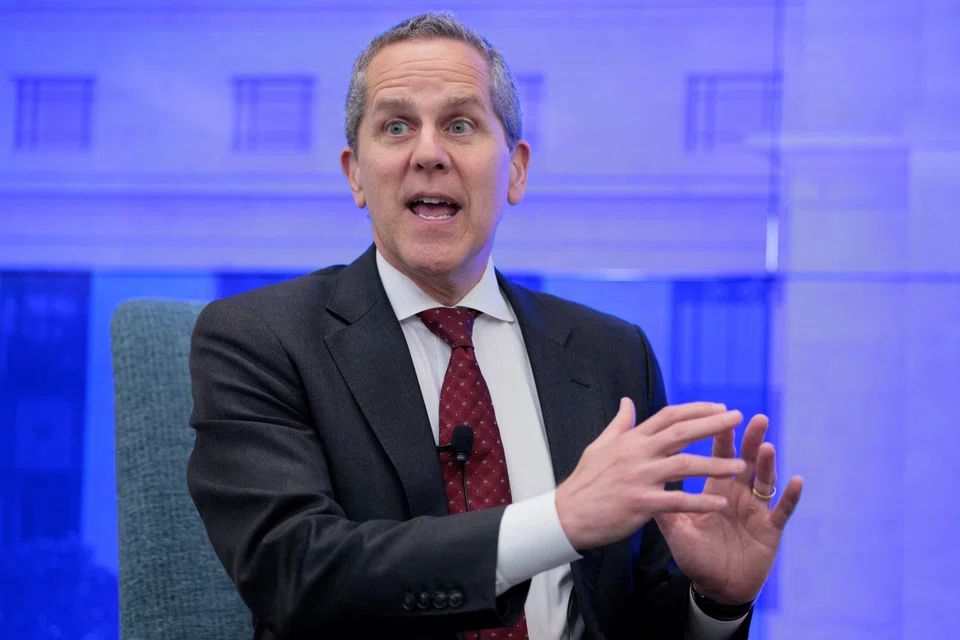
Federal Reserve governor Michael Barr on Sunday warned that the market could spark “psychological contagion” and a broader credit crunch.


Concerning links between private credit and banks
One area of concern for the FSB is links between private credit and banks.
The report – which it began working on in July 2025 – cited industry estimates of US$270 billion to US$500 billion of drawn and undrawn bank loans by private-credit companies based on data from 2024.
More recent Bloomberg calculations show 13 European banks had collective private-credit exposure of US$135 billion in 2026, while 11 top US banks had US$185 billion of loans outstanding to the sector.
The FSB called out high concentrations among the banks’ lending to the private-credit sector, the borrowers taking the cash, and industry sectors such as healthcare and technology.
It also indicated the potential for retail investors piling into the sector to worsen liquidity mismatches.
FSB secretary-general John Schindler said: “The sector’s complexity, leverage and interconnectedness could amplify stress in adverse scenarios, posing broader risks to financial stability.”
He added that the lack of transparency could hurt investors as well as authorities since “they may have only partial information about correlations and concentrations across loan portfolios and markets”.
“Without this information, risks may be mispriced, and vulnerabilities may go undetected,” he added.
The FSB also noted that private-credit companies tend to lend to more indebted borrowers.
It added that default rates are rising, and instruments sometimes rely on ratings from “smaller lesser-known agencies”. BLOOMBERG
Decoding Asia newsletter: your guide to navigating Asia in a new global order. Sign up here to get Decoding Asia newsletter. Delivered to your inbox. Free.
Share with us your feedback on BT's products and services
TRENDING NOW

Once staunchly pro-China, Malaysian Chinese businesses are now distancing themselves from Beijing

Looking beyond looming CEO succession, should UOB potentially pursue a transformative merger?

Could stablecoins be the future of money?

Grab CEO’s wife Chloe Tong on life with Anthony Tan and finding her purpose

