

Gold’s breakout moment: Opportunity or overvaluation?
Whether to hedge against uncertainty or wait for a pullback depends on each investor’s strategy and current positioning
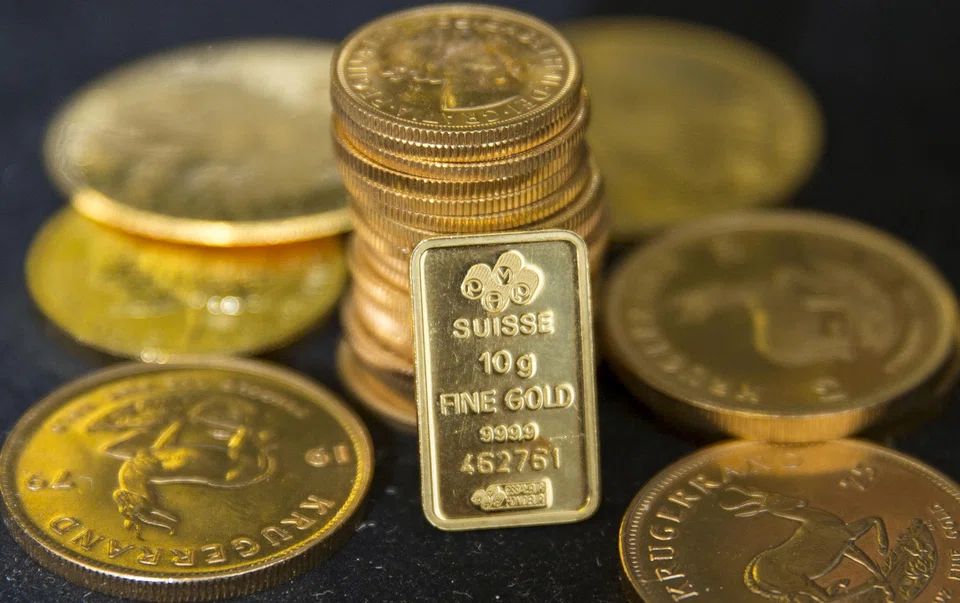
GOLD kicked off the year with a strong rally, recently briefly hitting all-time high levels of above US$3,000 per ounce. Can this rally last, and what does it mean for emerging markets (EM) debt investors?
Gold’s upward trajectory
What’s fuelling gold’s momentum?
The rally began early last year with expectations of interest rate cuts, later confirmed by the US Federal Reserve, Bank of England, and European Central Bank starting in mid-2024.
Geopolitical and economic risks have also played a key role. The 2024 US presidential election added uncertainty, followed by trade tensions with Mexico, Canada, China, and the European Union including retaliatory tariffs. Meanwhile, the Russia-Ukraine war remains a flashpoint, with a ceasefire between the war parties becoming the main point of discussion.
In times of uncertainty, gold thrives.
Is the rally sustainable?
Can gold maintain its recent peak of above US$3,000 per ounce?
Some analysts, including ourselves, were seeing gold reaching the US$3,000 psychological milestone in the first quarter of this year. Uncertainty has been the key catalyst, driven by trade wars, a changing outlook over the US economy, and question marks over the Russia-Ukraine ceasefire.
Central banks remain a key force in the gold market. Since 2022, they have ramped up purchases despite high prices. The People’s Bank of China, one of the largest buyers, resumed gold purchases in November and as of February, its gold holdings have been the highest on record constituting 5.9 per cent of total foreign exchange reserves.
We believe gold is well-supported for now as some of the aforementioned factors are expected to persist at least till the first half of this year.
However, persistently high gold prices could lead to weakening physical demand for gold. Jewellery demand tends to decline when prices rise too high. As the saying goes, “the cure for high prices is high prices” – a reality that often holds true for commodities, including gold.
Understanding the opportunities
High gold prices are making gold producers, particularly in EMs, more attractive. Emerging markets account for over 70 per cent of global gold production, and gold companies are seeing improving fundamentals. Higher prices enable them to invest in growth projects and return capital to shareholders through dividends.
Beyond gold, we believe other precious metals could benefit as well. Silver and platinum group metals (PGMs), especially platinum, have already shown signs of a sympathy rally, supported by strong fundamentals.
Considering the risks
The key question is, could gold now be considered overvalued?
Gold at US$3,000 could indeed be viewed as overvalued if there is broader improvement in sentiment driven by more supported US economic data or a de-escalation of geopolitical tensions.
At US$3,000 per ounce, jewellery demand may also decline, and central banks – strategic buyers of gold – could hold off on purchases until a potential correction in prices. While some have continued buying at elevated levels, it remains uncertain if that trend will persist.
We’re always cautious when we see commodity prices soar too high too soon, and when undertaking fundamental analysis, we look at gold companies carefully.
But the question of whether to hedge against uncertainty or wait for a pullback depends on each investor’s strategy and current positioning. What is important right now – to hedge geopolitical and economic risks or potentially benefit from further price appreciation in gold? While gold’s diversification properties may prove to be very valuable in this macro environment, further price appreciation could prove to be challenging at current levels.
Factors to watch
We’ll also be looking for other factors that could move gold prices in the coming weeks. Key market drivers to watch include ceasefire negotiations in the Russia-Ukraine war and rising trade tensions. If sentiment weakens, gold could benefit.
Escalating tariffs are also inflationary, and inflation increases economic risks, so that could be a further catalyst for gold.
In addition, US economic data and the dollar remain crucial. Concerns over the state of the US economy could benefit gold prices.
A final word
Gold’s role as a safe-haven asset is unique, and we believe that gold prices are supported at current levels. However, we also note that higher prices increase downside risk, making further buying less compelling. As prices increase, the metal’s value increases in a portfolio as well, weakening the argument for further buying.
Investors may also want look to other precious metals, such as silver and platinum, which have strong fundamentals and diversified demand sources.
The writer is a corporate credit analyst on William Blair’s emerging markets debt (EMD) team
TRENDING NOW

Once staunchly pro-China, Malaysian Chinese businesses are now distancing themselves from Beijing

Looking beyond looming CEO succession, should UOB potentially pursue a transformative merger?

Could stablecoins be the future of money?

Grab CEO’s wife Chloe Tong on life with Anthony Tan and finding her purpose

