

Governance is key to families’ ability to sustain generational wealth, says US adviser
The CEO of Vanquour Global Wealth Management believes wealth management practices in America are a model to be emulated
[SINGAPORE] The adage “shirtsleeves to shirtsleeves in three generations” exists in almost all cultures, but the largest and most successful American and European families have managed to overcome it.
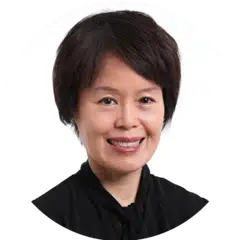
New York-based investment adviser Zhou Lu said that for the largest US families, the key lies in the entrenchment of governance in their businesses and management of wealth. It is a discipline that Asian families can learn from.
“If you dig into the question of how wealth grows from generation to generation, investments and portfolios are just a piece of it.
“The governance, legal framework and structure, the operating business that has generated the wealth and the family office that manages the wealth, the dynamics among family members – those intricacies matter in the long run.”
She added: “Western culture has given much thought to risk mitigation, which refers not just to the fluctuations of the portfolio, but also to family members. That’s often among the biggest risks.”
Zhou is chief executive of US-based Vanquour Global Wealth Management, which offers wealth management and multi-family office (MFO) advisory services. It manages roughly US$200 million in assets and is affiliated with the Royal Bank of Canada (RBC).
On the RBC clearing and custody division, she is the only female chief executive.
Financial education is key
She aims to build a presence in Asia, with financial education as a linchpin. In the United Arab Emirates, Vanquour has launched initiatives to enhance financial literacy for women.
“Asia is entering one of the greatest intergenerational wealth transfers in modern history, yet many families are still underprepared for the emotional, governance and succession complexities that come with preserving wealth across generations.
“I believe education will become one of the most important pillars of modern wealth management.”
She said the Vanquour’s vision in Asia is “not simply transactional finance”.
“We are interested in building long-term educational partnerships with institutions, family offices and leadership platforms focused on succession planning, legacy preservation, financial literacy, and preparing the next generation of wealth stewards,” she added.
“In many Asian cultures, wealth is deeply tied to family identity, responsibility and legacy. That creates an enormous opportunity for education around governance structures, family office management, philanthropic strategy, and how to navigate global capital markets across generations.”
Zhou grew up in China and moved to the US around 2002 for her undergraduate and postgraduate degrees; she obtained a Master of Science in International Relations.
“It was my dream to make a difference in the world. Little did I realise that as a foreign student in the US and a political (science) major, it was very difficult to find a job.”
Her first job was with Morgan Stanley in wealth management, which gave her an early foundation in advising clients, understanding capital markets, and navigating global finance.
She eventually left and joined a private equity (PE) firm, Global Access CSG, where she became managing director before she established Vanquour in 2021.
“We had a great 15-year run in the PE space. We participated in many interesting US and China bilateral investments, and facilitated joint ventures from America into China. But there came a point when I asked, what’s next?” Zhou said.
US as the model for family governance
She believes wealth management practices in the US are a model to be emulated.
“I have had the luck and opportunity to immerse myself in one of the most advanced countries and cultures when it comes to wealth preservation and wealth transfer. I don’t think there is a second country in the world with the ability, depth of markets and length of experience in wealth preservation.”
Vanquour’s MFO client base comprises mostly US families; none are Asian.
“We do meet with very wealthy Asian families. I often find the conversation is overly centred on investment returns. That’s a shallow understanding of how your wealth would fare, whether it would be there in 30, 50 or 100 years.
“My dream is to bring the Western longevity of wealth, the attitude and approach, the whole system of protection and preservation to the Asian market.”
Zhou believes the foremost prerequisite of wealth preservation is the structuring of assets and wealth in a jurisdiction with a sound legal framework and strong trust laws.
She cites the 13-generation Merck family in pharmaceuticals, whose fortune is estimated at US$80 billion. “They have a very detailed design on how the dividend, shareholding and distribution of profit works among the vast family members.”
“Every family has special circumstances, but it’s not as simple as saying – everything will go to my daughter or son. Your son or daughter will be married. How will you treat the in-law relationship? Are they going to participate actively in the business? Do you want them to? These issues matter in the overall governance structure.”
She advocates the use of professionals to help families navigate succession issues.
“It’s very difficult to have such conversations among family members alone. But when there is a competent manager who can outline a strong framework and governance structure, who is a respected, high-level third-party, it becomes easier.
“But my biggest belief is that such difficult conversations must take place, and early on. The earlier the conversation, the more you can prevent other difficult scenarios later.
“What I see across the board in the best Western practices is that the family office management that serves the families is highly respected and there’s a clear boundary in terms of their roles and responsibilities. When you have this, it becomes much more powerful and effective.”
Women, she said, are under-appreciated as wealth managers and owners. “Women have the ability to multitask and size up issues from many angles, and not just from a single lens of chasing returns.
“As mothers, we already take have a long-term view of what the world should look like. As allocators, women have the innate ability to craft the world we want our children to live in.”
In her experience training young women, she urged them “to realise that investment is not mathematical”. “We hear young girls say, ‘I’m not good in math, and therefore I must be bad in terms of money’. But just because you are not as strong in math does not mean you can’t learn to invest.
“I encourage all women, young or old, to take a deeper dive and ask yourself – what is my relationship with money? Money isn’t just numbers. It’s behaviour; it’s how you feel about money.
“Some people feel poor when they have a million dollars; some feel they’re on top of the world. You have to ask yourself, what is your goal with your money. Everyone is different and can be good at it.”
TRENDING NOW

Prima to move out of historic Keppel Road flour mill building in 2028

Grab CEO’s wife Chloe Tong on life with Anthony Tan and finding her purpose

OCBC sheds S$8 billion in value as shares close nearly 6% down; analysts cautious on banks

As Asia’s food delivery giants rejig the pie, who will win the market?

