

Growing dividends from property developers
Builders make decent dividend investments, in spite of lumpy profits, challenging markets and exposure to external and policy risk
PRIVATE investors love shares in property developers. And they can find them in just about every stock market in the world. But shares in these builders can also be unnervingly volatile. That's because developers are affected by a host of factors that is often out of the control of shareholders. These include government policies, prevailing interest rates, the availability of credit, economic conditions, unemployment levels and even sociological and technological change.
Apart from those external factors, another key challenge that developers face is the time that it can take from the start of a property project to its completion.
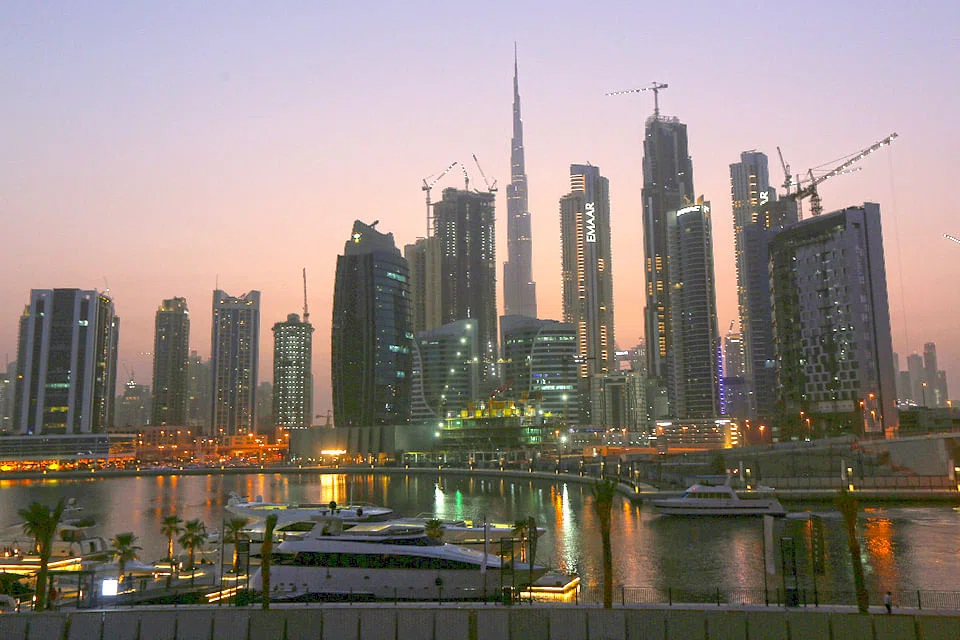
Consider the construction of the Burj Khalifa in Dubai at a reported cost of US$1.5 billion. The building of the world's tallest skyscraper started in 2004, long before anyone had even an inkling of the Great Financial Crisis. But it was only completed in late 2009, soon after the onset of the worst financial disaster in living memory. The timing of the launch could not have been worse for the developer.
There's something else. It doesn't really matter whether a developer builds condos, offices, business parks, shopping malls or industrial properties - rising land prices can be hazardous to any builder. That's because the initial investment could, in some instances, be exorbitantly high, which increases the risk for the builder.
In some developing economies, it might still be possible to buy land on the cheap and hope that climbing property prices could lead to exceptional profit on completion. But that model is fast becoming harder to execute in developed countries such as, say, Singapore.
So, some established developers prefer to focus on recurring rental income, or perhaps a convenient exit route by injecting a portion of their completed buildings into real estate investment trusts (Reits). This helps them recycle some of their capital. It can work. CapitaLand and Sino Land have, for instance, used that strategy to good effect.

With so many factors to consider, property developers could be a minefield for investors. That said, homing in on bottom-line profits could be a good place to start identifying possible prospects.
However, it is important to bear in mind that developers' net profits can be uncomfortably lumpy. So, it could be better to look at profits over longer periods, rather than income in any individual year. That should help even out some of the unevenness.
On that basis, the net income margins of property developers don't look too bad. The median margin for 22 Asian developers over the last 12 years has been a respectable 20 per cent. In good years, the margin was as high as 45 per cent. But in leaner years, the margin dipped as low as 15 per cent. In the main, though, those high net income margins have been the biggest driver of return on shareholder equity, which has averaged around 10 per cent over the last decade.
What is remarkable about many property developers has been the unexpectedly low levels of borrowing employed by these businesses. The median leverage ratio is a modest 1.7, which means that, on average, their assets are more than twice their liabilities. But that has not been not true in every instance - some Chinese developers have borrowed heavily. Country Garden Holdings, which is the developer of Forest City in Iskandar, and Shanghai Zendai have as much in liabilities as they do in assets. That could be risky, if credit should suddenly dry up or if interest rates should rise.
Currently, property developers do not look expensive on several measures. On average, they are selling below their book values. Perhaps the market thinks that property could be overvalued, and that prices might be due for correction. That is possible.
But bear in mind that developers are, to some extent, masters of their own destiny. After all, property prices can be as much a function of supply and demand as anything else. So, developers could deliberately cut back on the supply of fresh property to correct any fall in asset prices.
As it stands, the median price-to-book ratio is an undemanding 0.7. It means that we are buying a dollar's worth of assets for just 70 cents. The median price-to-earnings ratio is an equally modest 16. In other words, we are buying a dollar of earnings for $16. Put another way, if property developers should pay out all their profits as dividends, then that would equate to an average yield of more than 6 per cent.
But property developers, as a rule, don't pay out everything they make. They retain around 80 per cent of their profits. Nevertheless, their dividend yields are still quite respectable. The median yield is 3.2 per cent. What's more, with returns on equity of around 10 per cent, and an average retention ratio of 80 per cent, those pay-outs could grow at about 8 per cent a year.
*The Motley Fool Singapore does not own shares in any of the companies mentioned. David Kuo owns shares in Hongkong Land and Sino Land
Share with us your feedback on BT's products and services
TRENDING NOW

What shattered Crystal Jade? How the culinary empire shrank from 120 to just 9 outlets

‘We’ll wait and see’: Investors wary after STI sinks below 5,000 amid global AI selldown

‘The next 40 years’: SingLand CEO Jonathan Eu on remaking Marina Square

Singaporean extradited to face US charges over global insider trading scheme

