He runs the world’s biggest sovereign wealth fund, but his podcast made him famous
Nicolai Tangen says his more public approach is good for transparency and has given Norwegians greater exposure to the US$2.1 trillion fund
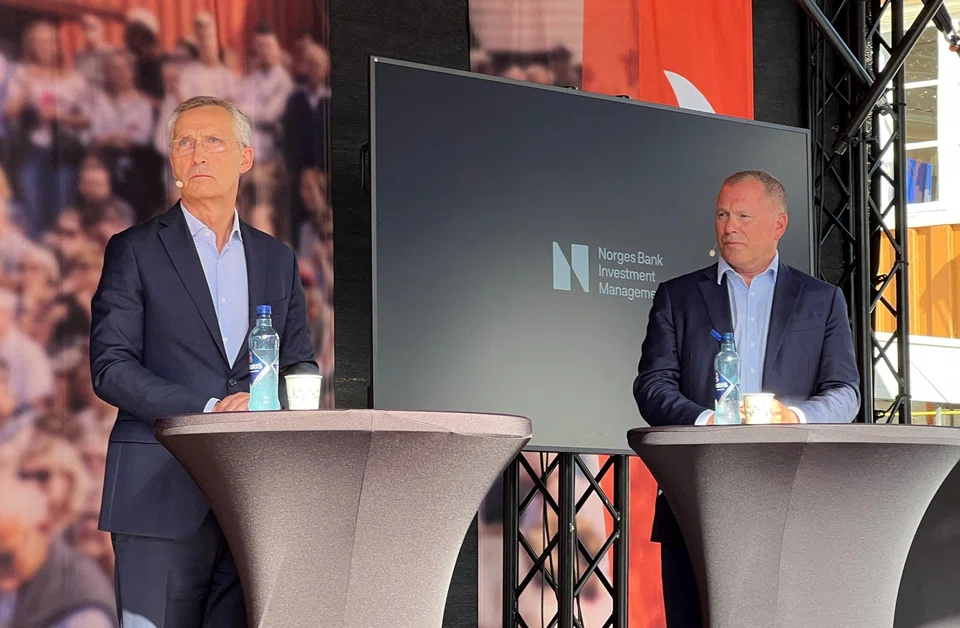
WHEN Nicolai Tangen became the chief executive of Norway’s sovereign wealth fund in 2020, he said he wanted to raise its profile. He succeeded, via media appearances and a weekly podcast in which he talks with some of the world’s top executives, including Elon Musk and Sam Altman of OpenAI.
His two predecessors kept a much lower profile than Tangen, a billionaire former hedge fund manager. He says his more public approach is good for transparency and has given Norwegians greater exposure to the US$2.1 trillion fund, which accounts for about a fifth of the country’s national budget.
But critics and some analysts say that his leadership style has exposed the fund to scrutiny, and that he has elevated his personal brand without doing enough to explain to the Norwegian people why the fund has been so successful.
Since Tangen became CEO of Norges Bank Investment Management, which manages the fund, its value has increased about 80 per cent. In March, he was appointed to a second five-year term after being credited with delivering strong results.
The fund was set up in 1990 to invest Norway’s oil wealth in global stock markets. It operates at arm’s length from the government, partly to ensure that day-to-day decisions are not influenced by politics. The Ministry of Finance has overall responsibility and sets an investing mandate for the fund, which functions as a broadly diversified global index fund. Portfolio managers are given little leeway to actively pick and choose stocks to try to beat the market.
The model has been a huge success. Norway’s sovereign wealth fund is the world’s biggest, with on average a roughly 1.5 per cent stake in every publicly listed company in the world.
An unusual pick
Tangen, 59, was a surprise choice to lead the fund after a lucrative career in finance in London. He divested his stake in AKO Capital, the hedge fund that he founded, and took a big pay cut in accepting the job. He said that taking the role was partly about giving back to Norway, and that it combined his love of asset management and running a big organisation.
But Tangen was embroiled in controversy before he began his new post. His name did not appear on the official list of applicants, spurring questions about the recruitment process, and he was at the centre of an expenses scandal that ensnared his predecessor.
Despite early hiccups, he set out to take a public approach to running the organisation when he took over. His podcast, In Good Company, in which he has chummy conversations with business leaders and thinkers, is the most obvious example.
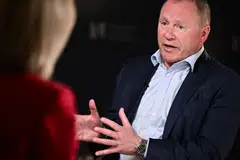
Satya Nadella, the CEO of Microsoft, explained on the show why poetry was like coding. James Gorman, the former Morgan Stanley boss, said the stress of the 2008 financial crisis often made him physically sick. Occasionally, Tangen goes into full content-creator mode, such as when he donned a Domino’s uniform to make a pizza.
The podcast has become his calling card, and he is especially animated when discussing the show. Talking to top thinkers and executives, he said, gives him lessons on how to better manage the fund. It also provides Norwegians with insights into the companies their money is invested in and helps the fund with recruitment, he added.
But he dismisses accusations that it is about self-promotion. “This is the fund’s podcast; this is not to elevate myself,” he said in an interview in his office in Norway’s central bank headquarters in Oslo.
“I believe in combining different disciplines,” Tangen added. His own interests range widely, from organisational behaviour to Nordic modernist art and social psychology. “The people who are the most creative, they are the ones who have the most different types of background and who combined information in a new way,” he said.
Tangen also opines on topics in the media that many business leaders have stopped talking about publicly for fear of provoking US President Donald Trump and his allies. In recent weeks, he has discussed the threat and opportunity of artificial intelligence and why lobbying in Washington has become a “full-time job” for CEOs.
He has also continued to talk about climate change, even though it has become a toxic topic for many executives since Trump was re-elected. “We think it’s part of long-term investing that companies need to be sustainable,” he said. “We don’t think climate is a political question; we think it’s a financial issue.”
Increased scrutiny
As the fund has grown, it has attracted more attention. That pressure has become more acute in the past year, as Trump has wielded economic policy as a tool to punish countries through tariffs and other trade barriers.
But Tangen’s public interventions have made things more difficult, analysts say.
“It was always a risk that raising attention to the fund made it more vulnerable,” said Karin Thorburn, a finance professor at the NHH Norwegian School of Economics and the Wharton School who served on the 2022 commission. “He’s putting the fund in the public spotlight and making foreign governments more aware of it.”
Others say Tangen has spent too much time pontificating.
Espen Henriksen, an associate professor of finance at BI Norwegian Business School, said hosting a podcast in English on general business issues had done little to explain to Norwegians how the fund actually works.
By elevating his own profile, Henriksen added, Tangen has given the impression that he operates in the mould of a CEO of a big active investment firm such as BlackRock or Vanguard.
In August, those criticisms burst into the public consciousness over the war in the Gaza Strip and the fund’s investments in Israeli companies with ties to the military campaign.
After a political and public pressure campaign and calls for Tangen to resign, the fund sold its stakes in about half of the Israeli firms in its portfolio and stopped using an external Israeli fund manager to make its investments.
It also divested from the American construction company Caterpillar, where it was a top shareholder, because the Israeli military was using its bulldozers in Gaza and the West Bank. Targeting a US business angered the Trump administration, which called the decision “very troubling”.
Thorburn said the controversy threatened to undercut the fund’s model as a non-political investor. “It was a worrying precedent,” she said, adding that creating the perception that politics could weigh on investment decisions opened up the fund – and Norway – to retaliation.
In November, Jens Stoltenberg, Norway’s finance minister, suspended the ethical rules that underpinned those decisions and said they would be reviewed.
Norges Bank Investment Management declined to comment on the divestments.
“Mr Tangen’s visibility and personalisation shift focus from the institutions to the individual, making the fund a bigger target for political storms,” Henriksen said. “The fund’s strength lies in boring, rule-based institutions.”
Tangen does not appear to have radically changed his public approach, despite the criticism.
Last January, a local newspaper revealed text messages between Tangen and Musk that showed the pair had clashed after the fund, one of Tesla’s largest shareholders, voted against a huge pay deal for Musk in his role as CEO at Tesla.
“That’s part of my role, to have relationships with CEOs,” Tangen said in an interview. He declined to comment on Musk’s controversial involvement in politics and said he would now communicate with business leaders like him by e-mail. “Some folks thought text was too comfortable or casual.”
But he shows little sign of going quiet. NYTIMES
Decoding Asia newsletter: your guide to navigating Asia in a new global order. Sign up here to get Decoding Asia newsletter. Delivered to your inbox. Free.
Share with us your feedback on BT's products and services