

Hedge funds lose appeal to wealthy individuals
Institutions have taken over as big investors in the funds.

Genevieve Cua
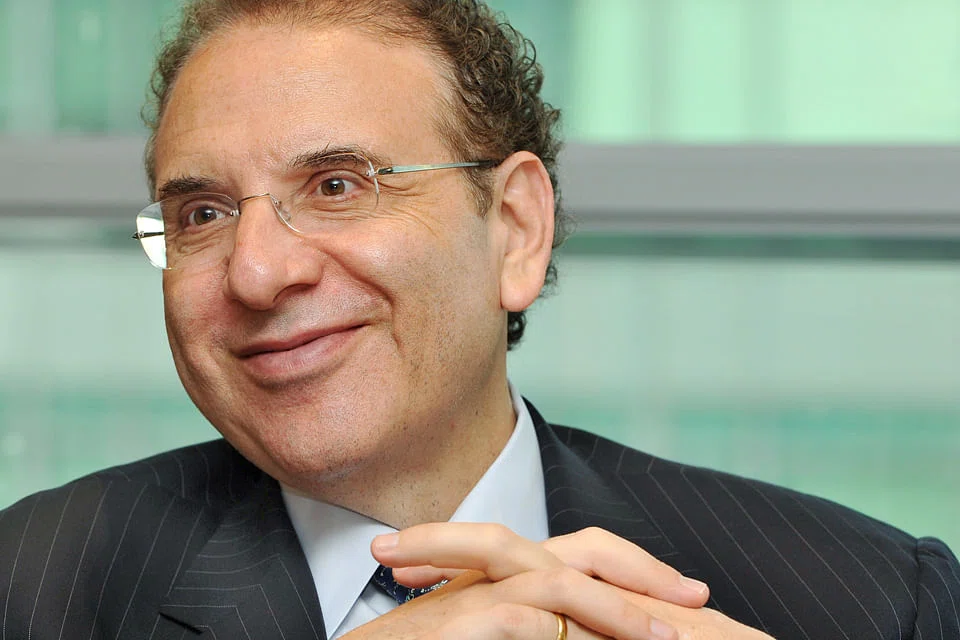
FUNDS of hedge funds, which pool together alternative strategies and managers in a single fund vehicle, appear to have mostly dropped off the radar of high net worth individuals and family offices.
Instead, the bulk of inflows today is from institutional investors, who see the vehicle as a means to achieve alpha, says Isaac Souede, chairman and chief investment strategist for Permal Group, an alternative asset manager. Permal manages some US$23 billion in assets.
Based on data from Citi Investment Services, wealthy individuals and family offices provided some US$500 billion, or 80 per cent of capital, to the hedge fund industry in 2002. Institutions' share was 20 per cent, or US$125 billion.
This started to reverse from 2008. In that year, individuals and family offices' share of capital to hedge funds was 62 per cent, or US$1.64 trillion, and institutions' share was 38 per cent, or US$991 billion.
By 2018, Citi expects institutions' share of capital to rise to 74 per cent, or US$3.56 trillion. Individuals and family offices' share is expected to fall to 26 per cent, or US$1.25 trillion.
Permal's inflows in Asia already mirror this: In the last 12 months, its asset mix has been 85 per cent institutional and 15 per cent individual.
Says Mr Souede: "We know the reasons - there was the taint of 2008. Institutions, on the other hand, are pouring money in, and you can see why. Returns from fixed income have been zero. Equities are high risk and many institutions can't participate.
"If I tell you I can deliver 6 to 8 per cent a year, and I have a credible process, and I can give you transparency, it seems an attractive proposition.''
In 2008, hedge funds not only suffered losses, some also "gated" their funds - that is, they halted withdrawals for a period. Individual losses were likely made more acute with leverage.
Since 2008, Permal has restructured its business to offer clients more customised solutions.
It launched PMAP, the Permal Managed Account Platform, which enables clients to invest through separate accounts rather than comingled with other assets. This platform allows more transparency, flexibility and control over asset allocation, and also enables Permal to negotiate lower fees. The platform has some US$9 billion in assets and over 100 accounts.
Mr Souede says PMAP accounts outperform comingled funds by about 2.7 per cent a year.
Of that, 80 basis points is a fee discount negotiated by Permal. "The other 2 per cent is the result of how we use (the underlying managers), whether we take more concentration, a slice of a strategy or more leverage on the strategy. From Permal's perspective, I think we made a strong attempt to earn our keep.''
He says investors today face a "conundrum'' in markets. "Most people will tell you equities are somewhere between fairly valued and over valued. But bonds are even more over valued. So what do you do? It's one of the things that creates a tremendous demand for yield assets such as real estate . . . Truly, the only country capable of increasing yields slowly is the US . . . All other yields are heading to zero and as it gets lower, you are not getting paid for risk.''
The US equity market's cyclically adjusted price earnings (CAPE) ratio is 28. When CAPE is 25 or higher, the real annualised return over the next five years is likely to be negative 1.7 per cent, and 0.4 per cent over 10 years.
Mr Souede believes US economic growth is sustainable, although he is cautious on US equities.
"More or less we've reached the end of PE expansion. Most of the market rise in the last five years was due to PE expansion. Going forward it's really about earnings. American wages are going up. It's a trend that has to happen, but as it does, can companies increase productivity?
"It's a time to be much more active in equities than passive. Good active investors in the first part of the year are up between 5 and 9 per cent. As passive investing gets more popular, you may be entering a phase in America where active investing could earn its keep.''
Turning to the Greek crisis, he says Greece is relatively unimportant to Europe, accounting for less than 2 per cent of the region's GDP.
For now, Greece has skirted a "Grexit'' from the European Union, thanks to a deal that aims to resolve the debt crisis but will require more austerity. The bigger question that the crisis raises, he says, is its impact on the political cohesion of the EU.
He is positive about Japan and the structural reforms underway. Japan's market valuation at a price earnings of 13 times is also more attractive than the US' 18 to 19 times and Europe's 17 times.
In addition to quantitative easing by the Bank of Japan, there is also the sizeable reallocation of assets into equities by the Government Pension Investment Fund of about 137 trillion yen (S$1.5 trillion). A number of other Japanese pension funds have followed suit.






