Higher for longer after all? Investors see Fed rates falling more slowly
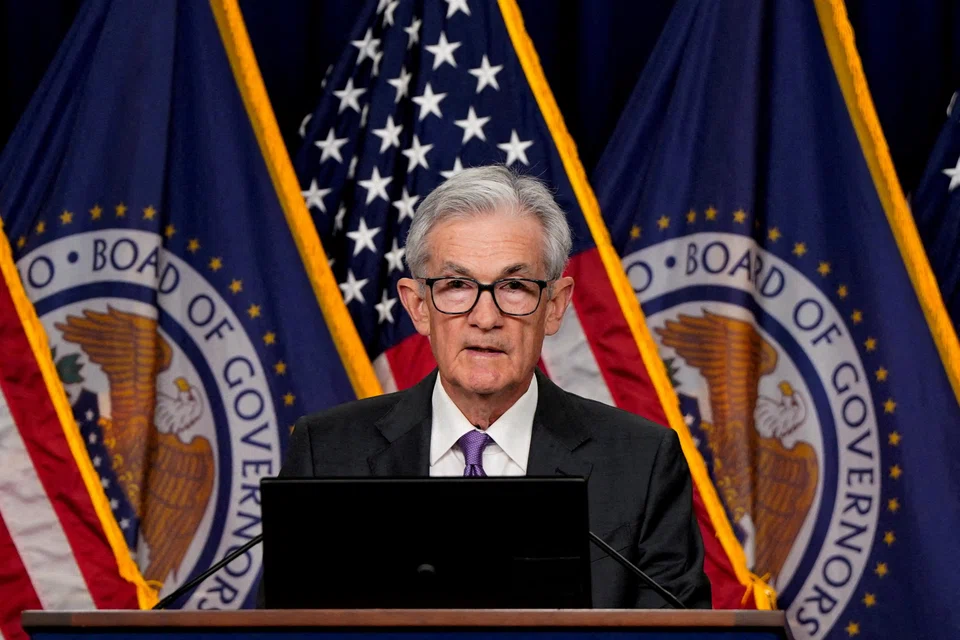
INVESTORS were betting big on Federal Reserve rate cuts at the start of 2024, wagering that central bankers would lower interest rates to around 4 per cent by the end of the year. But after months of stubborn inflation and strong economic growth, the outlook is starting to look much less dramatic.
Market pricing now suggests that rates will end the year in the neighbourhood of 4.75 per cent. That would mean Fed officials had cut rates two or three times from their current 5.3 per cent.
Policymakers are trying to strike a delicate balance as they contemplate how to respond to the economic moment. Central bankers do not want to risk tanking the job market and causing a recession by keeping interest rates too high for too long. But they also want to avoid cutting borrowing costs too early or too much, which could prod the economy to re-accelerate and inflation to take even firmer root.
So far, officials have maintained their forecast for 2024 rate cuts, while making it clear that they are in no hurry to lower them.
Here is what policymakers are looking at as they think about what to do with interest rates, how the incoming data might reshape the path ahead, and what that will mean for markets and the economy.
What “higher for longer” means
When people say they expect rates to be “higher for longer”, they often mean one or both of two things. Sometimes, the phrase refers to the near term: The Fed might take longer to start cutting borrowing costs and proceed with those reductions more slowly this year. Other times, it means that interest rates will remain notably higher in the years to come than was normal in the decade leading up to the 2020 pandemic.
When it comes to 2024, top Fed officials have been very clear that they are primarily focused on what is happening with inflation as they debate when to lower interest rates. If policymakers believe that price increases are going to return to their 2 per cent goal, they could feel comfortable cutting, even in a strong economy.
When it comes to the longer term, Fed officials are likely to be more influenced by factors like labour force growth and productivity. If the economy has more momentum than it used to, perhaps because government infrastructure investment and new technologies like artificial intelligence are kicking growth into higher gear, it might be the case that rates need to stay a little bit higher to keep the economy operating on an even keel.
In an economy with sustained vigour, the rock-bottom interest rates that prevailed during the 2010s might prove too low. To use the economics term, the “neutral” rate setting that neither heats up nor cools down the economy might be higher than it was before Covid-19.
For 2024, sticky inflation is the concern
A few Fed officials have argued recently that interest rates could remain higher this year than the central bank’s forecasts have suggested.
Policymakers projected in March that they were still likely to lower borrowing costs three times in 2024. But Neel Kashkari, the president of the Federal Reserve Bank of Minneapolis, suggested during a virtual event last week (Apr 4) that he could imagine a scenario in which the Fed did not lower interest rates at all this year. And Raphael Bostic, the Atlanta Fed president, said he did not foresee a rate cut until November or December.
The caution comes after inflation – which came down steadily throughout 2023 – has moved sideways in recent months. And with new strains surfacing, including a pickup in petrol prices, mild pressure on supply chains after a bridge collapse in Baltimore and housing price pressures that are taking longer than expected to fade from official data, there is a risk that the stagnation could continue.
Still, many economists think that it is too early to fret about inflation’s stalling out. While price increases were quicker in January and February than many economists had expected, that could have owed partly to seasonal quirks, and it came after meaningful progress.
The consumer price index inflation measure picked up to 3.8 per cent in March, after volatile food and fuel costs were stripped out. That is the same reading as February’s, but far below a 6.6 per cent peak in 2022.
“Our view is that inflation is not getting stuck,” said Laura Rosner-Warburton, senior economist at MacroPolicy Perspectives. “Some areas are sticky, but I think they’re isolated.”
The recent inflation data does not “materially change the overall picture”, Jerome Powell, the Fed chair, said during a speech last week, even as he signalled that the central bank would be patient before cutting rates.
The longer run is also in focus
Some economists – and, increasingly, investors – think that interest rates could stay higher in coming years than Fed officials have predicted. Central bankers forecast in March that rates will be down to 3.1 per cent by the end of 2026, and 2.6 per cent in the longer run.
William Dudley, a former president of the Federal Reserve Bank of New York, is among those who think that rates could remain more elevated. He noted that the economy had been expanding quickly despite high rates, suggesting that it can handle higher borrowing costs.
“If monetary policy is as tight as chair Powell is arguing, then why is the economy still growing at a rapid pace?” Dudley said.
And JPMorgan Chase chief executive officer Jamie Dimon wrote in a shareholder letter this week that big societal changes – including the green transition, supply chain restructuring, rising healthcare costs and increased military spending in response to geopolitical tensions – could “lead to stickier inflation and higher rates than markets expect”.
He said the bank was prepared for “a very broad range of interest rates, from 2 to 8 per cent or even more”.
Borrowing would be pricier
If the Fed does leave interest rates higher this year and in years to come, it will mean that the cheap mortgage rates like those that prevailed in the 2010s are not coming back. Likewise, credit card rates and other borrowing costs would most likely remain higher.
As long as inflation is not stuck, that could be a good sign: Super-low rates were an emergency tool that the Fed used to try to revive a flailing economy. If they do not come back because growth has more momentum, that would be a testament to a more robust economy.
But for would-be homeowners or entrepreneurs who have been waiting for the cost of borrowing to come down, that could provide limited comfort.
“If we are talking about interest rates that are higher for longer than consumers were expecting, I think consumers would be disappointed,” said Ernie Tedeschi, a research scholar at Yale Law School who recently left the White House’s Council of Economic Advisers. NYTIMES