Hong Kong steps up efforts to lure billionaires to set up family offices
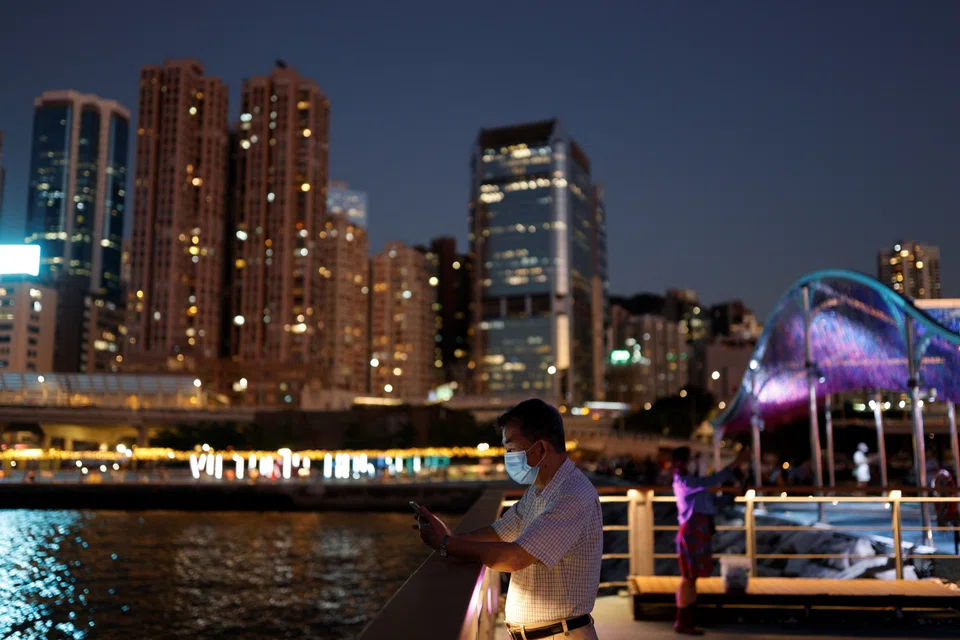
HONG Kong officials are planning roadshows across the Middle East, Europe, South-east Asia and the Chinese mainland to lure the super-rich to set up family offices in the city, as part of a strategy to bolster its position as an international asset and wealth management hub.
The move comes as Hong Kong tries to reboot its image and economy, which have suffered as a result of strict Covid policies and an exodus of tech and financial talent. The city recently lost its title as Asia’s top financial centre to Singapore in the Global Financial Centres Index released in September, which ranks the competitiveness of the world’s leading financial centres.
Family offices are privately held companies that manage the investments, tax affairs and even lifestyles of ultra-high-net-worth individuals and their families. Collectively, they oversee trillions of dollars, and have become a growing force in financial markets.
The Hong Kong government only set up a specialised family office task force in June 2021 , which operates under InvestHK, the agency charged with boosting the city’s status as an international business hub. But Singapore has long been dedicated to building a local family office ecology in the city-state, and set up its Family Office Development Team in March 2019 as a joint initiative between the Economic Development Board and the Monetary Authority of Singapore (MAS), the central bank and financial regulator.
The number of single family offices (SFOs) in Singapore soared 75 per cent in 2021 to around 700, the MAS disclosed in July. Among them are high-profile names such as James Dyson, founder of vacuum cleaning giant Dyson; top Hong Kong tycoon Li Ka-shing; and Ray Dalio, the billionaire investor who built Bridgewater Associates into one of the world’s biggest hedge funds.
“Hong Kong has its own advantages compared with Singapore,” Wong Hang-tak, head of financial services and global head of family office at InvestHK, told Caixin, saying that the city needs to showcase those advantages by boosting external publicity.
Hong Kong laid the groundwork for its family office initiative in August 2020 when it launched the limited partnership fund (LPF) structure, which allows private funds and family offices to register locally as investment vehicles. Within just over two years, some 500 private funds have registered under the model – while Singapore has only 700, even though it introduced similar rules 13 years ago, he said.
The LPF has become a widely used structure for private fund managers to raise capital for investment. The similarities between Hong Kong’s structure and those in other jurisdictions such as the Cayman Islands, Singapore and the Chinese mainland, along with its relatively low cost, make it a competitive and viable alternative for family offices to grow.
The Hong Kong government is also set to roll out a tax concession for investment profits earned by SFOs, following a public consultation earlier this year.

The expansion of family offices should not only be regarded as an essential part of Hong Kong’s strategy to promote itself as an international financial hub, but more importantly, as a means of wooing the world’s most capable and talented industrialists, inventors and philanthropists to invest and develop in the city, said Gao Hao, director of the Global Family Business Research Center at the Tsinghua University PBC School of Finance.
“Family offices should not only be seen as a slice of the wealth management industry,” he said. “Standing behind them are entrepreneurs with the finest abilities in building innovation, creativity and wealth, especially the heads of Fortune 500 companies and high-tech firms.” CAIXIN GLOBAL
Decoding Asia newsletter: your guide to navigating Asia in a new global order. Sign up here to get Decoding Asia newsletter. Delivered to your inbox. Free.
Share with us your feedback on BT's products and services