

How fear robs investors of opportunities and returns
When doubts and fear crowd out the big picture, keep the faith and focus on the even-bigger picture. Building guardrails against poor behaviour will help us to stay invested
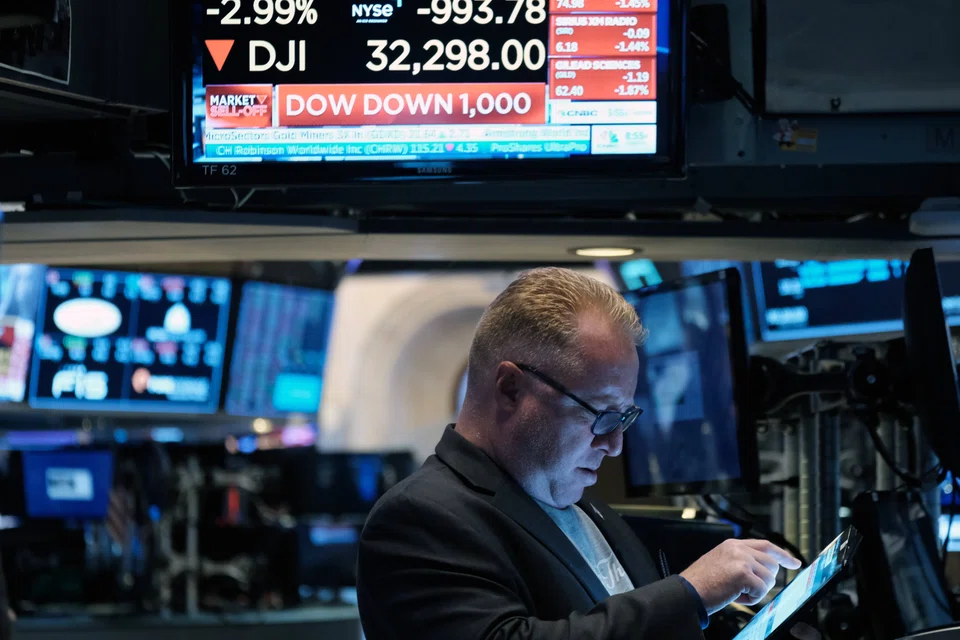
IT’S not brains that will help you beat the stock market – it’s your stomach.
Peter Lynch once said that you can be the world’s greatest expert in financial statements. But without a strong stomach, you will succumb to the negative headlines, and sell in panic when share prices go down. That is what is happening today.
With dark clouds gathering around the global economy, stocks are generally cheaper today than they have been for the past two years. Yet, not many are won over by the lower valuations. It’s not for the lack of data or analysis. There is more information readily available today than there has ever been.
Instead, the root of the problem is something simpler – fear.
When fear overcomes reason
When it comes to investing, many picture themselves making rational, well-considered decisions. However, in reality, many tend to react poorly to stock market moves.
This disconnect is down to the way we process information, says Daniel Kahneman, seen as a founding father of behavioural finance. In his book, Thinking, Fast and Slow, he describes two general modes of thinking: System 1 (reflexive) and System 2 (reflective). System 1 is built for intuitive, snap decisions; System 2 is primed for untangling complex problems which require time.
Under this framework, most investors see themselves as System 2 thinkers, tapping on the analytical side of their brain to process data, deliberate over the pros and cons, and arrive at a rational investment decision. Yet, in practice, System 1 often overwhelms System 2 before the latter has a chance to act.
It is not a matter of choice. Kahneman says that, most of the time, we function based on System 1. Our reflexive mode is useful for daily routines and familiar situations, and it does a good job in prompting the appropriate reaction.
In addition, because System 1 is adept at processing similarities, it will alert us when there is a deviation from the norm. For instance, if you step onto the road and a car is speeding towards you, you will sense danger and move out of the way. Here, System 1 kicks in automatically without deliberation, saving your skin.
Therein lies a wrinkle. What’s good for avoiding danger is not always helpful when it comes to investing. In particular, watching the stock market fall day by day, month after month, is enough to send investors’ System 1 into overdrive, overwhelm their System 2 mode, and cause them to panic-sell.
The result is what we see today – few takers despite the lower stock valuations.
The everlasting effects of fear
Amid the doom and gloom, it is easier to be a pessimist today than it is to be an optimist. Singapore faces a long list of challenges, ranging from disrupted supply chains, protectionism among trade partners, higher cost of living, and rising interest rates.
Unfortunately, the insistent drone of negative headlines can also alter the way we think about the future. Why is that the case?
Journalist and author Jason Zweig has the answer. In his book,Your Money and Your Brain, he says predictions of the future often fall prey to over-reliance on the short-term past to forecast the long-term future. In the current context, it is akin to taking all of today’s worst problems and projecting these worries indefinitely into the future. Faced with nothing but gloom, it’s no wonder fearful investors are sitting out.
Under the circumstances, it is helpful to remember that the stock market has undergone worse situations before. Tellingly, not all predictions of doom turned out to be true.
Fearful prophecies gone wrong
In 2014, a former Harvard economist withdrew almost US$1 million of his own money, in the belief that cash would lose almost all its value due to the US Federal Reserve’s zero-interest-rate policy. Yet, in today’s rising interest rate environment, the US dollar has gained ground over almost every major currency. That’s not the only prediction that didn’t pan out.
In 2012, a high-profile investment advisor suggested that investors should dump most of their US stocks in favour of gold. With the benefit of hindsight, we can now say that it was a terrible idea.
Over the past decade, the value of the S&P 500 index, which represents 500 of the largest US companies, almost tripled, but the value of gold fell by 3 per cent.
The lesson here is to be aware of the undue influence of the current problems we see today. To be clear, this is not about being blind to the real issues that we have to deal with in our day-to-day life. But to assume that the challenges of today will persist unfettered for the long term would be an incomplete approach.
As history has shown in the two examples above, positive scenarios are possible too.
Finding courage in fearful times
Avoiding predictions is one thing, but what about our inherent System 1 biases? Here, we have to accept that we can never fully get rid of our innate tendencies, nor can we control them at will. There are simple things we can do to lessen the negative effects of our biases.
Firstly, we can remove the column which shows the daily stock movements from our portfolio trackers. Think about it: Whether a stock is up or down in a single day should play no part in your investment decisions and only serves to inflame our System 1 biases, potentially triggering the wrong reaction.
Secondly, setting up simple guard rails can moderate our buying and selling when investing. For instance, we can earmark a specific amount of cash to invest at every interval when the S&P 500 declines. That way, we would be more disciplined in how we put our money to work and avoid buying too much of a stock as the stock market falls.
The third action is to start writing an investing journal. You can start by writing down the reasons why you bought a stock, its valuation, and the risks you see. Doing so will make you more objective in judging the performance of the underlying business in the future.
Writing a journal will also help you figure out your past tendencies in different stages of the stock market, which can become a blueprint for guardrails against your own behaviour in the future.
Get smart: The even bigger picture
Keeping the faith and stockpicking should go hand in hand, says Peter Lynch, as success in the latter depends on the former. When confronted with doubts and despair about the current big picture, he suggests that we concentrate on what he calls the “Even Bigger Picture’‘.
In his book Beating the Street, he says that stocks have provided patient owners with gains of 11 per cent per year, on average, while other instruments such as Treasury bills, bonds, and certificate of deposits have returned less than half that amount.
Now, that is a useful picture to have in mind. With the right measures in place, we can emerge with a stronger stomach, and hopefully, some satisfying gains in the stock market. But this is so only when we keep faith and stay invested for the long term.
The writer is co-founder of The Smart Investor (https://thesmartinvestor.com.sg/), a website that aims to help people to invest smartly by providing investor education, stock commentary and market coverage.
TRENDING NOW
Chairman’s role in spotlight with raft of proposed new rules for Singapore boards

Director of PR firm sacked for secretly recording internal meeting loses wrongful dismissal claim
Indonesia stocks suffer worst plunge in nearly 30 years as MSCI proposes standalone status

If Europe goes to war, the fallout will be felt in East Asia

