

Inflation, climate change to drive higher insurance premiums; but some tail risks remain

Genevieve Cua
PREMIUMS are set to rise globally, driven by rising risks brought on by climate change and inflation, said Moses Ojeisekhoba, Swiss Re global chief executive for reinsurance.
But while rising premiums paint a promising outlook for insurers, the industry continues to grapple with unknowns that could saddle them with large and unexpected liabilities, he noted. Policy language for some risks such as business interruption and cyber is expected to come under scrutiny in efforts to limit exposures.
Still, the overall outlook is positive for life and non-life sectors. “The main reason is that exposures are growing. The value of properties rises with greater urbanisation and inflation. Whatever item you have today, the cost of replacing that item tomorrow is higher.
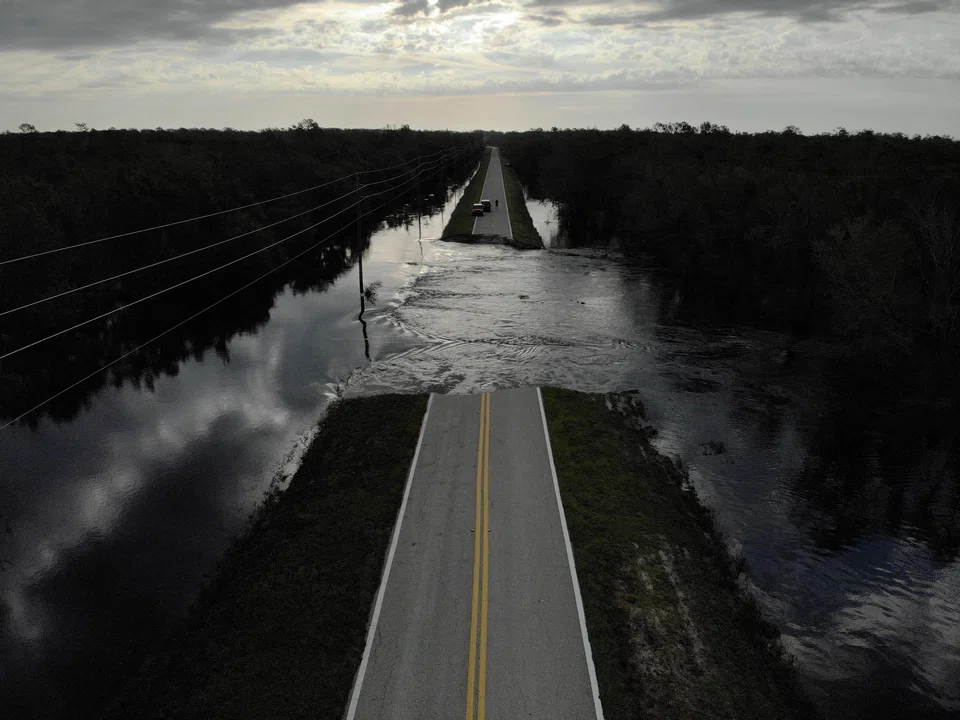
“But also, the exposure in terms of risks is growing. With climate change there is greater incidence and severity of events. Events that we had expected to happen once every 50 or 100 years are happening almost every other year. You have to adjust the price of risk to reflect the exposures. That means premiums overall will grow.’’
Economic growth is also expected to underpin demand for protection. “On balance, around the world, GDP (gross domestic product) per capita is also rising. As you accumulate assets and wealth, you also feel the need to protect yourself – in terms of health from a morbidity standpoint or life, and savings related products.’’
Covid-19 has been a wake-up call for some unexpected exposures. For example, the pandemic forced governments around the world to impose shutdowns, which froze companies’ operations and sparked supply chain bottlenecks. However, business interruption cover, mostly part of property and casualty (P&C) policies, is typically designed for disruptions caused by physical damage due to natural calamities such as earthquakes.
“Our pandemic models do a good job of calibrating things like intensity of disease and the rate of spread across the world. But the one thing most models did not contemplate is government actions like shutting down businesses at scale.’’ Asia, he said, was an exception as it had suffered the Sars outbreak around 2003, and hence policy language was “much tighter’’.
More than two years since the onset of Covid-19, litigation from business interruption claims is yet unresolved in many countries. A paper by the Organisation for Economic Co-operation and Development (OECD) says many claims were subject to policy interpretation and court decisions in several countries, including the UK, Australia and South Africa.
Ojeisekhoba expects that by 2023 across Europe and the US, contracts will explicitly exclude non-physical damage from infectious disease. If non-physical damage is included, premiums would be adjusted upwards. “The rate-making process has changed significantly.’’
On risks arising from climate change, he noted that secondary perils are a growing concern. Secondary perils are broadly defined as smaller to mid-sized events which follow a primary peril. A primary peril is a large-scale catastrophe such as an earthquake or tropical cyclone. An example of a secondary peril is an earthquake which causes a tsunami or fire.
According to Swiss Re Institute, global insured losses from natural catastrophes came to around US$81 billion in 2020; secondary perils accounted for over 70 per cent of the insured losses.
This year Hurricane Ian is expected to cause insured losses of between US$53 billion and US$74 billion, said RMS, a Moody’s company. Swiss Re expects claims from Hurricane Ian to come to US$1.5 billion. It reported a net loss of US$285 million for the first nine months of 2022, driven by a US$442 million net loss in the third quarter.
Ojeisekhoba said insurance and reinsurance companies have well-developed models for primary perils such as hurricanes. “But secondary perils were far less well-modelled because the incidence was infrequent. But now they’ve become much more frequent; even the nature of some primary perils has changed.’’
“The industry has to understand that in their rate making, the room for error is much larger. No matter how well we try to develop the models, they just don’t cater for the variability that exists in the world. Looking at the extremities of weather and higher temperatures, there is no model that comes anywhere close to being accurate. If you’re going to charge premiums, you need to be cognisant of your deficiencies and account for that in the price.’’
Cyber risk, he added, is an area where risks are burgeoning, and the protection gap is widening. Cyber insurance premium is estimated at around US$13 billion globally at end-2023, from only US$5 billion a year ago. By 2040, Swiss Re expects cyber premiums to grow to US$300-400 billion.
For insurers, the biggest risk in cyber is that of the accumulation risk, where a single attack or event could trigger a large number of claims. As digitalisation creates a more interconnected world, this scenario is far from remote. Companies and individuals, for example, increasingly use third-party cloud services. A cyber attack on major infrastructure could also cause major shutdowns.
“If you have a major event like an outage in the cloud, that impacts thousands of companies and maybe the entire world. The accumulation event is a significant issue for the insurance industry. The potential loss from a single event could challenge the capitalisation of the entire industry.’’ He believes that in order to offer such cover, insurers must work with governments to create pools of capital.
“Our view Is that over the next three to five years, you’ll see clearer definitions of what we call cyber catastrophe.’’ Some insurers have rolled out products that exclude such accumulation events.
TRENDING NOW
Two Singapore-listed palm oil firms named in Greenpeace report on Indonesian plantation fires
Singapore Airlines flight returns to San Francisco after ‘unruly’ passenger incident
Singapore looking into which companies responsible for haze-causing fires: PM Wong
Deluge IPO 3.86 times subscribed ahead of SGX debut

