Institutions and wealth managers in Asia propel outsourced-CIO demand in an uncertain world
Government-related entities and family offices in Asia are adding to a healthy pipeline of partnerships for outsourced chief investment officer services, say senior executives

[SINGAPORE] Institutional investors and wealth managers in Asia are increasingly turning to providers of outsourced chief investment officer (OCIO) services, as they seek to broaden their portfolio allocations and benefit from cost savings, experts said.
Also, unlike in North America and the UK, the OCIO market in Asia is not dominated by corporate pension funds. It is driven by government-related institutions and the wealth segment, they told The Business Times.
The global OCIO industry trebled in size over 10 years, growing from around US$1 trillion in 2015 to more than US$3.3 trillion by Dec 31, 2024, according to asset management research firm Cerulli Associates.
The US makes up three-quarters of OCIO assets under management (AUM), followed by Europe at 9 per cent, the UK at 8 per cent, Canada at 3 per cent, and Asia at 2 per cent, noted a 2025 survey by Chestnut Advisory Group.
It added that the global OCIO market is forecast to grow to US$5.78 trillion by 2030.
However, Asia contributes significant AUM growth to the global market, mostly in Japan (22 per cent), with Asia ex-Japan adding another 15 per cent to the mix.
Notably, the average OCIO mandate from the Middle East is the largest among regions, at close to US$1 billion. This is followed by Europe (ex-UK) at US$646.1 million, and Asia (ex-Japan) at US$599.5 million.
The US offers the smallest mandates on average, at US$104.6 million, according to the Chestnut Advisory Group data.
Institutional and wealth growth
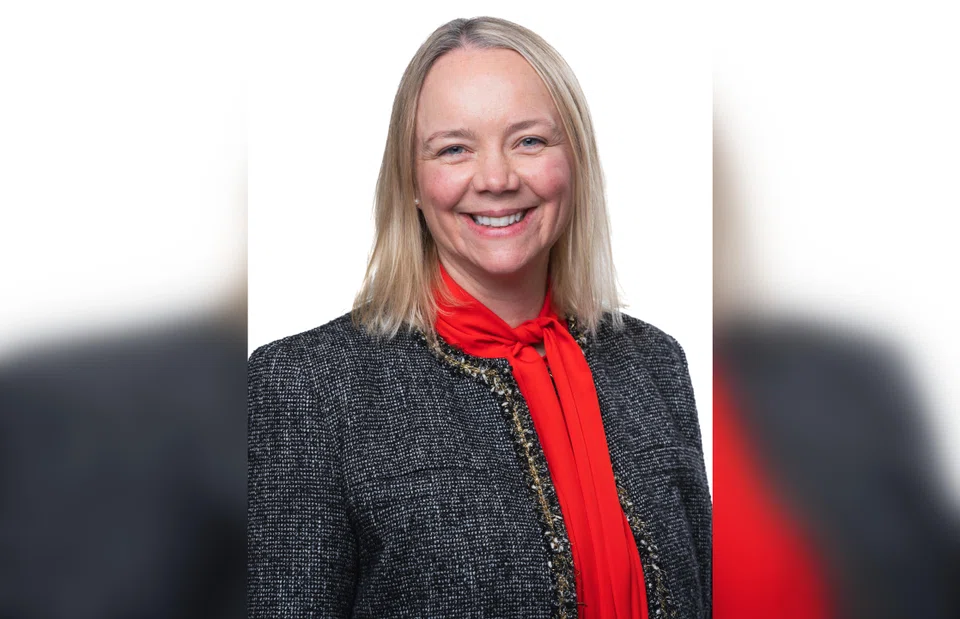
Katy Thorneycroft, the London-based CIO of multi-asset solutions international at JP Morgan Asset Management (JPMAM), noted: “We are engaging with our clients here in Singapore, which is very interesting, and what they’ve been looking for is assistance from a third party that has more of a global perspective, the operational infrastructure, (and) the ability to be able to have more tools at their disposal to solve their investment needs.”
“Now, I think it’s important that each of these partnership conversations is a little bit different. And from the client side, it could be the case that they’re happy to outsource and delegate all of the decision-making, (but) most of the time they want to retain quite a lot of that,” she told BT during an April visit to Singapore.
In North America and the UK, the OCIO market is driven mainly by corporate pension funds that typically hand over the fiduciary responsibilities and the management of the fund’s entire portfolio – much like a literal “outsourced” CIO.
In Asia-Pacific, however, OCIO services are often sought after by government-related institutions such as sovereign wealth funds, public bodies or endowments, as well as wealth managers and family offices, said industry insiders. Often, they parcel out only parts of fund management to service providers.
Wealth managers, for instance, may look for more advisory services, while other institutions may already have their strategic asset allocations in place and are looking for help with their tactical asset allocation decisions, manager selection, or search for alpha, added Thorneycroft.
Portfolio expansion and cost benefits
The motivations for clients in Asia may also differ from those in North America or the UK.
In some cases, the client might be looking to expand their portfolio allocation to incorporate a wider set of asset classes, such as alternatives or private markets, said Paul Colwell, the Hong Kong-based head of portfolio advisory for investments in Asia at WTW, to BT.
But that will not be very easy, he noted, for an organisation that might have developed its governance around more straightforward, traditional assets, such as equities or bonds, or a strategy with a small number of investment managers.
“Going from that portfolio to something broader, more diversified and more complex in its orientation – that’s a lot of work,” said Colwell.
“And so there may be a desire to work with someone to get access to those investment strategies, who can help them structure the investment strategy portfolio construction, and understand the risk in moving from what they currently have to something else.”
The OCIO model also comes with scale and cost benefits.
This is possible through ways such as “pooling different investors together in a way that enables each of them to benefit from that broad organisational scale”. This could be the result of that provider being able to negotiate with asset managers on fees on behalf of the entire book of clients that they have, he explained.
In some cases, such as corporate-defined benefit pensions – which are present in Asian geographies such as Japan and South Korea – the fund could be shrinking due to drawdowns. This makes it more difficult for organisations to justify having a dedicated internal team to manage the assets, added Colwell.
Navigating uncertainty
Client interest in OCIO services have ramped up in the Asia-Pacific since 2022, particularly for active asset allocation solutions, JPMAM’s Thorneycroft said.
At that time, investors had started thinking about how to navigate a world where inflation and volatility were higher, and correlations across stocks and bonds were “not as stable and negative as what you saw before”.
Some clients were also looking for multi-asset partners with a private-markets platform to help counter the market volatility, she said.
Clients were finding that even though the world was becoming more uncertain, return goals remained the same. Alternatives are one way to help investors navigate the volatility and uncertainty.
“We still believe you’ve got a risk premium in, for instance, private equity over the long term. It is fair to say that with the strong performance that you’ve seen in public markets, you are left with less of a differentiation… from private equity, but (it has been so for only) a short space of time.”
Thorneycroft pointed out that having a diversified portfolio is key, to cushion against times when valuations or internal rates of return are not good. “Then it gets back to the really important point: You have to have the time horizon to be able to do it.”
JPMAM had US$4.1 trillion in assets under supervision as at Sep 30, 2025, and US$438 billion in AUM under its multi-assets solutions division as at Dec 31, 2024.
Post-crisis demand
It is not uncommon for there to be a spike in demand for OCIO services after a period of crisis, noted Rich Nuzum, the New York-based head of OCIO at Franklin Templeton Investment Solutions.
“There’s this occasional review with humility coming in (where allocators think): ‘Our governance was fine in a normal environment, but, in a crisis we weren’t able to be as fast as we want to be. So we’ll look at the OCIO model.’”
In today’s environment, the fund manager, which had US$1.68 trillion in AUM as at Mar 31, advocates that an institutional allocator should “have some money in physical cash with an equity future swap overlay to create the equivalent of an equity index fund exposure”.
“And then, when you hit a crisis, if you need to spend money, you’ve got the cash, you just stop rolling your future swap position,” Nuzum added.
Due to concerns about potential heightened volatility or liquidity needs, some clients are sitting with 5 to 15 per cent in physical cash, waiting to buy assets on the secondary market, if discounts reach, say, US$0.70 on net asset value per unit instead of US$0.85 or US$0.90, he noted.
“We saw that in the global financial crisis for months. We saw that in the Covid drawdown for a few weeks. We saw it in the gilts crisis for a few days,” he said. It was the opportunist clients that had cash and agility of governance that were able to act, added Nuzum.
“And that’s actually another selling point for the OCIO model. With some clients, we have the discretion as an OCIO... to deploy the budget. But we’re accountable for doing it, and if we didn’t do it, if we didn’t pull the trigger in a crisis, we have to explain after the fact why we missed the window.”
TRENDING NOW
He built the Vingroup empire. Now South-east Asia’s richest man is handing some key roles to his sons
Quarter of Singtel special discounted shares sold ahead of CPF Board transfer
Why Tan Aik Keong of digital solutions specialist Agmo wants to make himself less indispensable
Asia needs new energy security architecture