Investing in an energy-driven world
Capital deployed into low energy-intensity, high-quality compounders should outperform
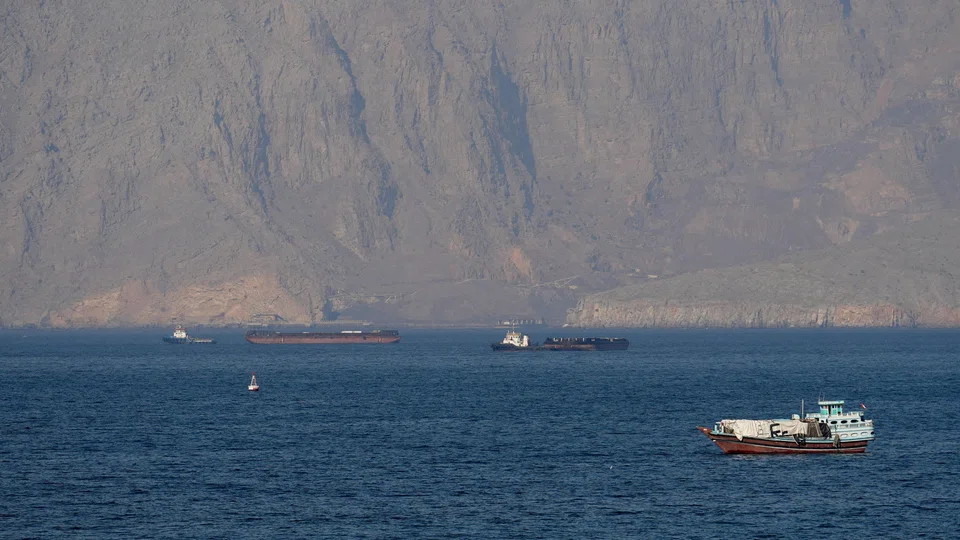
THE most consequential variable for global markets in 2026 is no longer the path of US interest rates or even the durability of the artificial intelligence capex cycle. It is the price of a barrel of oil and by extension, the integrity of a single shipping lane in the Persian Gulf.
Since military action began in late February, the Strait of Hormuz, through which roughly a fifth of global oil supply transits, has oscillated between opening and closure. Brent crude averaged US$103 per barrel in March and briefly touched almost US$128 in early April.
Amid this volatility, futures markets and physical markets are telling investors two different stories. Futures are pricing the rising probability of a durable resolution. Physical prices reflect the reality that insurance dynamics, tanker reroutings and shut-in production will not normalise the moment a diplomatic communique is signed.
We expect the gap to close in the wrong direction, with futures eventually catching up to physical, and look for Brent to average between US$80 and US$85 for the year before easing to between US$65 and US$70 in 2027. This is the central tension investors must price.
A stagflation risk that central banks can’t solve
The International Monetary Fund’s (IMF) April World Economic Outlook, pointedly titled Global Economy in the Shadow of War, captured the dilemma with unusual candour. Under its reference scenario, which assumes a short-lived conflict and a 19 per cent rise in energy prices, global growth is now projected at 3.1 per cent in 2026, down from a pre-conflict path of 3.4 per cent, while headline inflation has been revised up to 4.4 per cent.
The adverse scenario, which IMF chief economist Pierre-Olivier Gourinchas has acknowledged, is increasingly plausible, sees oil at US$100 per barrel in 2026 and growth slowing to 2.5 per cent with inflation at 5.4 per cent. The severe scenario, contemplating sustained damage to regional energy infrastructure, would push growth in 2026 and 2027 towards 2 per cent and inflation above 6 per cent.
These are not academic exercises. They describe a regime in which monetary policy faces its hardest possible trade-off: an energy-driven supply shock simultaneously slows demand and lifts prices.
Central banks cannot drill for oil. They can, however, prevent a one-off price shock from becoming an entrenched inflation problem by anchoring expectations early.
The Monetary Authority of Singapore (MAS) did precisely that on Apr 14, slightly increasing the slope of the Singapore dollar nominal effective exchange rate policy band – the first measured tightening by a major Asian central bank in this cycle.
Singapore’s inflation forecast was raised to 1.5 to 2.5 per cent for the year, and first-quarter gross domestic product grew 4.6 per cent year on year – weaker than the 5.9 per cent the market had expected.
MAS’ move is significant beyond Singapore: It signals that policymakers in import-dependent economies will not wait for second-round effects before acting. Investors should expect other Asian central banks to face similar choices.
Portfolio implication: Low energy intensity wins
For asset allocators, the conclusion follows from the diagnosis. In an environment where energy costs remain elevated for an extended period, even if the conflict resolves, the businesses best positioned to defend margins are those least exposed to the cost shock. We favour low energy intensity sectors, with two clear preferences.
The first is technology, where the recent correction has reset US valuations to mid-2022 levels. The semiconductor complex, including the equipment makers that supply it, remains the cleanest expression of the AI capital expenditure cycle.
Hyperscalers continue to commit unprecedented sums to build-out, and the demand signal across the AI value chain – upstream chips, vertically integrated platforms, and the utility and energy infrastructure required to power data centres – has not weakened.
Diversification into Asian and Chinese technology leaders adds a second dimension: These companies benefit from lower-cost energy inputs and policy support for nuclear and renewable capacity expansion, both of which become more valuable as global energy prices stay structurally higher.
The second is financials, particularly large diversified US banks. The first-quarter 2026 reporting season, which concluded earlier this month, was a strong one.
Goldman Sachs reported net revenues of US$17.2 billion, up 14 per cent year on year, with its equities desk delivering a record quarter. Citigroup posted a 42 per cent jump in profit. JPMorgan and Morgan Stanley likewise reported double-digit earnings growth.
Two structural drivers explain the strength. First, the volatility unleashed by the Iran conflict has been a tailwind, not a headwind, for trading desks. Portfolio rotation into defensive plays has lifted equity volumes, while investment banking activity has accelerated as corporates reposition for a higher-uncertainty environment.
Second, capital returns are robust. Major US banks have executed roughly US$33 billion in share buybacks this quarter, supported by solid profitability and a more accommodative regulatory backdrop in Washington.
Banks are also less directly exposed to energy input costs than industrials, transport or petrochemicals, making them a natural overweight in a stagflation-tilted environment.
A different kind of crisis
The oil shocks of the 1970s offer an instructive parallel, but also an important difference. The closer and more relevant comparison is with 2022, when Russia’s invasion of Ukraine triggered the last major commodity surge.
As IMF’s Gourinchas observed alongside the April World Economic Outlook release, today’s economy enters this disruption with softer labour markets and more normalised corporate and household balance sheets than it did three years ago, when post-pandemic tightness was actively fuelling wage-price spirals.
Inflation expectations are also better anchored after the 2022-23 disinflation, and central banks have demonstrated they will move pre-emptively.
For investors, the watchword is selectivity. The shadow of war has not extinguished the structural growth drivers of this decade. Artificial intelligence, electrification and the reshoring of critical supply chains remain intact. But it has raised the cost of getting sector allocation wrong.
Capital deployed into low energy-intensity, high-quality compounders should outperform across the range of scenarios IMF has now placed before us. Capital deployed into the sectors most exposed to the energy shock will, at best, tread water.
The crisis may yet reach a resolution. The aftermath will not be normal.
The writer is chief investment officer, DBS Bank