

Investing in the future: AI, nuclear energy and space
Invest in what you know, but it doesn’t mean you should avoid new areas. Understand them and go where the fundamentals are sound
THE extreme complexity and widespread speculation in the financial markets today make it easy to lose sight of why markets exist in the first place – to allow capital to flow where it is needed and facilitate efficient allocation of resources.
In other words, the financial markets enable progress. This might sound like a textbook statement, but I believe keeping this principle in mind can help one become a better investor, especially when looking at growth opportunities.
After all, these are plays where one needs to look to the future – not to try to predict it, but to weigh possibilities and position oneself accordingly.
Amid the noise and chaos of the markets, the companies that can demonstrate true value to everyday lives will stand out.
Three of our calls in the recent past demonstrate this.
AI conviction
We published our first major conviction on AI in mid-2023, driven by clear evidence of a booming number of practical use cases and staggering growth in the number of adopters.
ChatGPT took just a week to reach its first million users – versus 40 weeks for Facebook – and barely two months to reach 100 million monthly users.
More importantly, we experienced the improvement in end-user platforms firsthand. Chatbots and image-generation tools were doing what was unthinkable just a few years ago and widely available to the public, not just sequestered in R&D departments or academia.
At the same time, AI was starting to outclass humans (at least those that took part in related tests) in various cognitive tasks, including reading and comprehension, understanding of language and image recognition.
Since our original call over two years ago, the AI index has more than doubled, with models becoming smarter every day and promising disruption across the value chain.
That said, thematic investing does not mean blind conviction. While we approach identifying structural trends with practical rigour, it pays to also be selective with bottom-up reasoning.
Our I.D.E.A (Innovators, Disruptors, Enablers and Adapters) framework is one such way, identifying the winning players that are equipped to smoothly ride a technology S-curve. This is especially important as we have now somewhat moved past tech-related exuberance.
With US$660 billion set to be spent on chips and data centres this year and Big Tech starting to gear up, market jitters have been reflected in widening CDS (credit default swap) spreads in technology and signs of sectoral rotation.
Meanwhile, we are seeing knee-jerk reactions to signs of heavy disruption in recent selloffs in SaaS (software as a service) and cybersecurity companies, thanks to Anthropic’s latest agentic releases.
We believe this has been overwrought. AI is not a monolith, and leading innovators and participants that operate on a resilient moat ecosystem, with cashflow and entrenchment strong enough to sustain their tremendous capex plans, will be well-positioned.
This extends to the providers of “picks and shovels” – upstream semiconductor IC (integrated circuit) design leaders. As with every instance of a boom time, this is a game of musical chairs. Not everyone will win, but those that do, win big.
The atomic option
Often, looking to the future means learning from the past. In this case, we look at technology that is almost a century old, but will be essential for the world of tomorrow: nuclear.
Based on the facts and numbers, nuclear energy is one of the safest and most efficient energy options around – 0.03 fatalities per terawatt hour of electricity produced (coal and oil stand at 24.6 and 18.4, respectively), and US$63.36 a megawatt hour, against US$117.91 for coal and US$120.76 for solar.
None of this is new information. But in mid-2025, the nuclear theme turned from optimism to conviction for us. Geopolitical volatility highlighted increasingly fragile supply lines for fossil fuels.
News of AI-related capex, including the building of energy-intensive data centres – all underscored by looming climate concerns – made it clear that the energy status quo is insufficient.
Meanwhile, technology is solving some of the biggest hurdles of nuclear. The development of small modular reactors addresses the high startup costs and long lead time of traditional reactors, while advancements in cladding and fuel materials improve safety.
For any rational party, nuclear energy is the way forward. The markets seem to concur; the nuclear index has grown over 30 per cent since mid-2025.
Going to Mars
Sometimes, it also pays to cast your sights a little further – what initially seems like a distant possibility might just turn out to be a close reality. We first investigated the space theme in 2024, when it became obvious that exploring space and putting things into orbit were increasingly a priority for industrialists and not just the imperative of militaries.
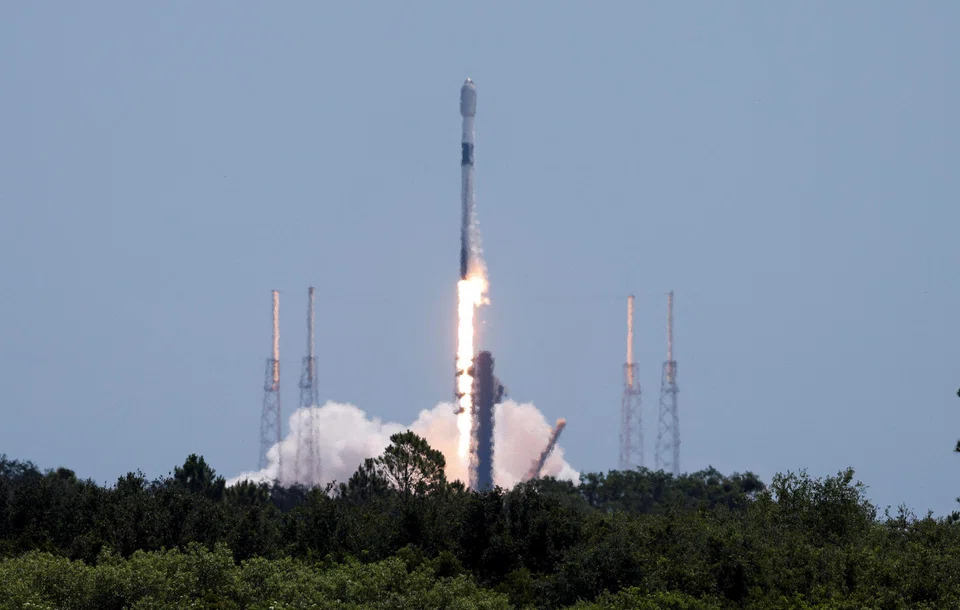
Today’s space race is dominated by private companies, and with that comes commercialisation that will accelerate growth and reduce costs. Thanks to reusable rockets, the cost of launching heavy payloads into low Earth orbit has already shrunk by about 98 per cent from historical highs.
This has serious implications. While space might seem out of reach for all but a select few, what lies beyond the atmosphere is closely intertwined with our daily lives with GPS, satellite Internet, and weather monitoring.
Indeed, the space economy was already valued at US$546 billion in 2022; it is expected to grow 41 per cent to reach US$772 billion by 2027.
The space theme has returned over 50 per cent in the public markets since July 2024. On the private end, the valuation of SpaceX, a key company for space exploration, has soared from about US$200 billion in 2024 to today’s initial public offering estimate of around US$1.75 trillion.
As with the nuclear theme, geopolitical strife and AI proliferation are the additional engines for the space industry right now. Control of space has undeniable defence implications, while nascent or theoretical applications like space mining – for key materials used in the tech value chain – or even space-based data centres (where cooling no longer becomes an issue) have entered the conversation.
I believe that legendary investor Peter Lynch’s statement to invest in what you know does not mean to limit investments to one’s existing worldview.
Rather, it is to deeply understand what you are about to invest in, and decide whether there are actually fundamental reasons to do so.
The writer is chief investment officer, DBS Bank.






