

Investing post-pandemic: Start with these 3 sectors
The news just keeps getting better. Just last month, outdoor mask-wearing was made optional while group sizes were doubled from five to 10. Alcohol restrictions were lifted, allowing revelers to party late into the night. Live performances and singing were also finally allowed, and many people rushed to make bookings at their favourite karaoke outlets.
Last Friday, the government announced another surprise. Singapore’s Disease Outbreak Response System Condition, or DORSCON, was lowered from Orange to Yellow for the first time in two years. Along with this move, there will no longer be limits on group sizes, all employees can return to their workplaces, and no pre-departure tests are needed for fully-vaccinated travellers entering Singapore.
In short, life is almost back to normal. And with borders reopening and economic growth creeping up, it represents a golden opportunity to park your money in good long-term winners at attractive valuations.
A pertinent question you may have is- where should I begin? Here are three sectors that should see a sustained recovery and can serve as a starting point for suitable investment ideas.
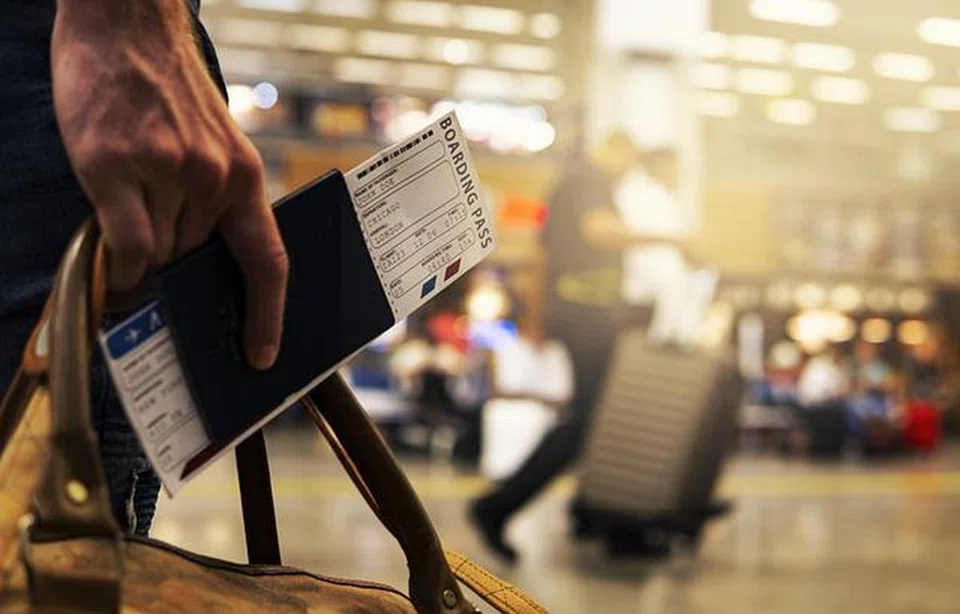
Pent-up travel demand
After two years of limited travel, there is a lot of pent-up demand for travel and tourism. The good news is that tourists are once again traversing the globe as borders reopen and planes start flying. Last month, Changi Airport welcomed 1.14 million passengers, marking the first time since the onset of COVID-19 that the airport has crossed the 1 million mark.
Needless to say, companies such as Singapore Airlines Limited (SGX: C6L) stand to benefit. The carrier disclosed that passenger numbers hit 893,000 in March, nearly nine times higher than the 100,100 passengers on its planes at the same time last year.
Despite the sharp increase, the current level represents just 20 per cent of the traffic it witnessed three years ago in March 2019. This low ratio implies a significant upside for the airline and its sister company SATS Ltd (SGX: S58) as passenger numbers ramp up. And with the increase in the number of flights around the world, maintenance, repair and overhaul specialist SIA Engineering Company (SGX: S59) should also enjoy increased volumes.
Meanwhile, cruises are another attractive option for travellers looking for a relaxing holiday. Last month, the US Centers for Disease Control and Prevention (CDC) removed all risk advisories around cruising, paving the way for ships to sail without restrictions. Singapore Tourism Board has also announced that cruises out of Singapore with international destinations may be possible by the end of this year.
These developments would benefit major cruise liners such as Royal Caribbean Cruises (NYSE: RCL), Carnival Corporation (NYSE: CCL) and Norwegian Cruise Line (NYSE: NCLH). The flood of tourists should also boost theme park businesses owned by Disney (NYSE: DIS) and Six Flags (NYSE: SIX).
Genting Singapore Ltd (SGX: G13), which operates the Resorts World Sentosa integrated resort, and Straco Corporation Limited (SGX: S85), which owns aquariums in China and the Singapore Flyer, will also benefit from this influx of tourists. Samsonite International (SEHK: 1910), which retails a wide range of luggage, should also see sales and profits jump as more people switch out their old luggage for new ones.
A warm and hospitable welcome
As more people travel to far-flung places, they will also be searching for suitable accommodation to ensure a relaxing holiday. Hotel chains and resorts stand to benefit from the increase in tourists, and investors can into stocks of popular hotel chains such as Hilton Hotels (NYSE: HLT), Marriott International (NASDAQ: MAR), Intercontinental Hotels Group (LON: IHG) and Hyatt Hotels (NYSE: H).
Occupancy rates are set to rise as more countries reopen their borders and resume flights, while revenue per available room, or RevPAR, should also trend upwards. But if you prefer something other than hotels, you can always park your money in hospitality REITs that own a portfolio of hotels and serviced residences. Ascott Residence Trust (SGX: HMN), which owns 93 properties with more than 17,000 units, has exposure to 43 cities in 15 countries, and stands ready to benefit from the rise in demand across the world.
Likewise, CDL Hospitality Trusts (SGX: J85) owns not just hotels in Singapore, but its portfolio also contains upmarket resorts in Maldives and hotels in Japan, the UK, Australia, and Europe.
And let's not forget accommodation specialist AirBnB (NASDAQ: ABNB), which operates an online platform that offers accommodation for vacation rental and homestays. The company reported US$47 billion in gross booking volume (GBV) for 2021, 23 per cent higher than the pre-pandemic year of 2019. AirBnB’s revenue of US$6 billion in 2021 was also 25 per cent higher than its pre-pandemic level in 2019. As more people take to the skies, AirBnB should see both its GBV and revenue rise even further.
A surge in revenge spending
As countries and economies continue their recovery, people are also opening their wallets in a big way. This trend is manifested as "revenge spending", a phenomenon that occurs after people have held back spending for the past two years. Simply put, it is the urge to spend money to make up for the lost time.
There is evidence that this money is being channelled to discretionary and luxury items. Luxury apparel designer Ralph Lauren (NYSE: RL) reported double-digit year-on-year (YoY) revenue growth for all regions for its fiscal 2022 (FY2022) third quarter ended 25 December 2021. Revenue for the quarter jumped 26.7 per cent YoY while net profit surged 81.7 per cent to US$217.7 million.
Luxury handbag maker Prada S.p.A (SEHK: 1913) reported a sharp turnaround, with revenue up nearly 39 per cent YoY to €3.37 billion and gross margin expanding from 72 per cent in FY2020 to 75.7 per cent in FY2021. The company chalked up a net profit of €295.1 million, reversing a loss of €54.4 million a year ago.
The surge in asset prices has also boosted the ranks of millionaires and ultra-high-net-worth individuals (UHNWI) in Singapore and Asia. The world saw a 9.3 per cent rise in UHNWIs in 2021 to hit 610,569; and in Singapore, the number of high-net-worth individuals rose by 6 per cent YoY to over 526,000 last year.
These numbers bode well for luxury watch retailer The Hour Glass (SGX: AGS) and Cortina Holdings (SGX: C41) as they cater to these segments of the population. Hermes International (EPS: RMS), which represents the pinnacle of luxury handbags, has also reported a 32.7 per cent YoY jump in revenue for the first quarter of 2022 to €2.77 billion.
And for the aspirational rich and those who are just yearning to spend that extra dollar to gain access to the affordable luxury categories, there's always Gucci, owned by Kering S.A. (EPS: KER) or Coach and Kate Spade, owned by Tapestry Inc (NYSE: TPR).
With a plethora of opportunities awaiting the intrepid investor, you are only limited by the size of your wallet. That said, this surge in spending could prove temporary, so it may be prudent to invest in stages rather than go all-in.
As you continue to monitor the economic landscape and track these companies’ fortunes, you may then have greater conviction to park more money in them.
Disclaimer: Royston Yang does not own shares in any of the companies mentioned.
The writer is portfolio manager of The Smart Investor (https://thesmartinvestor.com.sg/), a website that aims to help people to invest smartly by providing investor education, stock commentary, and market coverage.In
TRENDING NOW

Inside Singapore’s government team that kills its own products

Once staunchly pro-China, Malaysian Chinese businesses are now distancing themselves from Beijing

Cliff Tan has 7 million followers and a 4-month waitlist. Why won’t he expand his business?

Grab CEO’s wife Chloe Tong on life with Anthony Tan and finding her purpose

