

Investors face 'transitional shock' as climate crisis hits
Good climate strategies require much longer time horizons than stock markets generally allow, says FSN Capital's Knut Kjaer
 Add BT as a preferred source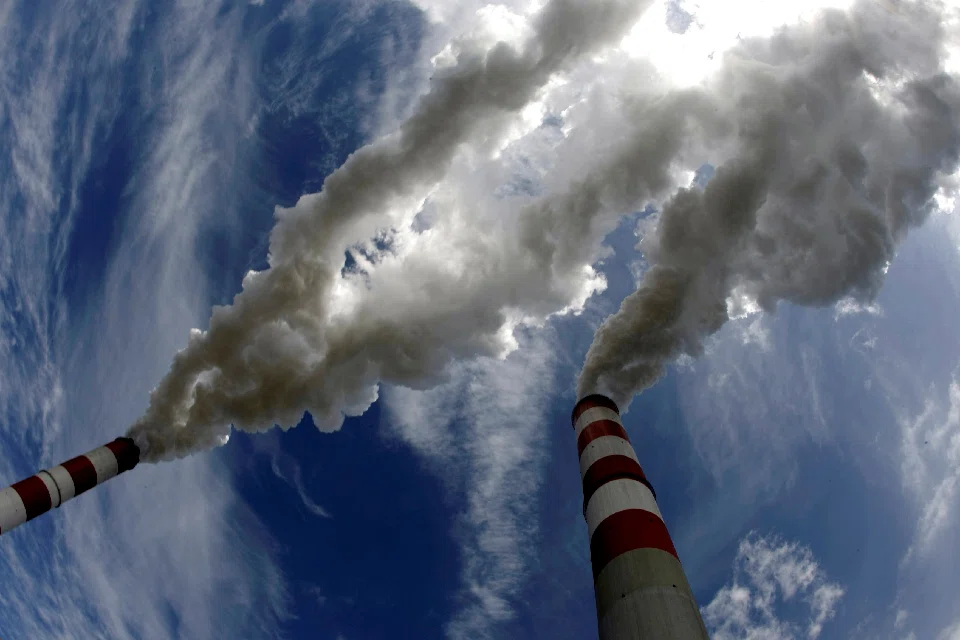
DeeperDive is a beta AI feature. Refer to full articles for the facts.
Stockholm
PUT simply, the climate crisis represents the "biggest market failure of all time".
The observation comes from Knut Kjaer, the founding chief executive of what is now the world's biggest sovereign wealth fund - the Government Pension Fund of Norway - and, more recently, an evangelist for planet-preserving investment strategies.
The 65-year-old Norwegian, who is also a co-author of the United Nations-backed Principles for Responsible Investment, says good climate strategies require much longer time horizons than stock markets generally allow.
Asset managers need to prepare for the "massive change" that is coming over the next decade, Mr Kjaer said in an interview. From both an investment and policy perspective, that means anticipating new behaviour patterns as people try to adapt to a hotter and less stable environment. Failure to adapt implies "a much bigger transitional shock later", he said.
Today, as the chairman of a private equity firm called FSN Capital, Mr Kjaer will not touch fossil fuels: "We normally don't take a bad company and make it good."
Navigate Asia in
a new global order
Get the insights delivered to your inbox.
In fact, he said FSN's investment models, which look at a company over horizons as long as 10 years, flash "Don't Touch" when it comes to "brown companies".
Mr Kjaer does not use the same jargon as many of his peers in environmental, social and governance (ESG) investing. Instead, he speaks of the dismal future ahead after a persistent mispricing of carbon that has led to chronic overuse. He also blames "irrational human behaviour" for the mess in which the planet now finds itself.
Such comments have begun to strike a nerve as some of the puffery around ESG investing starts bumping up against reality. Former insiders have come forward to expose what they say are the misleading ESG claims being made by investment professionals.
And asset managers that made bold declarations about their ESG credentials now find themselves the target of international investigations.
Meanwhile, scientists have made clear that the planet is overheating at a more dangerous pace than previously thought. And only by dramatically cutting carbon emissions does humanity stand a chance of avoiding a climate catastrophe, they say.
Adapting to heat
The financial industry has responded to the looming planetary crisis by creating a US$35 trillion ESG market, in which many products come at a premium. And money keeps pouring in.
Investment in ESG exchange-traded funds more than doubled last week, marking a 52nd straight week of inflows. But a growing army of climate watchdogs is increasingly finding gaping holes in products sold as green.
Mr Kjaer said he is not convinced the global finance industry has the power to deliver the needed change - in part because any meaningful ESG strategy should apply to much longer time horizons than those typical of publicly traded markets, though he readily acknowledged that not all investment models can allow themselves the selective approach FSN takes.
The companies Mr Kjaer's firm invested in saw an 11 per cent jump in total revenues last year, while their operating profit, or earnings before interest, taxes, depreciation, and amortisation (Ebitda), went up 35 per cent, said its website. In June, FSN said it had to take in more investor cash than planned after its latest financing round was oversubscribed.
The 1.8 billion euros (S$2.86 billion) it generated will be placed into mid-sized companies in Northern Europe that live up to so-called
Article 8 - or light green - standards as defined in the European Union's Sustainable Finance Disclosure Regulation.
Rebecca Svensoy, FSN's legal counsel, said part of the firm's strategy is to assume that the world will look different as the fallout of climate change makes itself felt.
"We have prepared for a transition scenario and an adaption scenario, on a portfolio level," she said. Part of that involves having a "separate due diligence approach" that specifically targets climate change, she added.
Mr Kjaer said that "for every investment we do and every action we take in a portfolio company, we must have a 10-year-plus horizon".
The upshot is that the strategy at FSN "is aligned with" limiting temperature increases to 1.5 deg C, as targeted in the Paris Agreement.
But Mr Kjaer is not one to kid himself on the broader outlook. Even that level of temperature rise implies a "huge worsening" of the climate compared with today, he acknowledged. So adaption is a strategy that "we need to apply", he said. BLOOMBERG
Decoding Asia newsletter: your guide to navigating Asia in a new global order. Sign up here to get Decoding Asia newsletter. Delivered to your inbox. Free.
Share with us your feedback on BT's products and services
TRENDING NOW

Autobahn Rent A Car directors declared bankrupt over S$50 million each owed to DBS
Higher costs, lower returns: Why are Singaporeans still betting on real estate?

Richard Eu on how core values, customers keep Singapore’s TCM chain Eu Yan Sang relevant

Loyang Valley sold for S$880 million to SingHaiyi-led consortium

