Investors hung their hats on Peloton and Zoom last year. What now?
The economic reopening has led stocks at the center of so-called stay-at-home trade to collapse, as investors shift attention to last year's no-go zones.
 Add BT as a preferred source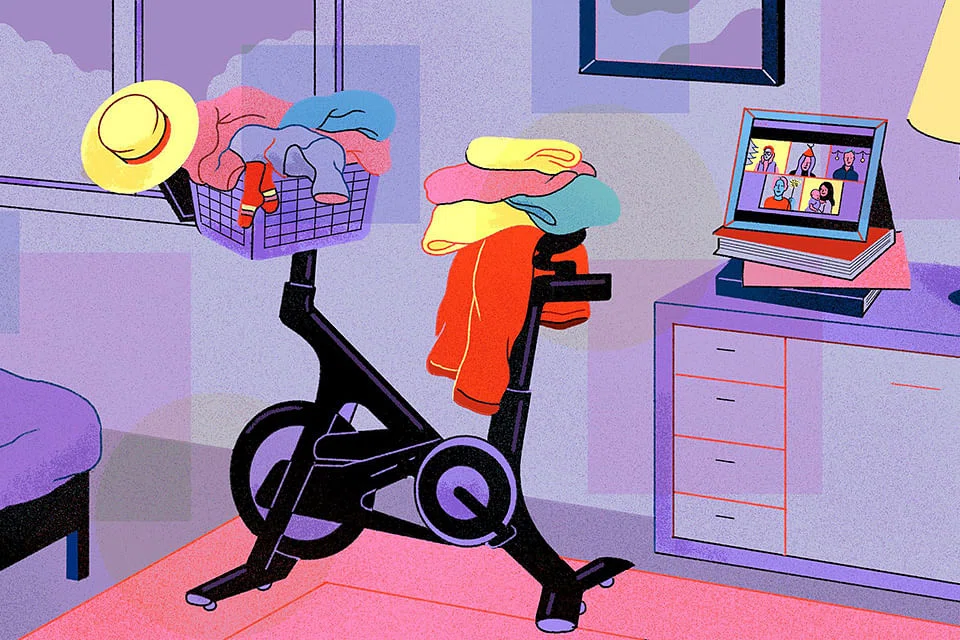
DeeperDive is a beta AI feature. Refer to full articles for the facts.
PELOTON'S pricey exercise bikes were the hot product for fitness buffs in the early days of the pandemic. With jumbo screens and upbeat instructors, being on them mimicked the experience of an in-person spin class in their living rooms. What happens now that they can get the real thing again?
Shares of companies like Peloton and Zoom Video, the online conference software that replaced face-to-face communications for countless schools and businesses, were darlings of the stock market for the better part of last year. But as the economic reopening gains speed - aided by rising vaccination numbers and promising new treatments for those who get sick - some of the stocks at the centre of the so-called stay-at-home trade collapsed.
On Nov 18, a Florida pension fund filed a lawsuit seeking to recover losses stemming from the company's stock slump in the past year, claiming that Peloton falsely assured investors its dramatic Covid-inspired sales surge would continue after the end of the pandemic.
Instead of growing, sales of the company's stationary bikes and treadmills started falling as the pandemic dragged on and its stock price sank, wiping out billions of dollars of shareholder value, the fund claimed in the lawsuit, filed on Nov 18 in Manhattan federal court.
Lawyers for the pension fund of the city of Hialeah, Florida, said in the complaint that the company and its executives repeatedly told investors that a dramatic surge in sales in 2020 was not primarily due to Covid, but that the company's growth and financial results were sustainable. In one case, Peloton chief executive officer John Foley told an investor the company's results had "nothing to do with Covid" and instead were simply based on "a human need of, I want to get fit, I want fitness in my life in a consistent way", according to the lawsuit.
"The markets clearly sense the pandemic is over," said Ben Emons, managing director of global macro strategy for Medley Global Advisors. "We're in a full reopening and we're moving toward a normalised situation."
Navigate Asia in
a new global order
Get the insights delivered to your inbox.
That has been bad news for the share prices of some of last year's hottest stocks.
Peloton dived 35 per cent in a single trading session this month, after it deeply cut its sales forecast for the coming year. Foley said on a conference call with analysts that the company knew it would be a challenge to duplicate the results it had during the peak of the pandemic. But he added, "Our long-term thesis of fitness moving into the home is unchanged." On Nov 16, Peloton's shares jumped 15.5 per cent after a US$1 billion stock offering to raise cash, but are still down nearly 64 per cent for the year.
Other once-hot stocks have also skidded. Shares of the online education company Chegg plunged almost 50 per cent in a single trading session Nov 2, and are off 67 per cent in 2021. Zoom Video plummeted 17 per cent on a single day in late August, after it noted that strong demand for its products showed signs of easing as the pandemic abated. So far this year, it is down nearly 22 per cent.
Instead, many investors are shifting their attention to corners of the market they considered no-go zones last year, with businesses including airlines, live events companies and commercial real estate firms posting large gains. The turn away from stay-at-home stocks has not sapped the market's overall momentum. The S&P 500 closed up 0.4 per cent on Nov 16, hovering near another record high, and is up more than 25 per cent this year. After the index's head-spinning recovery last year, and a nearly 29 per cent gain in 2019, stocks are on track for the best 3-year run since the late 1990s.
Investors owe the bulk of the market's gain this year to so-called cyclical stocks, such as oil companies and financial firms, whose profits and share prices tend to mirror the trajectory of the economy, rising and falling as growth quickens or slows. It is a stark switch from the kinds of stocks that were at the epicentre of last year's remarkable rise - and a huge surge in trading.
As lockdowns forced much of the country to stay home - often with ample extra money from government stimulus and little else to do - millions of neophytes tried their hand at trading stocks. Many of them bought shares in the products they were being exposed to for the first time, like Peloton, or those they were using more frequently, like Clorox.
The logic was fairly straightforward: As the economy went through one of the worst economic shocks on record, these companies seemed like they would be able to grow profitably through, and perhaps because of, the crisis.
It was a disparate group of stocks: Shares of Zoom Video were up nearly 400 per cent last year while Peloton rose about 470 per cent. Online retailer Etsy, which suddenly became a key source of home-made masks, jumped 300 per cent. And Internet furniture store Wayfair rose 150 per cent as people nestled down and spruced up their homes.
Etsy is up roughly 60 per cent in 2021, as the company has been successful at converting those who went to the site for face coverings into repeat customers. And the online security company Zscaler - which soared more than 300 per cent last year - has only continued to climb, rising more than 70 per cent so far this year.
But the pandemic darlings are not finished, even if their most explosive growth has petered out. Some investors believe that nearly 2 years of stay-at-home life have so altered our behaviours that companies like Peloton and Zoom Video will remain part of our daily routines for the foreseeable future. BLOOMBERG
Decoding Asia newsletter: your guide to navigating Asia in a new global order. Sign up here to get Decoding Asia newsletter. Delivered to your inbox. Free.
Share with us your feedback on BT's products and services