

JPMorgan Asset Management tells investors how to attain yesterday's sterling yields today
MD says "to do one of two things: the first is to take a lot of risk in less liquid assets; and the other thing is to perhaps sell the upside and growth to produce income"

Genevieve Cua
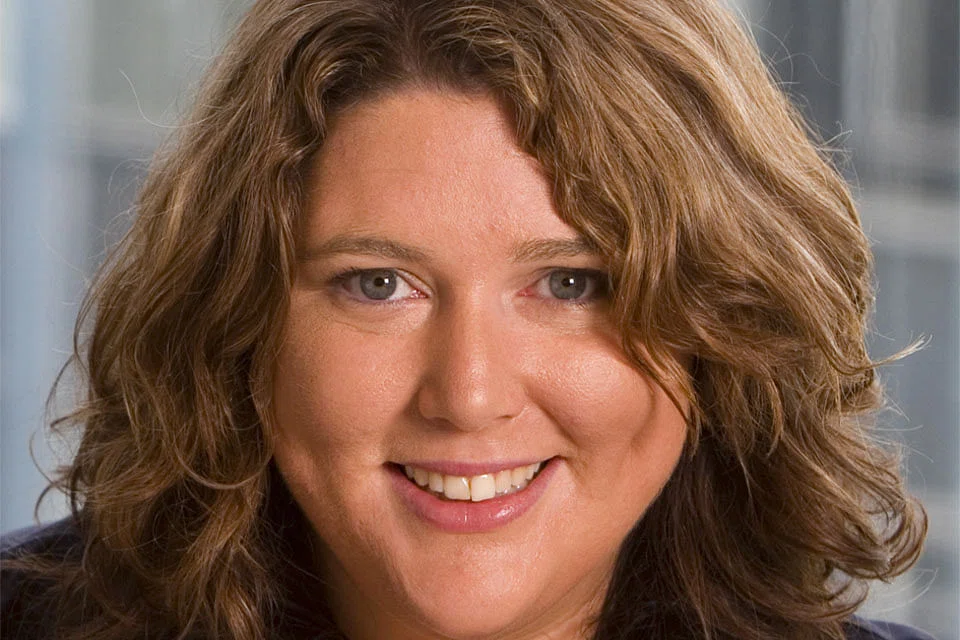
YIELD-HUNGRY investors will have to ratchet up the risk curve if they are to achieve the same level of income that they got a few years ago, says JPMorgan Asset Management managing director Olivia Mayell.
The firm's Global Income Fund, a multi-asset portfolio, reflects this trend. Its equity exposure is now effectively around 55 per cent compared to 20 per cent in 2008. The weighting of high-yield debt, which used to be as high as 60 per cent, has been dialled down to 25 per cent.
Says Ms Mayell: "We still like high- yield debt but you need to complement that with developed market equities.
"The big change we've seen is that people who traditionally said their income investments comprise a fixed-income portfolio now would say they have a multi-asset portfolio. Policymakers have pushed investors into taking more risk, into diversifying into risk assets to try to achieve the same objective that they had five years ago."
A higher equity exposure also means the portfolio is more sensitive to moves in the equity market, and less sensitive to the interest-rate environment.
Multi-asset portfolios consisting of stocks, bonds and non-traditional assets such as preference shares and non-agency mortgage securities have become a staple in investors' portfolios. Many are managed towards a risk or return objective, and their diversified nature is seen as a way to cushion downside risk and volatility.
JPMorgan Asset Management itself has seen its multi-asset portfolios burgeon to roughly US$31 billion. The Global Income Fund, incepted at end-2008, has over US$13 billion in assets.
The fund has an annualised yield of about 4.6 per cent for its US dollar (hedged) and Sing dollar (hedged) share classes. Ms Mayell says that yield "acknowledges a conservative level of risk to achieve income". She says inflows have been strong despite competing funds that market a significantly higher headline yield.
Historically, the fund has delivered an annualised return of about 8.8 per cent in US dollar terms (offer-to-bid pricing) since inception. About 50-60 per cent of the return has been from income or dividends, and the balance from capital appreciation.
Ms Mayell says: "You can produce an eye-catching exciting yield, but you'd have to do one of two things: the first is to take a lot of risk in less liquid assets; and the other thing is to perhaps sell the upside and growth to produce income."
An example of the latter strategy is the use of covered calls. A covered call sells a call option on an underlying stock holding. That earns an income but caps returns should the market rise strongly.
Says Ms Mayell: "Heavy use of covered call options increase yield but you sacrifice the upside of equity performance. They are useful in specific cases but they may be confusing for investors who don't understand that their capital is effectively being turned into income. In terms of the natural income from individual asset classes, for a balanced level of volatility and to have liquidity, 4.6 per cent is achievable for the next year or so."
In equities, the firm has been switching out of some US exposure into Europe, where liquidity from quantitative easing (QE) is seen to be supportive of stocks. In March, US exposure was 51.8 per cent and Europe 17 per cent.
Ms Mayell says: "I think we feel that the US has had significant price appreciation, which could make it more expensive than other developed and emerging equity markets. We argue that you pay a premium for quality and for sustainable performance. But if you look for cheaper opportunities, Europe has some potential. But we'd say (Europe) is more of a shorter-term opportunity. The US is a longer-term buy-and- hold trade in the portfolio.
"It's not necessarily that Europe is cheap, but it's understanding the flow of money supporting Europe. We saw what that did for asset prices in the US. Our expectation is that QE could be as supportive for asset prices in Europe."
The firm is also investing in non-traditional assets that balanced funds typically may not invest in. These include preference shares, convertible bonds, non-agency mortgage-backed securities and real estate investment trusts (Reits).
Ms Mayell says the US Federal Reserve is likely to keep "a careful hand on the tiller" in terms of rate rises. "We expect small modest rate moves in June or September. We don't have particular clarity on this . . . The economy is doing well and the (Fed) will not want to do anything to threaten that."
TRENDING NOW

Higher rates, weaker spending: Is the Philippines entering stagflation?

Singapore’s deep-tech startups tap China for scale, set sights on the US for higher margins

Who are some of the longest-serving CEOs among Singapore’s blue-chip companies?

Grit built in the genes: Malaysia’s Lee Yeow Seng drives IOI’s bold Singapore push

