

Julius Baer woos retired bankers to its fold: Age has its advantages
The bank has older clients, who may not want relationship managers in their 20s, says the CEO

THE talent market for private wealth managers in Singapore is notoriously competitive, yet senior and mid-career bankers and fresh talent are not the only pools to draw from.
Julius Baer, which celebrates its 20th year in Singapore this year, is looking to woo retired bankers into its fold, in addition to the traditional hunting grounds.
The bank’s relationship managers (RMs) in Singapore and Hong Kong are on average around 48 years old. But this average obscures those at the older end of the spectrum. Currently, its oldest banker is 80.
The oldest, most-recent retiree was 83.
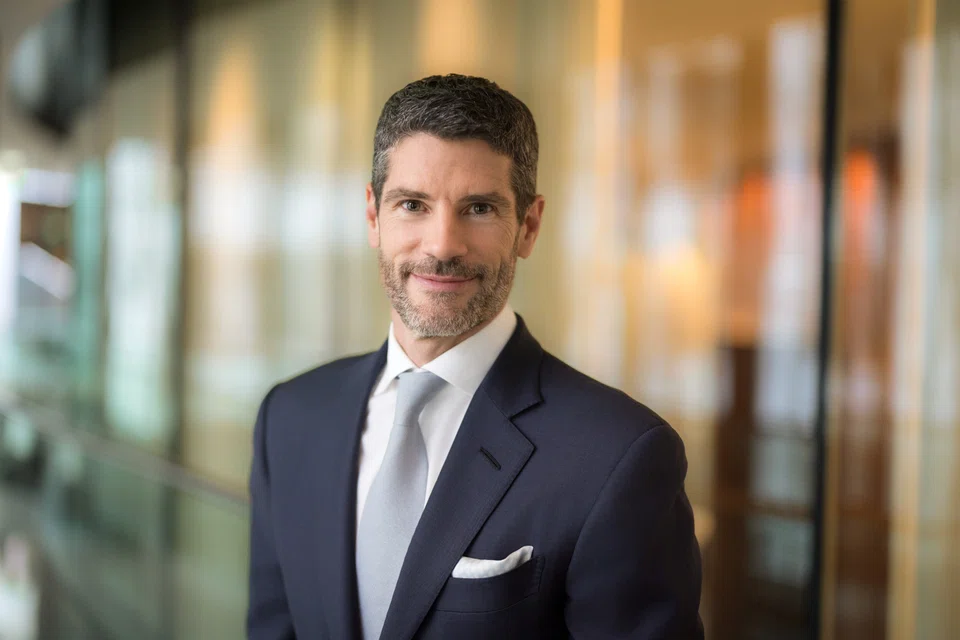
Julius Baer chief executive Stefan Bollinger, who was in Singapore recently, said: “We would love to have twice as many relationship managers on the ground… We’ve been offering many people who have retired from other firms an opportunity to work because they’ve done it for 30 years and have passion for it. Wealth management is personal; clients tell us their RM is part of the family.”
As life expectancy lengthens, some clients could be in their 90s. “Some prefer not to be contacted by someone in their 20s. Of course, we have other people on the team who are younger, and they cover the next generation. And then we get the very young people in to serve the third generation. So, the whole family is covered.”
RMs who wish to continue working past the current retirement age of 64 may be offered fixed-term contract extensions on a case-by-case basis. The bank had more than 1,247 RMs globally as at the first half of the year; of these, more than 430 are in Asia.
Some banks may worry about how sticky assets would be once wealth is handed over to younger generations. But the key, said Bollinger, is to serve the family rather than an individual, who may be the first-generation wealth creator, typically the patriarch.
Cultivating the spouse is, hence, a priority.
“The important fact about the great wealth transfer is that the money may not immediately go to the next generation. It may go first to the surviving spouse. Statistically, women are on average younger than men when they marry and their life expectancy is longer.
“When the patriarch passes away, the money goes to the matriarch and then to the next generation. Who decides who becomes the banker for the next generation? Often, it’s a woman. The classic mistake many wealth managers make is to focus on the patriarch.”
Julius Baer’s second home market
Since the office was established in 2016, Singapore has become Julius Baer’s second-largest wealth hub by employee numbers, and accounts for a quarter of the assets under management.
Bollinger said: “Asia’s growth rate is incredible. Two-thirds of the incremental growth in global gross domestic product comes from Asia, and we’re just participating in Asia’s wealth creation story. We’re very fortunate to be extremely strongly positioned here. (Singapore) is our second home market.”
“We want to completely focus on wealth management and double down on our focus on clients. I call it our client obsession.”
Senior leadership based in Singapore includes Rajesh Manwani, who is co-head of global products and solutions and a member of the executive board. Also in Singapore is Jimmy Lee, regional head for Asia since 2016 and a member of the global wealth management committee.
In its latest half-year results, Julius Baer reported a 5 per cent rise in AUM to 547 billion Swiss francs (US$650.1 billion), thanks to positive market performance, currency impacts and net new money inflows. Net new money reached 5.7 billion Swiss francs.
Progress in three-year strategy plan
The group’s strategic plan for 2026 to 2028 set a target of net new money growth of 4 to 5 per cent and a cost-to-income ratio of less than 67 per cent by 2028.
The bank has implemented a slew of measures, including a reduced executive board and sharper client segmentation. It aims to double down on the high-growth markets of the Middle East and Asia.
The interim results for 2026 reflected progress. Cost-to-income ratio fell to 62.6 per cent, compared to 72.8 per cent in the first half of 2025.
Between 2021 and 2024, the bank’s operating leverage was negative. Operating income was flat against operating expenses which rose by 3 to 4 per cent a year. Cost-to-income ratio rose by over 7 percentage points.
Efforts to raise efficiency are focused on what Bollinger calls a “magic triangle” comprising growth, general expenses and personnel costs. Optimising the three items will improve the cost-to-income ratio, he said.
“We focus on driving growth and revenues, and very much on general expenses. I told our people in a town hall on my first day at Julius Baer, that they should look at expenses as if they’re part of a family and it’s their own wallet. You would not spend the money if it were your money,” said the CEO, who was appointed to the role in January 2025.
One cost measure was to cut out management consultants. “Our spend on management consultants has gone down by 90 per cent. A very good thing that has happened is that we took back control, rather than having many people tell us what to do.”
In terms of client segmentation, around 45 per cent of AUM comprises ultra-high-net-worth (UHNW) clients and family offices. For this segment, outsourced chief investment officer services are an option. The balance of 55 per cent of AUM comprises HNW clients, where discretionary portfolio solutions are a value-add offering.
Technology is helping to raise RM productivity. The use of AI in onboarding and screening processes has saved around 10,000 work hours, for instance.
The bank also has a three-year “Associate RM” programme for young talent. Of the 2026 cohort of 70 RMs in the programme globally, 16 were from Asia.
Its employee share-purchase scheme aims to enhance staff retention and ensure alignment of interests. Bollinger said: “Our people have a lot more share ownership, and that focuses them on doing the right thing for the organisation. It also focuses you on the long term rather than the short term.
“I am a very big proponent of our people acting like owners. We spend a lot of money on our share-ownership programme, but this will accrue to the benefit for our clients and shareholders.”
TRENDING NOW

Wall Street asks what can save AI trade after Anthropic wipeout

What shattered Crystal Jade? How the culinary empire shrank from 120 to just 9 outlets

As Indonesia picks new vice-president to succeed Gibran, investors see risks and opportunities

Could Jensen Huang work for Elon Musk? It would be ‘a titanic ego death match’, says biographer

