

Junk bonds are the new safe haven assets
In this period of negative yields, even the most conservative firms are looking to invest in sub-investment grade debt for the first time
New York
THE new fixed-income haven is, of all things, the market for junk bonds.
With government bonds in countries from Germany to Japan and Slovakia yielding less than nothing, money is pouring into exchange-traded funds (ETFs) that buy speculative-grade debt, traditionally the riskiest of fixed-income assets.
The pace is staggering. So far this year, about US$9 billion have flowed into the funds globally, a significant chunk for the US$44.4 billion market in junk-debt ETFs.
In the land of negative yields, even the most conservative firms such as Zurich Insurance Group AG and Assicurazioni Generali SpA, the biggest Swiss and Italian insurers, are planning to invest in sub-investment grade debt for the first time.
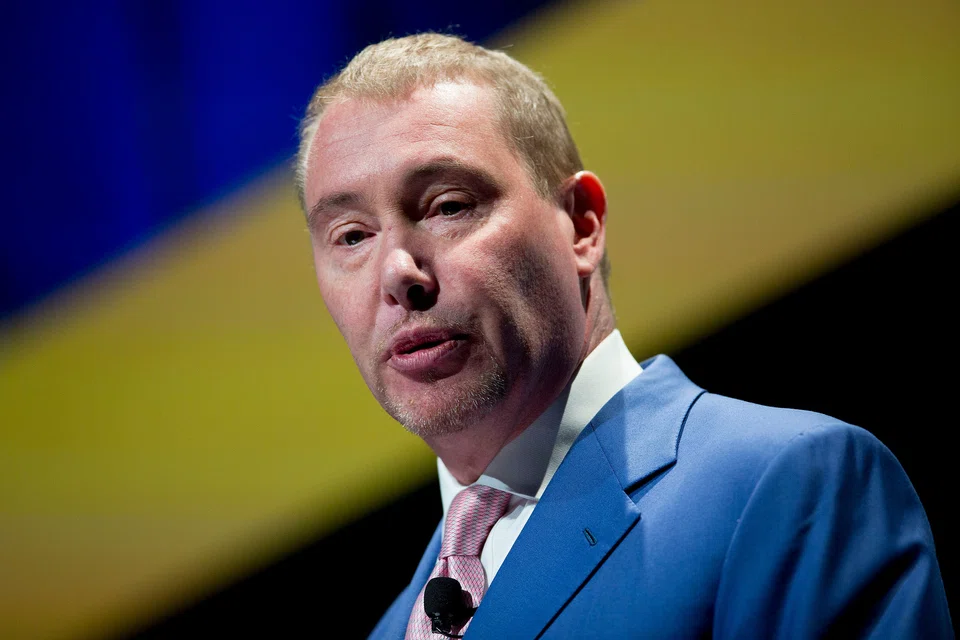
One of the bond market's brightest luminaries, Jeffrey Gundlach, says you're better off in junk because the only money to be made on German bunds is from betting against them.
While last week's sudden selloff in euro sovereign debt gives investors all the more reason to crowd into high-yield assets, the lingering concern is that buyers are exposing themselves to even greater losses. And with the European Central Bank's bond purchases still keeping government yields close to historic lows, many bond investors have few other options.
"Investors are being forced by the central bank to assume more risk," Jens Vanbrabant, a money manager at ECM Asset Management, which oversees US$6.5 billion, said from London. "They're trying to adapt their investment parameters to the new situation of zero or negative yields."
Bond markets around the world are being distorted as central banks step up cheap-money policies to bolster growth and prevent deflation. About US$2.36 trillion of government bonds globally have negative yields, data compiled by Bloomberg show.
That means investors effectively pay a dozen governments when they borrow. The situation is particularly acute for the 19 nations that share the euro. In Germany, Europe's largest economy, quantitative easing has left about 40 per cent of the nation's securities tracked by Bloomberg with sub-zero yields. That's prompted investors to take more chances on debt of the least-creditworthy borrowers.
Flows into junk-bond ETFs in the first four months of the year exceeded any comparable period since EPFR Global began compiling the data in 2007.
The iShares Euro High-Yield Corporate Bond UCITS ETF, the largest of its kind in Europe with 4.2 billion euros (S$6.2 billion) in assets, amassed more than 1.5 billion euros over that span, data compiled by Bloomberg show.
"I'm long high yields right now," Mr Gundlach, the founder of Los Angeles- based DoubleLine Capital which oversees US$73 billion, said in an April 28 interview on Bloomberg Television.
He went on to say he's looking to short two-year German notes, which currently yield minus 0.216 per cent.
Investors got a wake-up call last week when 142 billion euros were wiped off euro-area government debt in the worst selloff since at least 1993.
Globally, junk bonds have outperformed government debt with a 4.4 per cent return this year. That's a reversal from 2014, when the lowest-rated bonds underperformed by the most since the financial crisis.
Part of the attraction has to do with the advantage of junk bond yields, which have risen in the past year as those on government debt kept falling. Speculative-grade securities yielded an average 6.37 per cent last week, versus 0.99 per cent for developed- market sovereign bonds tracked by Bank of America.
High-yield bonds represent "some of the best strategies to generate total return in today's low-return environment", said Payson Swaffield, London- based chief investment officer for fixed income at Eaton Vance Investment Managers, which oversees US$300 billion.
Junk bonds aren't the only higher- risk assets in greater demand. Michael Riddell, a money manager at M&G Investments, which oversees US$411 billion, bought local currency bonds issued by Colombia and Thailand for the first time this year.
AXA SA, France's biggest insurer, will boost holdings in "illiquid" assets such as real estate and infrastructure projects to 20 per cent from 15 per cent last year, according to its chief investment officer Laurent Clamagirand.
"It's very tricky" for insurers, said Bruce Porteous, an investment director for insurance solutions at Standard Life Investments, which oversees about US$370 billion. They're making a shift because "they can't earn enough money on the assets they hold to provide the benefits that they offer".
For an increasing number of investors, there are few good choices left as six years of easy-money policies by global central banks inflated prices of almost every asset imaginable.
A record 84 per cent of professional investors in a Bank of America survey released in April said bonds were overvalued. More than half also thought both stocks and bonds are too expensive, the most in 12 years. BLOOMBERG
TRENDING NOW

One-third of Singapore-listed firms at risk in severe AI downturn: MAS

‘Not done’: Keppel CEO Loh Chin Hua transformed the group, but says there’s ‘still a lot to do’

He built the Vingroup empire. Now South-east Asia’s richest man is handing some key roles to his sons

‘We don’t want to stay as we are’: CEO Patrick Ng builds a more resilient Huationg

