

Keep exposure to risk assets modest as structural shift in US policy plays out
In view of the macroeconomic environment, analysts have begun to lower corporate earnings forecasts for major stock markets
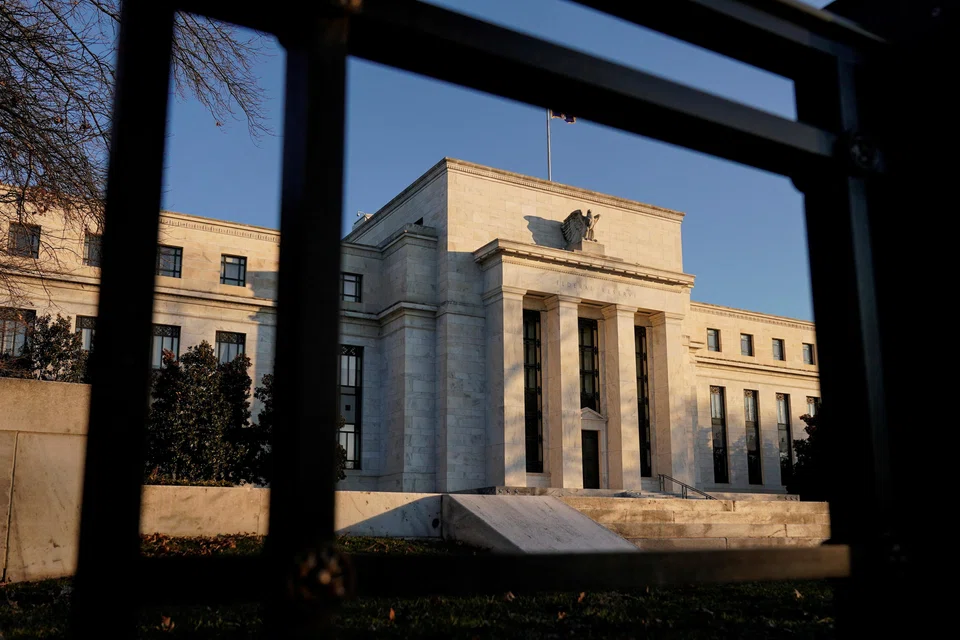
RECENTLY, US President Donald Trump has shown signs of making concessions on the issue of tariffs on China, and market volatility has also subsided slightly. The market is speculating on the US’ next move, but my main focus is: What is the US’ real goal? A reshaping of the global trade system will be costly, and the tension between ideology and reality are rising.
Market shocks force policy concessions
US Treasury Secretary Scott Bessent’s primary goal is to address the US deficit and debt spiral, and he has said that tariffs are only a negotiating tool rather than a means to increase revenue. However, Commerce Secretary Howard Lutnick sees tariffs as one way to increase revenue.
The US has launched the trade war at a time when its deficit is high. But it may not be able to bear the risk of an economic recession, because once it falls into a recession, the government’s various automatic stabilisation mechanisms will be activated, which in turn will expand the deficit.
In fact, US economic data – real disposable income, housing and elements of the labour market – were already slowing prior to Liberation Day. While elements of that volatility shock and the sudden stop in trade have somewhat reversed, we are still concerned about the long-term consequences of such policy shocks.
Bessent has stated that his motivation for becoming involved in politics is to prevent the risk of a debt spiral and failed government bond auctions. Ironically, some of the haphazard policymaking has led to some doubting the credibility of US policy, raising the risk of capital flight affecting the US dollar’s status as the global reserve currency. Although funds have indeed flowed out of US Treasuries, it has not yet reached a worrying level. In addition, Trump’s recent rhetoric has begun to soften, which shows that the market is imposing a certain degree of constraint on the US government.
However, we still need to see whether other countries are willing to reach bilateral trade agreements with the US. After all, Trump has overturned the United States-Mexico-Canada Agreement, which he personally established during his first term, and his treatment of Canada has also caused concern among other countries. Completing 70 bilateral agreements within 90 days is also easier said than done. Overall, the US government still has the ability to clean up the mess, but if it wants to avoid a greater impact on the real economy, the authorities must next restrain their practices.
The current passage of the US budget complicates the Fed’s outlook. At present, there is a distinct lack of fiscal discipline on show. The expansionary nature of government policy (as outlined in the House bill and subject to change) complicates the situation for the Fed.
In the face of slowing economic growth, we believe the Fed will cut interest rates in the second half of 2025. US inflation has risen a lot after the pandemic, and the tariff war will inevitably further push up inflation expectations, but it does not necessarily imply that it will trigger higher wage inflation expectations. During the pandemic, everyone stayed at home, which led to a tight labour market, soaring wages and high inflation.
However, the situation is different now. The labour market has begun to soften in the past three or four quarters. With the trade war, companies will be unwilling to pay higher wages. Instead, they will begin to cut staff. This is in sharp contrast to 2021, when almost every company complained that it could not hire the required talent.


The Fed has a dual mandate, and today there are upside risks to inflation, but there are also almost equal downside risks to economic growth. When faced with a trade-off, I have always believed that the Fed would prefer to focus on promoting economic growth. Faced with overall weakening economic fundamentals, the Fed would have to consider cutting interest rates.
Our concern at this juncture is that the Fed will end up being too reactive, given the policy uncertainty.
Flexible asset allocation to cope with market volatility
In view of the macroeconomic environment, analysts have begun to lower corporate earnings forecasts for major stock markets. Investors should strengthen their defensive capabilities and have modest exposure to risk assets.
The US stock market has performed well over the past decade, and many investors hold a large amount of US assets, which in turn sows seeds for potential capital outflow. Thus, in the past several weeks, sensational news headlines such as “The US is about to become an emerging market”; “The US dollar is no longer a reserve currency” and “Massive capital outflows” have been seen everywhere – indicating an extreme in short-term negative US sentiment.
As a professional investor, I think this can present opportunities, but it is important to stay disciplined and look for opportunities to enter the market when the market is extremely pessimistic. Preferred areas at present are US financial stocks and some Chinese stocks which are in sectors supported by government policies.
Over the past two years, I have been bullish on the prospects for precious metals. In an environment where populism is prevalent and countries are running serious deficits, what assets are truly safe? In a world of fiat currencies and policymakers printing money, gold is sought after as a store of value.
In addition, the freezing of Russia’s foreign exchange reserves has also led many countries to reflect on their own reserve assets. Since physical assets such as gold are not easily confiscated or interfered with by other governments, many central banks are also increasing their holdings. Recent euphoria in gold has caused us to take some profits, but it remains a key asset allocation.
In addition to gold, we are also optimistic about the outlook for copper prices. Under the trend of deglobalisation, countries are committed to reducing their dependence on external supply chains. Infrastructure demand is expected to increase significantly, which helps the outlook for copper prices.
In addition, the outlook for commodity currencies such as the Australian dollar, New Zealand dollar and Brazilian real is also relatively attractive; and these countries are relatively less affected by the trade war. Although there has been selling pressure in the US bond market recently, we expect the economic slowdown to be positive for bonds.
Structural change in US policy warrants attention
We are witnessing a tectonic shift in US government policy. After the pandemic, the US significantly eased both monetary and fiscal policies – but this combination cannot last long. Ultimately, it will have to return to some form of fiscal restraint and prudence.
Although the US wants to suppress China, it finds it difficult to act without harming its own economic interests. China is clearly prepared for a long-term trade war, but the US cannot do so. We have seen that Trump’s approval rating has declined slightly recently, and he will face the pressure of mid-term elections in 2026.
It is apparent that US policies are deeply affected by the political cycle, and may not be able to withstand the economic downturn that might linger onto next year. China is also aware of this, so the behaviour of the two sides presents a sharp contrast: the US strategy is flip-flopping, while China watches from the sidelines.
For many years, the US has provided the world with order and protection. But now people are beginning to see that the recent policy turmoil may not be short-term noise, but reflects deep-seated structural changes, and we may be at a turning point.
The writer is head of dynamic multi asset, BNP Paribas Asset Management
Decoding Asia newsletter: your guide to navigating Asia in a new global order. Sign up here to get Decoding Asia newsletter. Delivered to your inbox. Free.
Share with us your feedback on BT's products and services
TRENDING NOW

Once staunchly pro-China, Malaysian Chinese businesses are now distancing themselves from Beijing

Cliff Tan has 7 million followers and a 4-month waitlist. Why won’t he expand his business?

Could stablecoins be the future of money?

Grab CEO’s wife Chloe Tong on life with Anthony Tan and finding her purpose

