

Lombard Odier taps local alliances to capture Asia’s growth

Kelly Ng
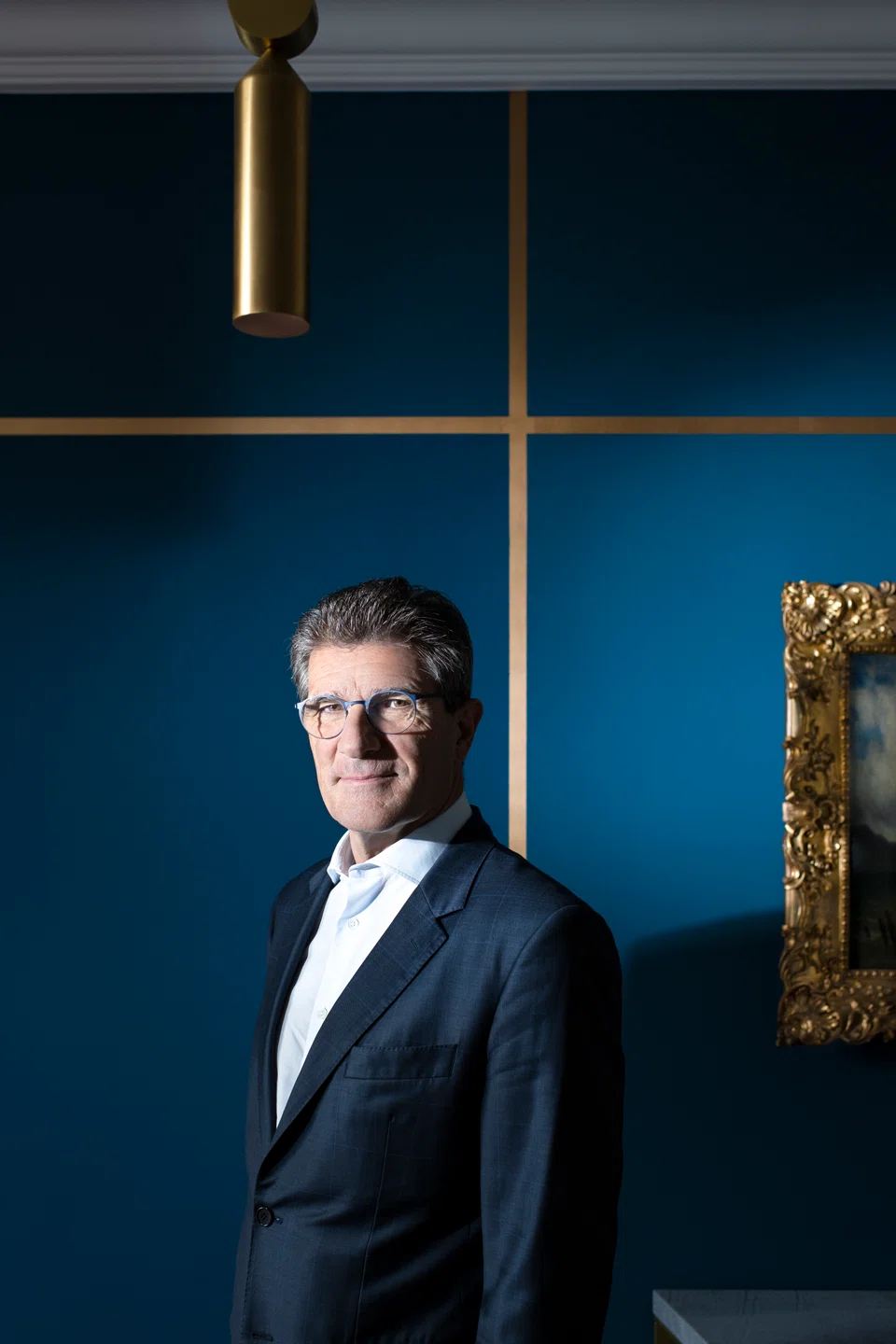
[GENEVA] IT may not be the best-known Swiss private bank in Asia, but Lombard Odier is steadily increasing its presence in the region via strategic local alliances, as well as by growing its Singapore-based management team.
Founded in 1796 and organised as a partnership, Lombard Odier wants to be the private bank of reference for entrepreneurs and their families, senior managing partner Patrick Odier told The Business Times at a media engagement in September.
It has set up three Asia hubs in the past 35 years, with the latest being its Singapore office in 2008. Singapore is home to its main banking operational platform and infrastructure in the region, as well as its main booking centre.
The Hong Kong office, which marked its foray into Asia in 1987, is one of its main investment research locations. The Tokyo office, started in 1992, houses investment specialists who provide wealth management and consulting services for private and institutional clients.
“We chose these particular hubs to allow us to be present in the key financial centres. We were the first in Asia to focus on developing strategic alliances in other regional markets where we can both offer our expertise, but also continue to grow. This model allows us to have a broader presence throughout the region without building a full bank and processes in each country (from scratch),” said Odier, 67, at the bank’s headquarters in Geneva..
The bank’s approach of forming alliances with local financial institutions applies particularly in South-east Asia, he added. Its partners here include Kasikornbank Private Banking in Thailand, Indonesia’s Mandiri Private, Japanese investment bank Mizuho Securities’ branch in Singapore, as well as UnionBank Private Banking in the Philippines. Other partners in the Asia Pacific include Taipei Fubon Bank and JBWere in Australia.
“This is a win-win model, because once our client offering is established via a local partner, our expertise on the discretionary side becomes much easier to understand and develop,” Odier said.
The bank did not disclose figures for regional assets under management, but said in response to BT’s queries that it had seen “extremely strong revenue growth (in Asia) for both 2020 and 2021 financial years, with solid commitment from existing clients”. As at June 30, 2022, the group’s total client assets amounted to CHF 310 billion (S$447 billion).
In July this year, Lombard Odier announced two new senior management appointments in its Singapore office, taking effect in September. Vincent Magnenat, a limited partner and then-chief executive officer (CEO) for Asia, has taken on an expanded role as global head of strategic alliances for the bank’s private client franchise, while remaining regional head in Asia.
Francis Liu, joining from UBS’s wealth management team in Hong Kong, has been appointed Lombard Odier’s CEO for its Asia private clients team, as well as its Singapore CEO.
These new appointments will help the bank better understand this fast-moving region, Odier said. He noted that the bank would benefit from Liu’s knowledge of the markets in Greater China.
However, he stressed that while the bank is keeping an eye on Chinese wealth flowing into South-east Asia, it has no plans for an onshore presence in the country.
“We historically haven’t had a strategic focus on developing a presence or expanding our offering in mainland China. This is simply because we believe in being very focused… China is a complex environment which still is in the phase of developing its financial infrastructure,” he said.
From a risk-reward perspective, the bank targets Chinese clients that have moved southward as part of their wider clientele.
In terms of its asset allocation, though, Lombard Odier is bullish on the country’s stocks. Senior executives of the bank said at September’s event that they are counting on the government’s fiscal support as well as “hints” of a pragmatic turn in its public health policy for a better second-half of the year.
The bank is holding its 2.1 per cent overweight position on Chinese equities, which now make up 4.3 per cent of its portfolio.
On the sustainability and crypto movements
Senior executives at the event highlighted the importance of sustainability for Lombard Odier. The bank has moved away from traditional sustainable investing approaches such as ESG (environmental, social, and governance) criteria, which it considers backward-looking.
Instead of focusing on a company’s business practices, the bank looks at how a company’s business model is aligned to the net-zero transition. For instance, a company may tout how much it cares for seniors in a community or how it champions gender equality, yet may not have decided to move out of polluting activities, said Odier.
“It is important to have ESG practices, but it is also important to understand that we have to go beyond standard ESG metrics to understand and measure the impact of the sustainability transition on a company’s financial structure. Our job is to understand how a company can contribute to the sustainability transition and how the transition may impact the valuation of the company,” he said.
The bank’s recent study of high-net-worth investors in Asia Pacific shows a stark gap between interest in sustainable investing on the one hand, and willingness to act, on the other.
Some 78 per cent of the 450 investors polled say they are interested in sustainable investing. But 45 per cent of these investors hold less than a fifth of sustainable investments in their portfolios; 17 per cent do not hold any; and 12 per cent are unsure about the level of sustainable investments they hold, which the bank has taken to suggest that many are still unsure what sustainability is.
Asked about the bank’s stance on digital assets and cryptocurrencies, Odier said the bank has not seen any significant interest from clients in these asset classes.
While Lombard Odier does not include cryptocurrencies in its investment universe because of their speculative nature, it is looking to tap the underlying blockchain technology to facilitate safer and more efficient custody and transactions services, he said.
TRENDING NOW

The only common thing in S-E Asia is that we all eat rice: Cisco’s Asean president

‘How many will survive?’: Bubble fears arise as China’s humanoid robotics face reality check
Green fuels, autonomous ships: How Singapore is future-proofing its shipping industry

Could stablecoins be the future of money?

