

Markets expect global monetary policy to converge amid the Iran war
Central banks are likely to turn cautious and even hawkish as risk of stagflation looms
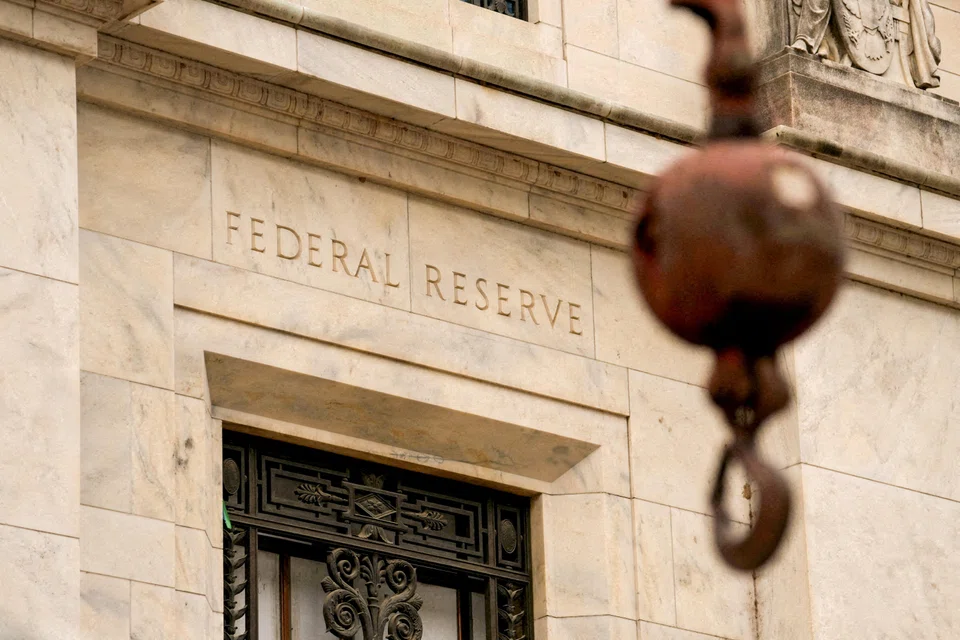
THE Iran conflict is the latest shock that is challenging the resilience of the global economy. It is prompting the market to reprice the global policy outlook, government bond yields and equity values.
The imminent macroeconomic threat from the Iran war is higher inflation via energy prices, challenging the existing inflation profile of major economies. This is already reflected in higher bond yields.
Before the war, market expectations about the global monetary policy outlook diverged as economic data evolved differently across regions.
Markets were asking how long the US Federal Reserve would pause, and whether a hike was plausible. Was the European Central Bank (ECB) about to turn dovish again after staying neutral for nine months? How far could the Bank of Japan (BOJ) hike interest rates?
However, the prolonged Iran war has changed all that and prompted market expectations to converge again with the risk of stagflation increasing.
The US problem
Markets were expecting the Fed to cut rates at least once this year due to the following reasons:
- Strong productivity growth: The latest data showed that non-farm labour productivity rose by an annual 2.8 per cent in the fourth quarter of 2025, implying that underlying demand had not yet boosted inflationary pressures, thanks to robust productivity growth.
- A declining inflation trend: Tariff-induced inflation seemed to have peaked, though not yet retreated. Crucially, there was disinflation in the shelter and super-core (that is, services inflation excluding food, energy, and shelter costs) components of the consumer price index (CPI). These two components account for three-quarters of the core CPI.
- Consumption might weaken: Spending was already elevated relative to wealth-implied levels and consumer confidence had fallen to decade lows.
That was why the Fed recently shifted its focus to protecting the labour market, while tolerating inflation running above its 2 per cent target.
However, a prolonged Iran war will change the Fed’s policy reaction function back to anti-inflation as the conflict disrupts energy markets and pushes inflation even higher.
Growth data for February jobs and wages and Q4 2025 gross domestic product have made things more complicated.
SEE ALSO




The US economy shed 92,000 non-farm jobs in February, and January’s figure was revised down by 69,000. The unemployment rate rose to 4.4 per cent. The labour market’s downside risk loomed again.
Meanwhile, Q4 GDP growth was revised down by half to 0.7 per cent year on year.
Core personal consumption expenditure inflation rose to 3.1 per cent year on year in January, while wage and average earnings growth and core CPI and producer price index inflation all accelerated in February. All these are adding to the inflation concern.
The combination of job losses, weaker GDP, and stronger wage and price pressures is not reassuring for investors at a time when inflation expectations are rising alongside energy prices, amid escalating tensions in the Middle East. The risk of stagflation has re-emerged.
Under these circumstances, the Fed will struggle to deliver the rate cuts that the market was anticipating before the Iran war.
Even if it does, the market may “revolt” against the cuts by pushing up bond yields, just like what happened after the Fed’s jumbo 50-basis-point rate cut in September 2024.
Back then, it was met by a sell-off in US Treasuries that pushed up the 10-year yield by 120 basis points in the following three months.
Europe losing confidence
Recent data suggests that, in Europe, growth was weakening in the first quarter of 2026, even as inflation remained under control.
The inflation flare-up in February – with headline inflation up at 1.9 per cent year on year from 1.7 per cent in January, and core inflation at 2.4 per cent from 2.2 per cent the month before – was partly due to energy price inflation and partly due to strength in France and Italy.
These “price noises” do not seem to concern the ECB at this point due to weakening growth momentum and decelerating wage growth, according to the ECB’s forward-looking wage tracker.
Meanwhile, the Economic Sentiment Indicator, which is a good predictor for GDP growth, fell in February, a print that followed weaker purchasing managers’ index figures at the start of the year.
The external environment continues to be fraught with uncertainty, with the US expected to raise tariffs on European imports to 15 per cent from 10 per cent. The 15 per cent tariff rate can be imposed for up to 150 days, and there is little clarity on what happens to it after that period.
European businesses are unlikely to commit to any major investment decisions until the dust settles.
These developments shifted the market expectation about ECB policy from “neutral” to “easing”.
However, the prolonged Iran war is changing that again, as Europe is a net energy importer and is thus quite vulnerable to rising energy prices.
Crucially, defence and infrastructure spending, the key drivers for growth, have a high energy intensity. So, the fiscal multiplier, and hence its boosting effect, could fall sharply if energy prices remain high.
Market expectations have thus shifted from rate cuts to two 25-basis-point rate hikes this year in the face of a stagflation risk.
Japan is hiking
Japan is also facing a stagflation risk, but the BOJ is still hiking rates on the back of Prime Minister Sanae Takaichi’s fiscal expansion.
The Iran war is making the BOJ’s life more difficult as Japan is a large net oil importer.
The negative terms-of-trade effect will crimp demand growth, notably from the second quarter of 2026.
Should oil prices remain at more than US$100 per barrel for a sustained period, GDP could be trimmed by 0.5 percentage point.
While this growth drag should constrain the BOJ’s rate-hike effort towards the neutral policy rate (estimated between 1 and 2.5 per cent) from the current 0.75 per cent, the energy-induced import inflation impact on domestic prices and inflationary expectations will add to price pressures and argue for rate hikes.
But then, more rate hikes will aggravate Japan’s worsening debt dynamics which, in turn, are a reason for rate cuts.
Thus, the BOJ is stuck between a rock and a hard place.
On balance, further rate increases towards the neutral policy rate seems likely.
The question is: How quickly can the BOJ move?
Gradual seems to be the operative word.
With productivity growth still elusive, the central bank must tread carefully between policy normalisation and demand preservation.
The bottom line is that the Iran war has increased global risk aversion significantly and prompted global central banks to turn cautious and even hawkish, at least before any de-escalation of Middle East tensions.
Furthermore, rising energy prices are not the only inflationary risk.
US tariffs and increased artificial intelligence adoption that is escalating the competition with local communities for resources – notably electricity – are further aggravating price pressures. All these are weighing on market sentiment and increasing asset-price volatility.
The writer is senior market strategist, Asia-Pacific, BNP Paribas Asset Management
Decoding Asia newsletter: your guide to navigating Asia in a new global order. Sign up here to get Decoding Asia newsletter. Delivered to your inbox. Free.
Share with us your feedback on BT's products and services
TRENDING NOW

DBS, OCBC, UOB rout lops billions off STI as inflation, rate concerns spook investors

Grab CEO’s wife Chloe Tong on life with Anthony Tan and finding her purpose

OCBC sheds S$8 billion in value as shares close nearly 6% down; analysts cautious on banks

Deal between tycoon friends sparks scrutiny of Philippine power sector

