

Navigating market turbulence with a barbell approach
 Add BT as a preferred source
INVESTMENT 101 has taught us that a globally diversified portfolio will provide capital protection during times of market volatility as investors pivot from risky assets such as equities and switch into the safety of bonds. While this strategy has worked on numerous occasions, this year we saw both equities and bonds fall in tandem. Indeed, a portfolio consisting of 50 per cent equities and 50 per cent bonds would have lost 5.8 per cent in 1Q22 – constituting the 4th worst start to the year since 1999.
The acute sell-off in financial markets comes on the back of the following factors: (1) The prevailing Russia-Ukraine crisis; (2) supply chain tension and rising inflation; and (3) the hawkish Federal Reserve and rising bond yields. Clearly, these are no ordinary times and the only other occasions when a multi-asset portfolio performed worse was during the dot-com bubble, the subprime crisis, and the Covid Pandemic (respectively, -6.9 per cent in 1Q01; -7 per cent in 1Q09; and -10.8 per cent in 1Q20).
Inflation morphing from transitory to structural?
The risk of inflation morphing from “transitory” to structural is on the rise – driven by both cost-push and demand-pull factors. On the cost side of the equation, no one can say with certainty when the crisis in Ukraine will end or how the Covid crisis in China will evolve. Until the day these headwinds ease, inflationary pressure will persist via the commodity and supply chain channels. On the demand side, US broad money supply remained abundant despite the closing of the output gap and this has contributed to inflationary pressures.
Navigating structurally higher inflation
To err on the side of caution, it is prudent for portfolio allocators to prepare for the plausibility of elevated inflation in the quarters ahead. From a portfolio construction perspective, we believe that investors should aim to achieve the following at this part of the market cycle:
· Gain exposure to sectors that have historically performed well in a high-inflation environment. · Maintain sufficient exposure to growth equities to capture opportunities should bond yields peak and retrace from here. Maintain exposure to profitable Tech companies with strong pricing power. · Maintain a balance allocation to high-quality credit to have the certainty of income generation and principal safety.
On the first point, we recently highlighted sectors (using US as a proxy for global) that historically garnered the highest average real returns during periods of high inflation. They are energy and real estate. A common factor underpinning the outperformance of these sectors lies on their ability to pass on rising cost to end consumers given that they operate in the “essentials” space of providing necessities like fuel and shelter.
On the second point, we believe that the surge in bond yields is not far from its tail end, and this explains why the US Treasuries 10-yr yield is currently broadly in line with consensus forecasts. Given the acute sell-down in growth equities, particularly technology, we believe that a strategic exposure to this sector encapsulates attractive risk-reward.

On the third point, the rate-hiking cycle has resulted in interest rates and credit spreads now turning historically cheap. With the growth outlook priced to perfection, bonds provide a good hedge to adverse outcomes and could perform well should growth and inflation moderate unexpectedly.
Barbell Income Strategy: Right place, right time
With bond yields hitting the extremes while inflation stays elevated, we believe it is timely for investors to start implementing the “Barbell Income Strategy’’. Our barbell strategy invests in both income-generating investments and growth stocks aligned with long-term secular themes. Such a strategy positions investors to capture capital gains and at the same time, achieve recurring income. The key drivers for the strategy are:
1. Outsized exposure to inflation winners: Drawing on our previous analysis, the sectors which registered the highest real returns during periods of high inflation are energy and real estate (via Singapore REITs). Our Barbell Income Strategy undertakes outsized exposure to these sectors. 2. Strategic positioning to capture growth opportunities: We believe that the technology-related growth exposure in Barbell Income Strategy has already sufficiently priced in the headwinds from rising bond yields. The tech exposure allows investors to capture future growth opportunities beyond prevailing headwinds. 3. Higher-quality credit assets for steady income generation: Risk management is key in portfolio construction, and valuations of high-quality credits have reached attractive levels to give a balance of yield and safety. At present levels, the real return on credit is expected to outperform cash in the medium term. 4. Covered call writing for additional income generation: The Barbell Income Strategy employs a covered call writing overlay to monetise the volatility of growth stocks.
The writer is chief investment officer at DBS Bank.
Decoding Asia newsletter: your guide to navigating Asia in a new global order. Sign up here to get Decoding Asia newsletter. Delivered to your inbox. Free.
Share with us your feedback on BT's products and services
TRENDING NOW

‘I felt like dying’: Thai Singha beer scion speaks up after disclosure of alleged sexual abuse

Japan’s Asics to spin off popular Onitsuka Tiger sneaker business; shares rise
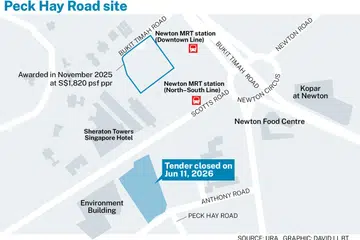
CDL, Hong Realty trump 3 other bidders with S$542.4 million offer at S$1,865 psf ppr for Peck Hay plot

The returnees: Inside China’s AI talent reversal

