

Nurturing the spirit of enterprise
More startup founders are passing on the desire for creating something new to their children from a very young age.
PERHAPS the most compelling family business narrative has long been about passing on an enterprise to the next generation. But with small business startups proliferating, and frequently growing in step with the children of company founders, it is not just the enterprise but the spirit of enterprise - the desire to create a new one - that is being passed on to the next generation.
More and more successful entrepreneurs are grooming their children to be chief executives of startups, sometimes starting as early as middle school.
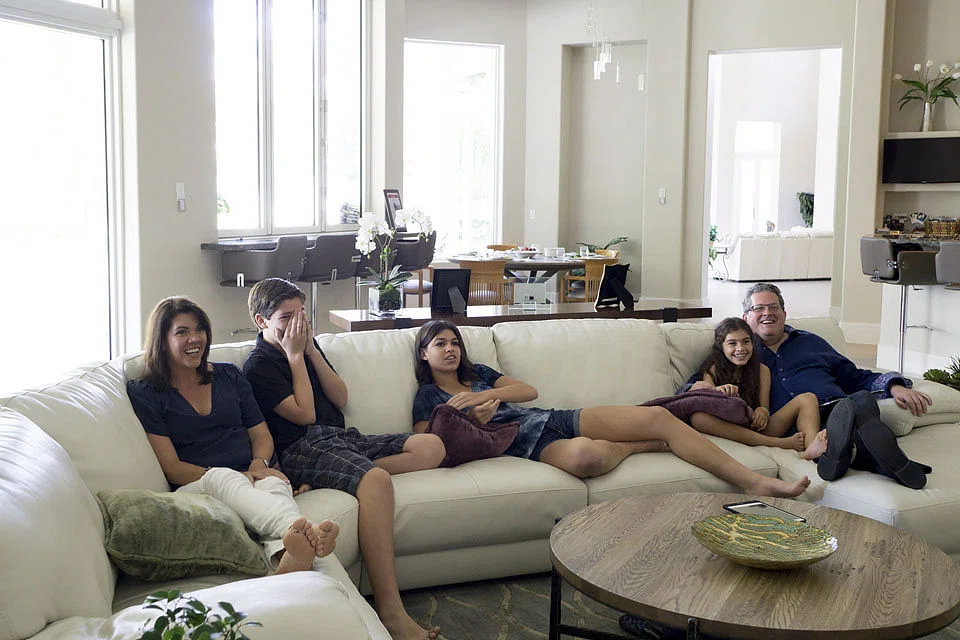
At the Zietz family dinner table in Boca Raton, Florida, the question "How was school today?" often comes after, sometimes long after, one of the children asks their father, Sam, about his day at work as the chief executive of TouchSuite.
The company, founded in 2003, offers an array of financial and technological services for small businesses. By 2014, it had grown to US$28 million in annual revenue. The children - Rachel, 14, Jordan, 13, and even nine-year-old Morgan, who has aspirations just like her older siblings - are not sweet-talking in search of a later bedtime or special favours. They're genuinely interested in business developments, like TouchSuite's recent acquisition of a Canadian company that added 42 employees to the family company's nearly 80 workers in the United States.
Favourite show
The family's favourite binge-viewing is a show Rachel started watching soon after her 10th birthday. With the pride of a father pointing to a child executing a perfect double axel, Mr Zietz recalled his young daughter announcing at the end of one entrepreneur's pitch on Shark Tank: "This guy is not getting an offer." "Why not?" he asked. "Because he doesn't even own his own IP," she said, referring to intellectual property, and beating the "sharks" to the punch.
"I always wanted to be an entrepreneur," said Mr Zietz, 47, who explained that he did so only after becoming a lawyer and specialising in tax law and deal-making. "In the '80s it wasn't cool to be an entrepreneur, like it is now. Back then, if you were an entrepreneur it was because you couldn't get a job." (Of course, that can sometimes be the case today.)
He affectionately called Rachel "a clone" of himself. "You could take Rachel and put her in any household in America - that girl would have been an entrepreneur. My son, on the other hand, would not be an entrepreneur. He's off-the-charts bright, but he doesn't have that entrepreneurial skill set in his DNA that Rachel has. But he's growing up in my house, and that's what we talk about."
"I was probably five to seven years old when I knew the meaning of the word entrepreneur," Rachel said. "In school, when they ask you what your parents do and it's not like doctor or dentist, you have to know what to say. I'd say, 'My parents are entrepreneurs. That means they make their own business'."
"I treat the kids like adults and I talk to them as peers," Mr Zietz said. "I try to share everything I've learned over the years. The old adage: If I knew then what I know now. I'm giving them the knowledge now, and they're taking it an applying it."
Indeed. Rachel projects that her startup, Gladiator Lacrosse, which began when she was 12, will this year top US$1 million in sales of lacrosse goals and training rebounders, products she imports from China and sells online. She presented her business plan at the end of a 30-week programme offered by a local chapter of Young Entrepreneurs Academy, which operates some 113 programmes in 38 states. Her brother, Jordan, who is already mastering app development, created a business called GameReef, to step into the open niche of renting video game systems, rather than video games.
He, too, signed on for the after-school Young Entrepreneurs Academy programme, which helps sixth through 12th graders identify their interests and skills; come up with an idea for a business; pitch that business to a panel, including local business owners; and finally open the enterprise - with seed money awarded to the most promising business plans.
Gayle Jagel, founder and chief executive of the academy programme, which is based in Rochester, New York, said 50 per cent of the student entrepreneurs were the children of entrepreneurs. And 50 per cent are girls. Her advice on raising young company founders?
"First and foremost, help your kids identify their interests and passions, not yours," Ms Jagel said. "And don't focus on the risks and the negatives, focus on the possible. Create an environment that allows for success. Ask a lot of questions to help them think how they might accomplish their idea. What would they need? Who could they ask for help?"
Additional advice comes from Joanna Strober, founder and chief executive of Kurbo Health, a mobile app to help teenagers and tweens manage their weight and make healthier choices. She started the business a year ago in her Palo Alto, California, home, enlisting the help of her three children, aged seven to 15. She stresses the learning-by-osmosis principle of grooming young entrepreneurs: "There's that old saying, 'You can't be what you can't see'."
Her oldest child, Sarah, has caught the startup bug. She has already amassed thousands of followers and her first income-generating sponsors for her food Instagram, TasteslikeSF, which tags local restaurants and food trucks, displaying photos of recommended dishes. The elder Ms Strober's tips for raising entrepreneurial children: Share the frustrations as well as the triumphs and show that there will be hundreds of "no's" for every "yes" - especially when raising money.
Saili Gosula, a single mother raising a son and a daughter while growing a new Synergy HomeCare franchise in San Mateo, California, did not necessarily set out to spark an entrepreneurial spirit in her children, but she is certainly pleased that has been the outcome of taking her children to work with her.
"You're working pretty hard in the beginning," Ms Gosula said. "What I did intentionally was keep my kids close to me, because I didn't want work to be distinct from them. One of the nice things about owning your own business is you can take your children to work with you. And you know what? Your teenager who doesn't talk to you otherwise will come to you, and you'll see things you don't see otherwise."
She enlisted her son Gabriel to do initial phone screening of caregiver applicants and assigned him other office tasks in support of her 70 employees in the field. Gabriel just graduated from California State University, Chico, with a degree in business and looks forward to one day owning his own. Ms Gosula is betting her daughter Isabela will follow a similar path.
The big picture
"I think she likes seeing the big picture of the company. She's the type of person who wants to see how it all fits together. She's 14 now, and hasn't yet started her own company. We've talked about that, but she hasn't come up with the right idea yet."
"I think," Ms Gosula said, "that I've left my kids with a positive perception of what owning a business is." She cited a Mother's Day card Isabela gave her on which she wrote, "You Are Such a Great Person Because," followed by a long list of reasons. The ultimate reason, the one Ms Gosula cherishes, was this: You are a business owner.
And how does 14-year-old Rachel Zietz, owner of a seven-figure company, define entrepreneurship today? "An entrepreneur is a person who creates their own business out of something they love, or out of a need. They are hardworking. They are passionate. They are definitely competitive." NYT
TRENDING NOW

KKR founders among investors buying 42% of Peter Lim’s Valencia; club valued at US$1.4 billion

Singapore’s central gas buyer affirms Indonesia’s role as ‘important partner’ amid export review warning

Why the biggest business decision about AI isn’t which model to choose

NEA issues notices to 10 Singapore-based companies, including Wilmar and APP, over haze

