Pockets of strength in S-Reits
The tide is rising for S-Reits, but the recovery favours those with strong balance sheets and the right sector exposure
AFTER a prolonged period of macroeconomic headwinds characterised by elevated interest rates, the outlook for Singapore real estate investment trusts (S-Reits) is shifting.
We anticipate a more constructive year ahead, when the convergence of easing financing costs, resilient fundamentals and reasonable valuations creates a compelling risk-reward profile for investors.
However, the recovery will not be uniform. A selective approach prioritising balance-sheet strength and domestic assets – a strategy we term the “Singapore shield” – will be essential for outperformance.
Easing rates offers greater relief for some
As the Singapore Overnight Rate Average (Sora) drifts lower, the benefits are beginning to materialise in financial statements. While many Reits hedge their debt and rate cuts affect earnings gradually, the ability to refinance debt maturing between now and 2027 at lower marginal costs will increasingly support earnings and ease pressure on cash flows.
Some relief has also been seen in recent business updates. For instance, the interest coverage ratios (ICR) of CapitaLand Integrated Commercial Trust (CICT) and Frasers Centrepoint Trust (FCT) improved to 3.5 times as at Sep 30, 2025 – well above the minimum ICR requirement of 1.5 times.
With financing costs easing, Reit managers are becoming more willing to move onto the front foot. Capital recycling has revived, with managers divesting non-core assets to fund accretive acquisitions.
Notable examples include CapitaLand Ascendas Reit (Clar), which is recycling capital into Singapore growth assets, and Keppel DC Reit, which recorded a 42.2 per cent year-on-year net property income growth in Q3 2025 from its recent data centre acquisitions in Singapore and Tokyo.
Singapore shield: Higher exposure to Singapore pays off
In a volatile global environment, geography has become a key determinant of returns. S-Reits with high exposure to Singapore assets are significantly outperforming those with foreign exposure, reflecting stronger tenant demand and stable domestic leasing conditions.
For example, CICT, which derives 95 per cent of its revenue from Singapore, continues to report positive rental reversions ranging from 6.5 to 7.8 per cent (as at Sep 30, 2025). In contrast, the overall growth of Mapletree Pan Asia Commercial Trust (MPACT), with only 57 per cent Singapore exposure, has been dragged down by weakness in China and Hong Kong markets.
Consequently, we remain overweight on Singapore-centric assets, where fundamentals are more resilient and earnings visibility is stronger.
Preference for industrials, logistics and commercial
We favour a selective approach, overweighting industrials, prime commercial and suburban retail, while remaining cautious on hospitality and discretionary retail.
Industrial & logistics: the structural growth engine
This sector remains our top pick. The JTC All-Industrial Rental Index has displayed exceptional resilience, with 20 consecutive quarters of rental growth. Demand is driven by structural tailwinds, including global AI investment in semiconductors and data centres, as well as the expansion of third-party logistics (3PL) firms.
Singapore’s warehouse rent growth accelerated to 0.9 per cent quarter on quarter in Q3 2025, and prime logistics occupancy tightened to 93.6 per cent.
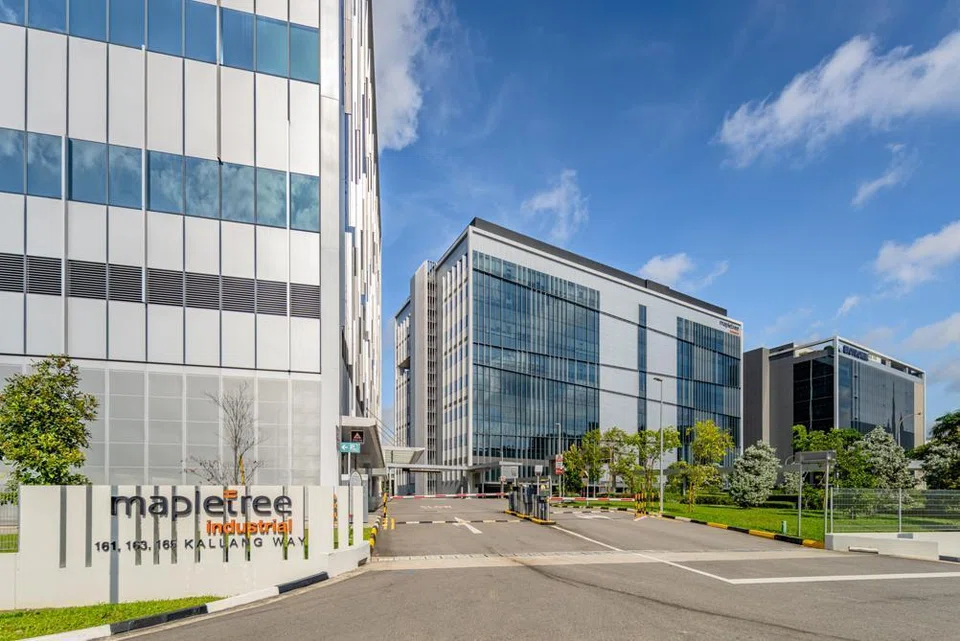
Clar and Mapletree Industrial Trust (MINT) are positioned as key beneficiaries of these trends, posting rental reversions of +7.6 per cent and +6.2 per cent respectively.
CBD commercial: flight to quality
Despite global economic uncertainty, the Singapore office market is characterised by a “flight to quality”. Tenants are consolidating into premium Grade-A buildings, keeping the market tight.
Vacancy rates in the Core CBD have tightened to 5.1 per cent. Crucially, there is no significant new Grade-A supply expected until 2028, handing leverage back to landlords.
We favour CICT as the primary winner. It is backed by a stronger sponsor and has a healthy balance sheet relative to other commercial S-Reits. Its portfolio of premium assets, such as CapitaSpring and Six Battery Road, positions it to capture rental growth in a landlord-favoured market.
Retail: suburban resilience versus discretionary volatility
The retail landscape shows a clear divergence. While retail sales rose 6.3 per cent year on year in November 2025, growth slowed to just 0.8 per cent when excluding motor vehicles, indicating consumer caution. In this environment, we favour suburban and heartland malls over downtown luxury retail.
These heartland malls cater to essential daily spending and are supported by stable residential catchments.
FCT exemplifies this resilience with 99.9 per cent occupancy (excluding cinemas) and strong rental reversions of +7.8 per cent.
While Orchard Road rents are recovering, they remain exposed to external risks such as wage stagnation and a strong Singapore dollar, which curbs tourists’ purchasing power.
Reasonable valuations
Despite a 16.9 per cent rally last year, valuations remain reasonable. The sector traded at a price-to-book (P/B) ratio of 0.97 times as at Jan 30, 2026, slightly below its 10-year average.
Furthermore, as government bond yields fall, the yield spread offered by S-Reits has widened to 3.4 per cent, significantly improving the income appeal compared to the tight 2.7 per cent spread seen in 2023.
A new structural catalyst has also emerged: the iEdge Singapore Next 50 Index. As at Dec 31, 2025, S-Reits accounted for 16 of the 50 constituents, or 46 per cent of the index’s market capitalisation. The launch of ETFs tracking this index is expected to drive passive inflows into mid-cap Reits, helping to narrow valuation gaps and improve liquidity for names that traditionally lack blue-chip coverage.
Top picks
The tide is rising for S-Reits, but the recovery favours those with strong balance sheets and the right sector exposure. We recommend staying selective. Some names we like include CapitaLand Ascendas Reit, Mapletree Industrial Trust, CapitaLand Integrated Commercial Trust and Frasers Centrepoint Trust.
Investors seeking broad exposure without single-asset risk may consider ETFs such as the Lion-Phillip S-Reit ETF (SGX: CLR), which tracks high-quality, financially healthy Reits and offers a projected average annual dividend yield of 5.6 per cent.
The writer is a research analyst with the research and portfolio management team of FSMOne.com, a Singapore subsidiary of iFast Corporation