Policy and portfolio implications of the US midterms’ big blue wave
Gridlock is the base case, with Democrats lacking the 67 Senate votes needed to override a presidential veto
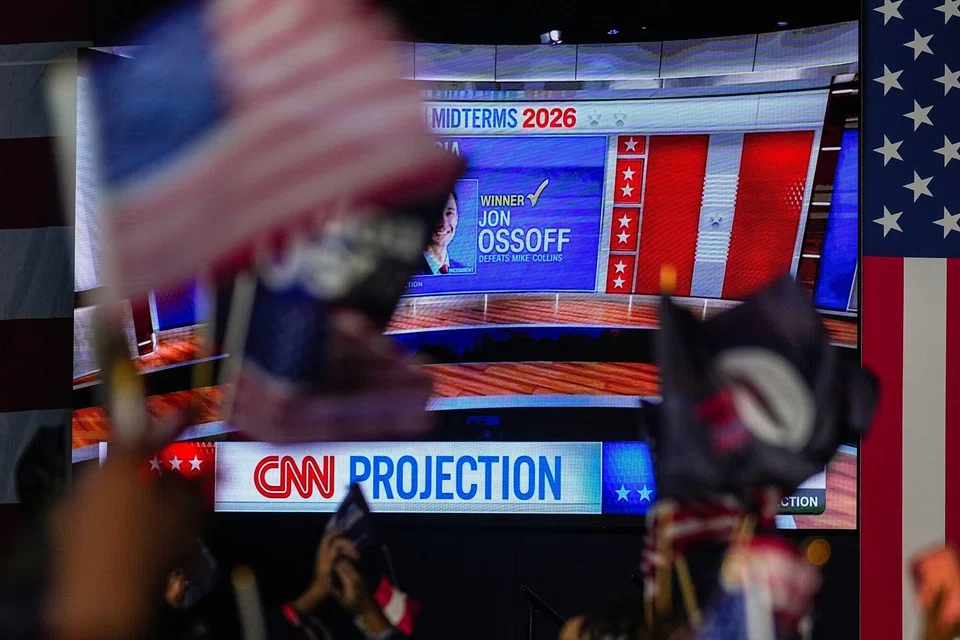
US DEMOCRATS have won control of Congress in a sweeping victory at the midterm elections, taking both the Senate and the House of Representatives in a big setback for President Donald Trump.
The results reflected voters’ frustration at the cost of living, tariffs and the rise of artificial intelligence. In signs of that discontent, Kansas elected its first Democratic senator since 1932 and Texas its first since 1988.
There are three key things to note. First the results show a blue wave, but not a progressive mandate. The Democrats’ majority is skewed towards moderates, which may help curb a more progressive legislative agenda.
Secondly, gridlock is the base case. Democrats lack the 67 Senate votes needed to override a presidential veto and the 60 votes generally needed to advance ordinary legislation.
Thirdly, the clearest policy risk is outside Congress. Trade, foreign policy and state-level AI rules could change.
The election results point to slightly higher Treasury yields, a weaker USD, and support for gold. In equities, we expect limited market moves at index level, but performance to broaden further.
Not a free hand
The Democrats won a commanding majority in the House, taking roughly 56 of the 100 seats in the Senate and flipping prominent governorships their way.
Markets have been reassured by the composition of the Democrats’ majority, with moderates in the ascendancy – an outcome that points to the party consolidating the centre as it looks ahead to the presidential elections in 2028.
However, congressional control does not translate into a free hand. Overriding a presidential veto requires 67 Senate votes, well above the Democratic total. That leaves scope for selective bipartisan deals, but not for a broad Democratic legislative agenda.
At the same time, gridlock may encourage Trump to rely more heavily on powers that do not require new legislation. Trade and foreign policy are the clearest areas where the executive can still act.
A renewed impeachment push would expose divisions within the Democratic coalition. Even if the House impeached the president for a third time, conviction in the Senate would still require a two-thirds majority that Democrats lack. The result would likely be political headlines rather than a change of president.
Policy implications
Nine of the ten states with the largest committed data-centre demand for 2027 are projected to have Democratic governors, some of whom have proposed conditional pauses on their construction pending new rules, and potentially additional taxes.
Therefore, the debate is no longer about compute costs anymore – it’s whether anyone can actually get permits and the electrical power to deliver capacity between 2027 and 2029. Moratoriums, local pushback, and tighter regulation could seriously constrain the supply.
This cuts two ways. Firstly, there’s a real risk customers have over-ordered chips, cooling and other electrical gear relative to what they can now actually use given the new realities of a Democrat-controlled congress.
Some demand might shift to other geographies or behind-the-meter solutions, but probably not fast enough. This is clearly negative, though much of it looks priced into multiples already in the run-up to the elections.
We strongly believe demand will continue to increase as AI will likely become a staple for all of us. So if supply can’t keep up due to the above-discussed constraints, the value of existing, energised compute goes up. That favours hyperscalers and owners of already-deployed capacity.
This is likely to cause delays in the US data-centre boom, making installed compute capacity more valuable in the face of unabated AI demand.
For fiscal policy, there is little prospect of major fiscal stimulus or consolidation, since President Trump retains the power to veto legislation. Even so, the risks to the budget skew towards a wider deficit, driven by higher healthcare and defence spending.
A California ballot proposal for a one-off 5 per cent tax on billionaires appears unlikely to pass, suggesting a wealth tax is not becoming an immediate national priority.
Regarding the debt trajectory. Several deadlines will create repeated opportunities for bargaining. The next government shutdown deadline is Dec 11, while the debt ceiling is expected to become binding in mid-to-late 2027.
Neither party has an incentive to trigger a lasting fiscal crisis, but both will seek concessions. The result is likely to be episodic volatility around deadlines without a durable improvement in the debt trajectory.
On the geopolitical front, Democrats may try to force votes on the Iran war and use investigations, funding conditions and oversight to constrain the administration. But the president retains wide latitude in the conduct of foreign affairs.
A Democratic Congress could, therefore, raise the political and procedural cost of policy without necessarily changing its direction quickly.
Trade is the clearest post-election policy risk because the president can act through existing unilateral authorities.
For investors, this means that legislative gridlock should not be interpreted as policy stability. Tariff uncertainty may remain a source of volatility for import-sensitive sectors, multinational supply chains and US trading partners.
Asset class implications
On equities, markets are reassured by the moderate composition of the Democrats’ majority. We expect limited market moves at index level, but performance to broaden further. Healthcare stocks are expected to outperform.
On fixed income, the balance of risks is tilted towards slightly higher Treasury yields. Partisan legislative gridlock limits the probability of large new stimulus bills but does not create a credible path to deficit reduction.
Fiscal challenges point towards downward pressure on the US dollar. However, a more aggressive tariff agenda or geopolitical escalation could initially support the dollar through safe-haven demand.
Gold should retain support from the mix of deficit pressures, a weaker dollar, and political uncertainty.
The writer is chief investment officer, Asia, at Pictet Wealth Management